


Get the GoFantastic app


Are Squirrels Dangerous?
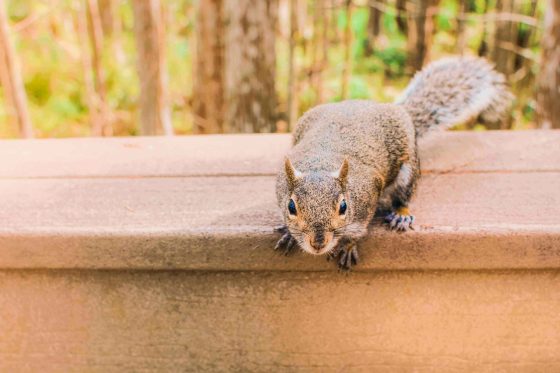
Squirrels are wild animals and should be treated as such. Many people all over the world think they are cute because of their adorable faces and big fluffy tails, but a fact is a fact. They are not domesticated animals and they are not used to human presence. On rare occasions, if you feed squirrels often they may pluck up the courage to get close to you or even eat from your hand. However, if they also feel threatened, they may attack you, your child, or your pet.
Squirrels can cause injuries and property damage, but the risk depends on the situation. Watching a squirrel outdoors is very different from trying to catch one, handling an injured animal or discovering squirrels inside your loft. Frightened squirrels can bite and scratch, while animals entering buildings can damage materials and contaminate spaces with urine and droppings.
For UK households, the most useful precautions are to avoid direct handling, keep children and pets away from distressed wildlife, and investigate signs of squirrels entering the roof.
This guide explains the risks associated with squirrel bites, parasites, droppings and damage to your home. It also distinguishes between grey and red squirrels, because their legal status affects what you can do if one enters your property.
Are Grey Squirrels Dangerous to Humans?
Grey squirrels can injure people if an encounter leads to biting or scratching. The clearest avoidable risk is close contact: attempting to pick up a squirrel, removing one from a confined space or reaching towards an animal that cannot escape. An injured squirrel may appear unusually approachable, so being able to get close does not mean it is safe to touch. Keep your distance and seek advice rather than testing its reaction.
A squirrel approaching people for food should also be treated as wildlife. Avoid offering food from your fingers, encouraging children to touch it or trying to stroke it. You can observe squirrels without creating an encounter that requires handling.
If a squirrel enters your home, keep children and pets away from the affected area. Do not chase it into a corner or reach into a nest. The practical priority is to establish where it is, whether other animals or dependent young may be present, and what assistance is appropriate. A squirrel in a building needs a different response from one passing through the garden.
Are Red Squirrels Dangerous?
The population of the red squirrel is now mainly found in Scotland. Out of their approximate number 160 000, about 120 000 are on Scottish territory. This means that in England, you’ll hardly see them in an urban setting. Unlike the grey squirrel, the red prefer living in forests and parks. Their preferred environments are coniferous woods and are rarely found in broad-leaved forests. Red squirrels are considered more aggressive than their grey brethren. They are very territorial and protective of their food and babies. They may attack humans, other animals, or even other red squirrels.
However, if red squirrels are common where you live, they may be more of a problem for your house. If they find a way in your home, they can cause structural damage, chew on electrical wires, make a nest on your property, leave droppings, urine, or just chaos from rummaging for food. If you are suffering from a red squirrel invasion, you must contact your local council. These animals are protected by law and you are not allowed to trap or kill them.
Do Squirrels Bite, and What Should You Do after a Bite?
Yes. Squirrels can bite, particularly when frightened or handled. If a bite breaks the skin, take the wound seriously even if it looks small. Cleaning helps reduce infection risk, but it does not guarantee that an infection will be prevented.
Follow the NHS guidance for animal bites:
- Clean the wound with soap and warm water.
- Gently pat it dry and cover it with a clean dressing.
- If bleeding is heavy, apply firm pressure with a clean cloth or dressing.
Get help from NHS 111 if the bite affects your hands, feet, face or head; contains dirt or other material; becomes hot or swollen; leaks fluid; or is accompanied by a high temperature. Also seek advice if you have not had a tetanus vaccination within the last ten years. Go to A&E for a large or deep wound, or bleeding that will not stop.
A clinician can assess whether antibiotics, tetanus protection or other treatment is needed. Do not wait for infection symptoms if an urgent-help criterion already applies.
Do Squirrels Carry Disease in the UK?
Squirrel-related health information should distinguish between a pathogen being found in wildlife and a demonstrated risk to people. A list of diseases recorded somewhere in the world does not show how likely a UK resident is to become ill after seeing a squirrel, finding droppings or receiving a bite. Different infections also have different transmission routes.
Lyme disease, for example, is transmitted to people through infected tick bites. It should not be described as an infection caught directly from a squirrel bite. Ticks occur throughout the UK, including woodland, long grass and some parks and gardens; not every tick carries the bacteria responsible for Lyme disease.
Leptospirosis is another infection requiring careful context. The NHS describes it as rare in the UK and explains that exposure can involve infected animal urine or contaminated soil and water. That does not establish squirrels as a common source of human infection.
The practical response is to avoid unnecessary animal contact, wash after handling contaminated materials and explain any relevant wildlife exposure when seeking medical advice. Symptoms alone cannot identify which animal, if any, caused an infection.
Do Squirrels Carry Rabies in the UK?
Rabies is not a normal risk from a wild squirrel encountered in the UK. The UK Health Security Agency states that rabies has been eliminated from the UK’s terrestrial animal populations. Rabies-like viruses have been found in bats, but this is a separate public-health issue and does not make ordinary UK squirrel encounters a typical rabies exposure.
This distinction matters because a bite can still require treatment even when rabies is not the concern. Wound depth, contamination, infection and tetanus protection remain relevant. Do not dismiss a squirrel bite simply because it happened in the UK, and do not assume that unusual squirrel behaviour proves an animal has rabies.
An encounter abroad needs a different assessment. UKHSA assesses rabies risk according to the country, animal and circumstances, with separate considerations for imported animals. Tell the treating clinician where the incident happened and whether the animal was imported.
If an animal abroad may have exposed you to rabies, wash the affected area and get medical help immediately. Do not wait for symptoms or postpone assessment until you return home.
Are Squirrel Droppings and Urine Dangerous?
Squirrel droppings and urine should be treated as contamination, particularly when found around food, stored belongings, insulation or water-storage equipment. Their presence does not prove that a particular infection is present, but affected materials and surfaces need assessment before the space is used normally again.
The British Pest Control Association identifies contamination of attic spaces and cold-water tanks, alongside damage to insulation and wiring, as problems associated with squirrels entering buildings. This makes the location and extent of the activity important: a few signs near an entry point and widespread contamination across a loft may require different work.
Keep children and pets away from contaminated areas. Avoid touching droppings with bare hands or disturbing soiled insulation before you understand the extent of the problem. If a water tank may have been accessed, arrange an assessment of the tank, its cover and the affected water system.
Cleaning alone will not resolve continuing squirrel activity. Establish how the animals entered, address that access appropriately and assess whether contaminated insulation or other materials need replacement. Do not identify the animal solely from droppings; an inspection should consider other evidence too.
Squirrel Control
Worried About Squirrels in Your Home? Get expert help to identify squirrel activity and entry points. Book a squirrel inspection today. Call 020 3746 2723
Are Squirrels Dangerous to Dogs and Cats?
A squirrel encounter can become a problem when a pet chases, catches or corners the animal. The immediate concern is an injury during contact. Keep pets away from injured or trapped squirrels, and avoid putting your hands between the animals if an encounter occurs. A frightened squirrel may defend itself against whoever is closest.
If your dog or cat has been bitten, scratched or has caught a squirrel, contact your veterinary practice for advice. Explain what happened, whether you can see a wound and whether your pet’s behaviour has changed. Do not assume that a small-looking injury is the only injury present, or give human medicines without veterinary instructions.
Preventing contact is more useful than encouraging pets to remove squirrels. Supervise dogs where chasing is likely, keep pets away from suspected squirrel access points and prevent them entering a contaminated loft.
Squirrelpox is a separate issue. Although it is a serious disease of red squirrels, Northern Ireland’s official guidance states that it does not affect people or domestic pets. That does not make handling an affected squirrel safe: bites, scratches and the animal’s welfare still need consideration.
Do Grey Squirrels Kill Red Squirrels?
The short answer is no. These two are the main squirrel species in the UK but they do not live in symbiosis. Grey squirrels in the UK do not actively seek out red squirrels and attack them with the sole purpose of killing them. This is simply not the case. The reason why the red squirrel’s population is reduced is that they have more trouble breeding due to various reasons and are more affected by diseases. They die off at a faster rate than they reproduce.
Conclusion
To sum up, squirrels may come near you if you offer them food but they won’t be quick to attack you. Unless you try to catch them or hurt them and they feel threatened in which case they will bite and scratch. If you have children and pets, you may want to keep them away from any wildlife animals, including squirrels.
Regardless of how cute and fluffy they may look, safety should always be a priority. And if you’re not a fan of squirrels but they are tormenting your home, you should hire professional pest controllers to fix the problem. Fantastic squirrel pest control experts follow all rules and regulations when treating squirrels on your land and property.
Squirrels on Your Property?
More squirrel facts worth knowing: