


Get the GoFantastic app


Squirrels in the UK: Identification, Habits and Signs of Infestation
The UK is home to two established squirrel species: the native red squirrel (Sciurus vulgaris) and the invasive grey squirrel (Sciurus carolinensis). Both are tree squirrels belonging to the rodent family Sciuridae. Their bushy tails and climbing abilities make them familiar woodland animals, but their conservation status and management rules differ greatly.
Squirrels may seem cute and harmless as they scurry through parks and woodlands, but when they invade your home, they can become a real nuisance. This guide compares the two species, explains their habitats and seasonal behaviour, identifies signs of activity around your property and helps you understand when professional squirrel control may be necessary.
Red vs grey squirrels: How to Identify the UK Species
Red squirrel (Sciurus vulgaris)

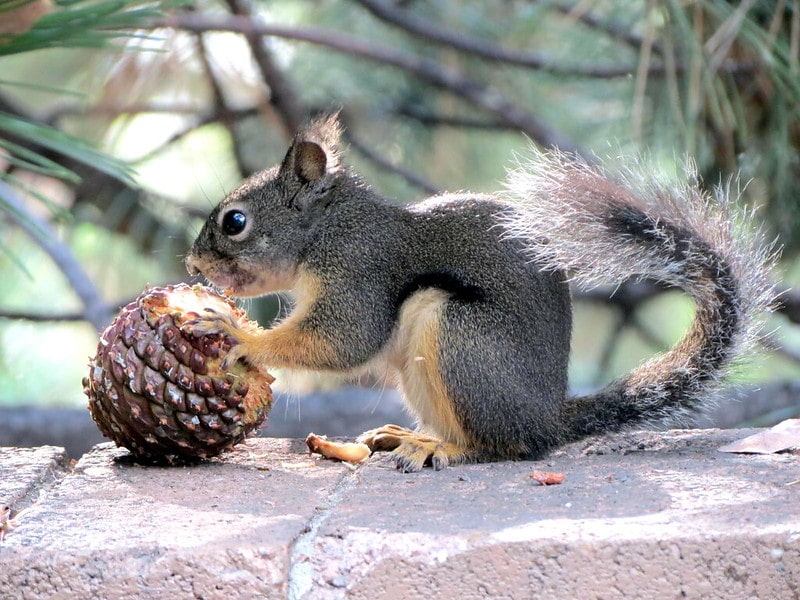
Red squirrels have a slender body measuring 19–23 cm in length, paired with a long, bushy tail. Despite their name, their fur varies significantly – ranging from ginger to dark brown or even black depending on the season and location. Regardless of the main coat colour, they typically have a distinctive cream or pure white underside. Their distinctive ear tufts become particularly prominent during winter. To support their arboreal lifestyle, they possess sharp, curved claws and continuously growing incisors.
Gray squirrel (Sciurus carolinensis)
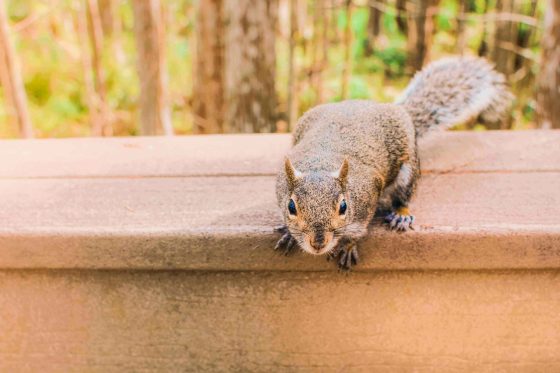
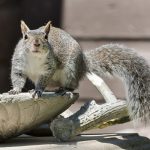 Grey squirrels have a robust body reaching 23–30 cm in length, featuring predominantly grey fur and a bushy tail with distinctive pale outer fringe. While their coat is typically grey, white and black variations are also found, particularly in urban areas. Like native red squirrels, they possess sharp, distinctly shaped incisors and curved claws adapted for climbing.
Use several features together when identifying an animal: body size, ear shape, tail appearance and location are more helpful than colour alone. A distant photograph or a brief glimpse may not be enough for a confident identification.
The measurements below are reference ranges, rather than a way to determine the species from one feature. Lifespan figures also need context: survival varies with age, food availability, disease and other conditions. They should not be interpreted as the age every squirrel will reach.
| Feature | Red squirrel | Grey squirrel |
|---|---|---|
| Scientific name | Sciurus vulgaris | Sciurus carolinensis |
| Origin | Native to the UK | Introduced from North America; first recorded release in 1876 |
| Head-and-body length | About 22 cm | 23–30 cm |
| Weight | About 300 g | Typically about 550 g |
| Appearance | Slender; reddish coat that can vary from almost white to almost black; ear tufts in winter, often lost in summer | Heavier build; grey coat, often with red-brown patches; no ear tufts; white-fringed tail |
| Typical wild lifespan | 3–7 years, average about 3 | Average 2–5 years; many live less than 2 |
| Litters | Usually one a year; a second is possible if food is plentiful | One or two a year |
| Legal status | Protected native species (Wildlife and Countryside Act 1981, Schedule 5) | Non-native; releasing one into the wild is an offence |
Where Squirrels live in the UK and Why Red Squirrels Have Declined
Grey squirrels occupy woodland, parks and gardens, including urban areas where mature trees provide food and shelter. They are widespread across England and Wales and occur in parts of Scotland and Northern Ireland. A garden visitor may be moving between feeding sites rather than nesting in the nearest building.
Red squirrels have a more restricted distribution. Scotland remains an important stronghold, with other populations in northern England, parts of Wales, Northern Ireland and islands including the Isle of Wight and Brownsea Island. Red squirrels can use coniferous, broadleaved and mixed woodland; they are not exclusively animals of pine forests.
The retreat of red squirrels has several connected causes. Introduced greys compete with them for resources and can carry squirrelpox virus. Grey squirrels are usually little affected, but infection is often fatal to reds. Habitat loss and fragmentation add pressure by reducing or separating suitable woodland.
Squirrel Behaviour through the Year: Breeding, Nesting and Winter Activity
Red and grey squirrels remain active throughout the year and do not hibernate. They are primarily active during daylight, though their visible activity varies with the weather and season. During cold weather, squirrels may spend longer sheltering in their nests to conserve heat, so fewer sightings do not necessarily mean an area is unoccupied.
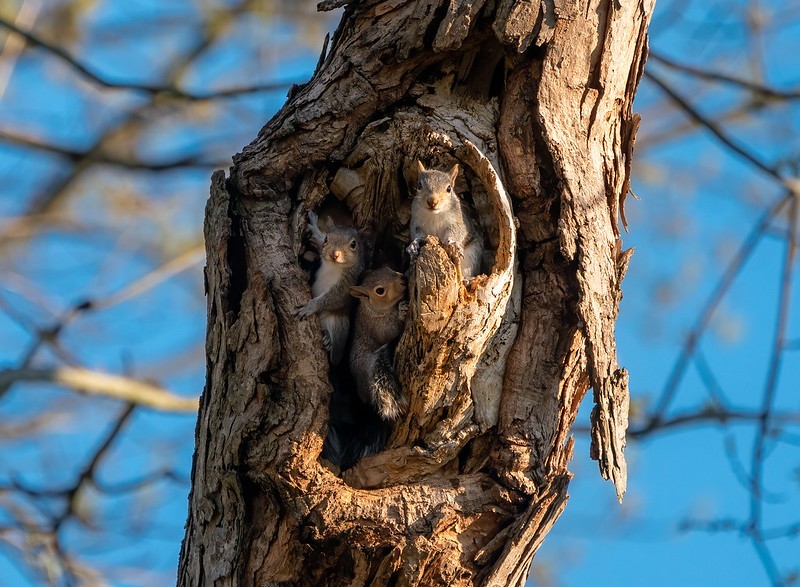
Squirrel nests are known as dreys. These are rounded structures made from twigs and lined with softer material. Both species naturally utilise hollow tree cavities, but grey squirrels are highly opportunistic and may also occupy sheltered roof spaces or domestic attics. Because red and grey squirrel dreys look identical from the ground, a nest’s appearance alone cannot be used to identify the resident species. In areas where both species overlap, all dreys should be legally treated as active red squirrel sites.
Both species can produce two litters a year when conditions allow. Young are commonly born in spring and summer, but the timing varies with location, weather and food supply.
Squirrel’s incisors never stop growing. This helps them maintain a diet high on hard nuts and seeds. When faced with hunger, squirrels can eat snakes, eggs, and small insects. In the wild, tree squirrels rarely live longer than a year. In captivity, they can reach the age of up to 20 years.
Are Squirrels Pests? Damage, Conservation and Legal Status
Grey squirrels are often classified as pests in the UK because they cause damage to property, trees, and even native wildlife. They gnaw on wires, invade lofts, and strip bark from trees, leading to structural and ecological problems. Due to their destructive nature, they are subject to control measures.
Red squirrels, on the other hand, are a protected species in the UK and are not considered pests. Their population has declined significantly due to habitat loss and competition from invasive grey squirrels. In Great Britain, the Wildlife and Countryside Act 1981, as amended, provides protection for red squirrels and their shelters. Northern Ireland has separate legislation, including the Wildlife (Northern Ireland) Order 1985.
The law also prohibits intentionally or recklessly damaging or destroying their nests or other places used for shelter, blocking access to these areas, or disturbing red squirrels while they are occupying them. If you discover red squirrels nesting in your garden or property, avoid disturbing them or interfering with their shelter. Seek advice from a qualified wildlife specialist before taking any action to ensure compliance with wildlife protection laws.
Squirrel Control
Seen a squirrel near your roof? Don’t wait for damage to appear. Our technicians identify entry points and provide professional squirrel control. Book a squirrel inspection. Call 020 3746 2723
Signs of Squirrels – How They Differ from Rats and Mice
Possible signs of squirrels indoors include repeated movement in a roof space, gnawed materials, disturbed insulation and sightings of an animal using an opening around the roof. Droppings may also be present, but they can be difficult to distinguish from those of other rodents.
A squirrel crossing your fence or taking bird food does not prove it is living in your loft. Similarly, scratching alone cannot establish which animal is responsible. Timing can provide a clue, but it should not be treated as a definitive identification method.
| Evidence | Squirrels | Rats and mice |
|---|---|---|
| Activity timing | Usually associated with daylight activity | Often more noticeable at night |
| Direct sighting | Bushy tail and climbing movements | Less bushy tail; appearance depends on species |
| Gnawing or disturbed insulation | Possible | Also possible |
| Droppings | Can resemble other rodent droppings | Identification needs supporting evidence |
Observe suspected entrances from ground level and record when activity occurs. Avoid handling droppings or entering an unsafe roof space.
What to Do If you Find Squirrels
If squirrels have become a nuisance, it’s important to use humane and effective methods to get rid of them.
1. Remove food sources – Any birds seeds, food leftovers
2. Remove tree libs within 2,5-3m from the roof – This will prevent squirrels from access to your roof.
3. Block the entrance to the habitat – Simply wait for it to go outside for food and block the passageway or the entry point.
4. Live traps – You can locate the path of entry and put a squirrel trap on the way. If you are inexperienced with this method, you can hire professional squirrel pest control.
Important note: Red squirrels are a protected species under UK law. If you suspect red squirrels are causing issues, contact a wildlife conservation organisation for advice.
Looking for professional squirrel control?
Frequently Asked Questions about Squirrels
Are grey squirrels dangerous to people?
How can I tell if squirrels are living in my loft?
Can squirrels damage electrical wiring?
How do squirrels get into roof spaces?
Can squirrels return after an infestation has been dealt with?
Find out more about the different pests