



Clover mites in the house are a common nuisance, especially in spring and autumn when these tiny red mites migrate indoors seeking shelter. Despite their small size, they can appear in huge numbers and leave red stains on surfaces when crushed. Here we’ll explore effective methods and practical tips to eradicate clover mites and prevent them from returning.
Whether you prefer natural remedies or targeted interventions, we’ve got it covered. Here’s how to successfully get rid of clover mites in your home.
TL;DR
- Clover mites are tiny red mites, about 0.75–1 mm, often spotted on window sills, walls, and around door frames when they move indoors.
- They do not bite humans or pets and are not harmful to health, but they stain surfaces red when crushed.
- They enter homes through cracks, gaps in window frames, and air vents, usually in spring or when temperatures drop in autumn.
- Vacuuming is the safest removal method indoors — do not squash them.
- Sealing entry points and keeping vegetation away from exterior walls are the most effective long-term prevention steps.
- Severe or persistent infestations are best handled by a professional pest controller.
Table of Contents
What are clover mites and how to recognise them?
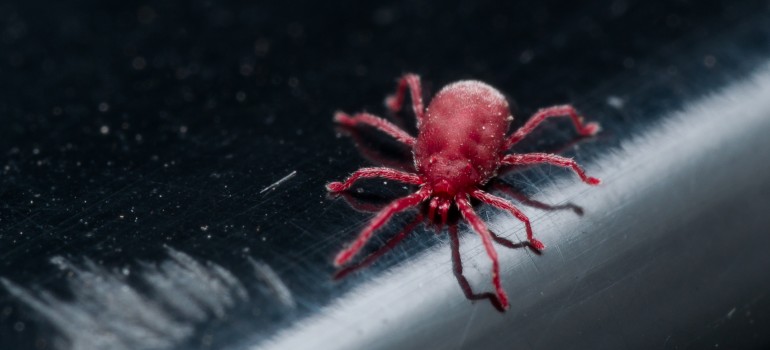
Clover mites are tiny red arachnids, roughly 0.75 to 1 millimetre in size. If you’re spotting moving red specks on your windowsill or wall, you’re likely looking at clover mites. They’re often confused with other small red spider mites or tiny red bugs, but a close look reveals eight legs and a distinctly reddish-brown colour in adults, while immature mites and eggs are bright red.
Clover mites are arachnids belonging to the mite family. Adult mites are reddish-brown, while immature mites and eggs are red. They have eight legs and two antennae, which helps distinguish them from insects.
Clover mites are an outdoor species that generally live on different types of trees and plants. Summer is their breeding season, when the outside population of these tiny red insects increases dramatically.
Cooler weather, on the other hand, often results in a mass migration of clover mites and other pests to buildings and houses for hibernation shelters. Many can enter the home through cracks in window frames or air vents.
Read The Ultimate Pest-Proofing Guide
What are clover mites attracted to?
When clover mites end up in your house, it’s rarely random. Certain environmental conditions and vegetation draw them in from outside. Factors that attract clover mites include:
- Vegetation: As their name implies, clover mites are attracted to clover plants and other vegetation. Grass and herbaceous plants are particularly favourite habitats for them. These plants may attract clover mites and other pests to your garden.
- Moisture: The clover mite prefers humid environments, so places with high moisture levels attract them. Clover mites can thrive in overwatered lawns, damp soil, and moisture-prone surfaces.
- Warmth: These mites are more active during warmer weather, especially in the spring and autumn. Home infestations may occur during hot summers when they breed or cold winters when they seek shelter indoors.
- Shade: A clover mite is photophobic and sensitive to light. Most are found on the shady side of buildings or under plant debris, as they avoid direct sunlight.
- Cracks and crevices: Small openings in walls, doors, windows, and foundations are easy entry points for clover mites.
Are clover mites harmful?
No. Clover mites are not harmful to humans or pets. They do not bite, they do not feed on blood, and they carry no known diseases. The only real damage they cause is to plants and, when crushed, to surfaces in your home.
The tiny arachnids feed on plants with their piercing mouthparts, which can cause patches of discoloured or silvery grass and damage to garden plants if their numbers are high enough outdoors.
Indoors, clover mites become a nuisance when they enter homes in large numbers. When crushed, they leave red stains on surfaces such as walls, carpets, and fabrics. That stain is the mite’s body pigment, not blood. It’s stubborn and worth avoiding, which is why vacuuming rather than squashing is always the better approach.
Although clover mites do not bite, it’s still worth dealing with an infestation promptly to avoid the staining and the sheer volume of them becoming overwhelming. By implementing preventive measures and getting rid of clover mites effectively, you can keep their population in check and reduce their impact on your garden and home.
What are the most effective ways to get rid of clover mites in the house?
In addition to natural remedies for eradicating clover mites, we will also address the extermination of mites indoors and outdoors separately. Learn how to get rid of clover mites in and around your home!
Indoor clover mites removal
- Vacuum: You can remove clover mites from your house by vacuuming them up. If you detect a group of clover mites in your home, use a vacuum cleaner to get rid of them. The next step is to vacuum the surrounding floors, walls, and windowsills to remove all mites and mite eggs (the eggs of clover mites are small, dark red orbs). It is best not to smash the mites as they may leave behind a red stain that is difficult to clean. After using the vacuum bag or canister, dispose of it immediately.
- Use soapy water: Make a solution of water and mild dish soap. Clover mites will be killed on contact with this mixture. Soapy water disrupts their waxy coats and dehydrates them.
- Sprinkle diatomaceous earth: Sprinkle food-grade diatomaceous earth on affected areas indoors. Diatoms in the powder damage mites’ exoskeletons, causing them to dehydrate and die.
- Apply boric acid: You can remove clover mites from your furniture by sprinkling boric acid. A compound in laundry detergents, such as Borax, repels and eradicates clover mites. Sprinkle powdered detergent over your carpets, rugs, and furniture. Pour a small amount of liquid laundry detergent into a spray bottle, dilute it with water, and spray it on clover mites.
- Get insecticides: Spray insecticide on the clover mites to kill them. An insecticide safe for indoor use, such as permethrin, diazinon, bifenthrin, or chlorpyrifos, can kill a group of mites. Ensure the insecticide is applied directly to the mites and repeat the process until the clover mites are gone. Use insecticides as a last resort because they can degrade air quality inside your home.
- Leave it to a professional pest control company: Sometimes clover mites may not be as easy to remove from your house. Their sheer number will be your biggest challenge, and pest professionals may be helpful. If the methods above do not work and the infestation is severe, a pest technician could be contacted to deal with the issue.
Eradicating clover mites outdoors
- Water dry areas: If you have dry spots on your lawn, clover mites may use them to lay their eggs. You can prevent that by watering the dry patches. The eggs of clover mites are often laid in dry areas, such as sun-exposed walls and the bases of evergreen plants. Water can prevent these eggs from hatching.
- Spray liquid insecticide on individual plants: You should use a liquid insecticide or acaricide on any greenery infested with clover mites. Follow the label directions to avoid under-dosing or over-dosing the insecticide, and apply it at the beginning or end of the day so the plants don’t scorch.
- Clean debris: Keep your home’s foundation clean by removing plant debris and fallen leaves that can create hiding spots for clover mites. The first step in controlling outdoor clover mites infestation is to cut back vegetation outside near infested areas or entry points, such as windows and air bricks. Outside air vents, cracks, and crevices can be puffed with powder.
- Remove clover mite attractants: Maintain your lawn and garden by regularly cutting the grass and trimming the vegetation. Keeping your lawn mowed and trimmed will reduce clover and other vegetation that mites consume.
- Remove food sources: Reducing the clover mite population is possible by reducing the food source (clover and other plants). Choosing plants that do not attract clover mites, such as roses, chrysanthemums, junipers, yews, and geraniums, helps keep numbers down around your property.
Keep in mind that clover mites are primarily a nuisance and do not pose a threat to pets or humans. That said, if you’re dealing with a severe infestation or are unsure what steps to take, a pest control professional can offer tailored advice and deal with the problem quickly.
How long do clover mites stay around?
A clover mite’s lifespan can vary depending on the environment and food availability.
Clover mites usually live for about two weeks and lay around 70 eggs. It may take between one and three weeks for an egg to become an adult. Adults and eggs may go dormant in the summer if temperatures soar too high.
In lower temperatures, their development may slow down, but they can live for a few months. Their life cycle continues as they feed on plant sap and lay more eggs.
Read also: What Are the Tiny Black Insects in My House?
How to prevent clover mite infestations
To keep clover mites at bay, follow these tips:
- Seal entry points: Check your walls, windows, doors, and foundations for gaps, cracks, and openings. Keep clover mites out by sealing entry points with caulk or weatherstripping.
- Invest in fine mesh screens: Install fine mesh screens on windows and doors to keep out clover mites while allowing fresh air to circulate.
- Maintain regular cleaning: Clean windowsills, door frames, and other potential entry points where clover mites may gather. If you notice any mites inside your home, vacuum them immediately to prevent them from settling.
- Keep your lawn and garden tidy: Invest time in maintaining your lawn and garden. Keep clover mites away from the yard by mowing regularly, removing weeds, and trimming vegetation.
- Keep vegetation at a distance from the house: Make sure vegetation, such as clover, remains at a distance from the exterior walls of your home. Doing this reduces the possibility of clover mites moving directly from your plants to your house.
- Remove moisture: Reduce moisture in your home, as clover mites are attracted to moist environments. Avoid overwatering near the foundation, fix leaky pipes, and make sure proper drainage is in place.
- Do a routine inspection: Regularly check your home’s exterior for signs of clover mites or other pests. It is easier to control an infestation if it is caught early.
Combining these preventive measures can significantly reduce the chances of clover mites entering your home. Proactive prevention is almost always more effective and far less stressful than dealing with an established infestation.
Why am I finding clover mites in my house?
Clover mites move indoors when outdoor conditions become unfavourable. This usually happens in spring when populations boom, or in autumn when temperatures drop and they seek somewhere warm to shelter. They enter through gaps in window frames, cracks in walls, and air vents. If your garden has dense vegetation, damp soil, or heavy clover growth close to the exterior walls, that increases the risk considerably.
Do clover mites get in your bed?
It’s unlikely but not impossible. Clover mites are attracted to warm surfaces and tend to congregate on window sills, walls, and around entry points rather than bedding. They do not feed on humans and have no reason to seek out your bed. If you’re finding red mites in your bedroom, check the windows and skirting boards first — that’s almost always where they’re coming from.
Takeaways
- Clover mites in the house are most common in spring and autumn, when they migrate indoors for shelter;
- They appear as tiny red or reddish-brown specks, often spotted on window sills, walls, and around entry points;
- Moist lawns, damp soil, and dense vegetation close to the house all increase the risk of an infestation;
- These tiny red mites avoid direct sunlight and are most active on the shaded sides of buildings;
- Clover mites do not bite and pose no danger to humans or pets, but they leave red stains when crushed, so always vacuum rather than squash them;
- Sealing entry points and keeping vegetation away from exterior walls are the most reliable long-term prevention measures.
Image source: Steven Ellingson / Shutterstock.com