


Get the GoFantastic app


Rat Droppings: What They Look Like and What to Do
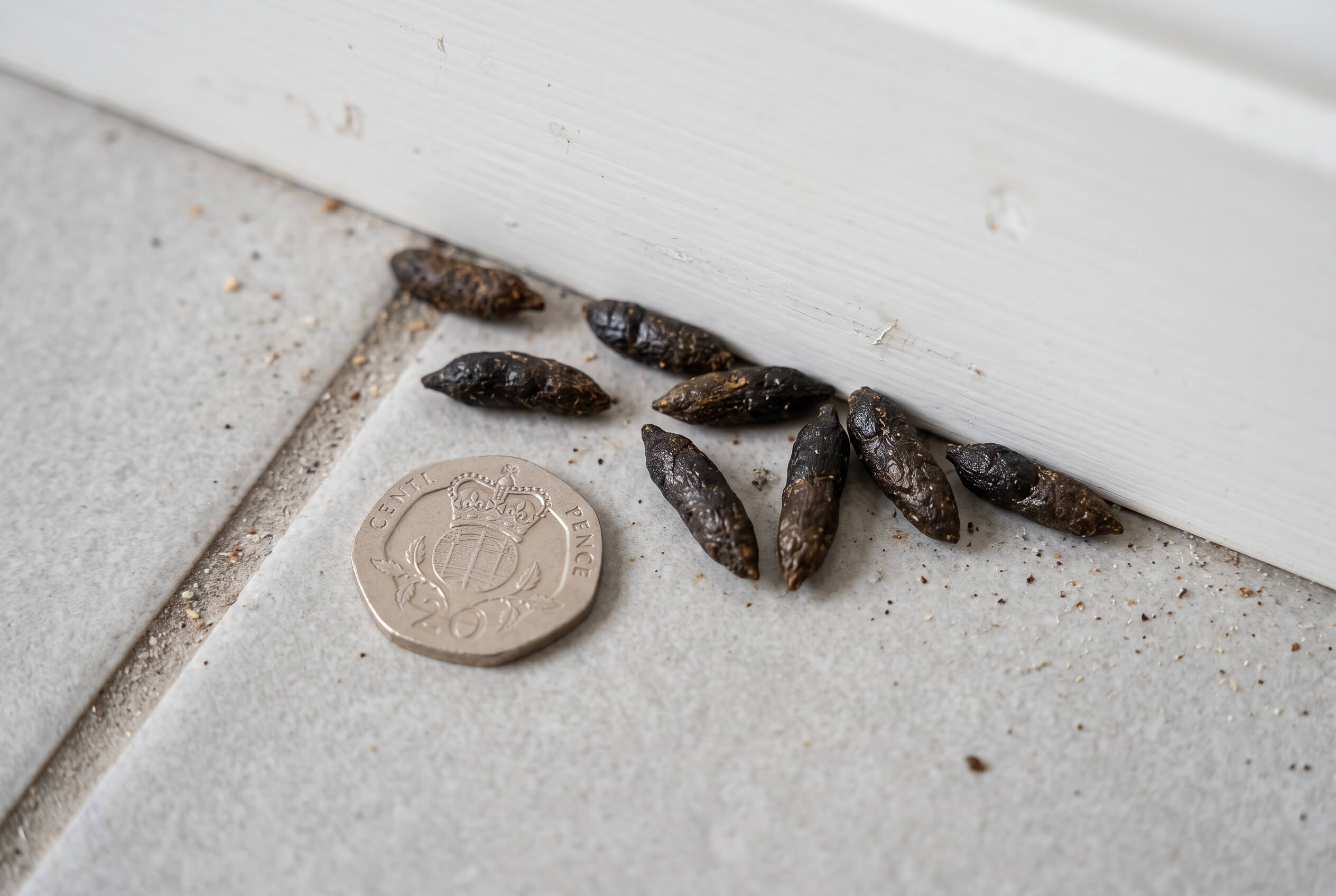
Rat droppings (rat poo) are dark brown to black, spindle-shaped pellets about 1–2 cm long, roughly the size of a baked bean. You’ll usually find them in groups along walls, in lofts or under kitchen units. Fresh droppings are shiny and soft, which means rats are active now. Don’t sweep or vacuum them. Wet them with disinfectant first, then pick them up.
What does rat poop look like?
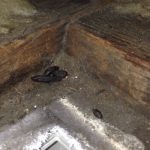
Rat poop is dark brown to black and spindle-shaped, tapered at both ends, and about 1–2 cm long. Most brown rat droppings measure around 12 mm. A single rat can leave 40–50 a day. Rather than being scattered at random, the droppings collect in groups along the routes rats use, near food and close to where they shelter.
| Feature | Rat droppings |
|---|---|
| Size | 1–2 cm, around 12 mm on average (about the size of a baked bean) |
| Shape | Spindle or capsule-shaped, tapered at both ends |
| Colour | Dark brown to black |
| Pattern | Grouped along runs, near food and shelter |
| Number | 40–50 a day from one rat |
Not sure what you’ve found?
Every rat control visit starts with a survey, so the technician can confirm it’s rats and how far the problem has spread.
Prefer to book online? See our rat control service and prices.
Rat droppings vs mouse droppings and squirrel poop: how to tell the difference
The quickest way to tell rat droppings from mouse droppings is size. Rat droppings are 1–2 cm long and turn up in groups. Mouse droppings are only 3–6 mm, like a grain of rice, and are scattered more widely. Squirrel droppings are about the same length as rat droppings but thicker, with rounded ends, and they turn up mostly in lofts.
| Rat | Mouse | Grey squirrel | |
|---|---|---|---|
| Length | 1–2 cm (around 12 mm) | 3–6 mm | About 1 cm, but thicker than a rat’s |
| Shape | Spindle, tapered at both ends | Small rods with pointed ends | Barrel-shaped with rounded ends |
| Colour | Dark brown to black | Dark brown to black | Brown, sometimes reddish |
| Pattern and where | Grouped along runs: kitchens, under floors, lofts, sheds | Scattered: cupboards, near food, behind appliances | Mostly in lofts and eaves |
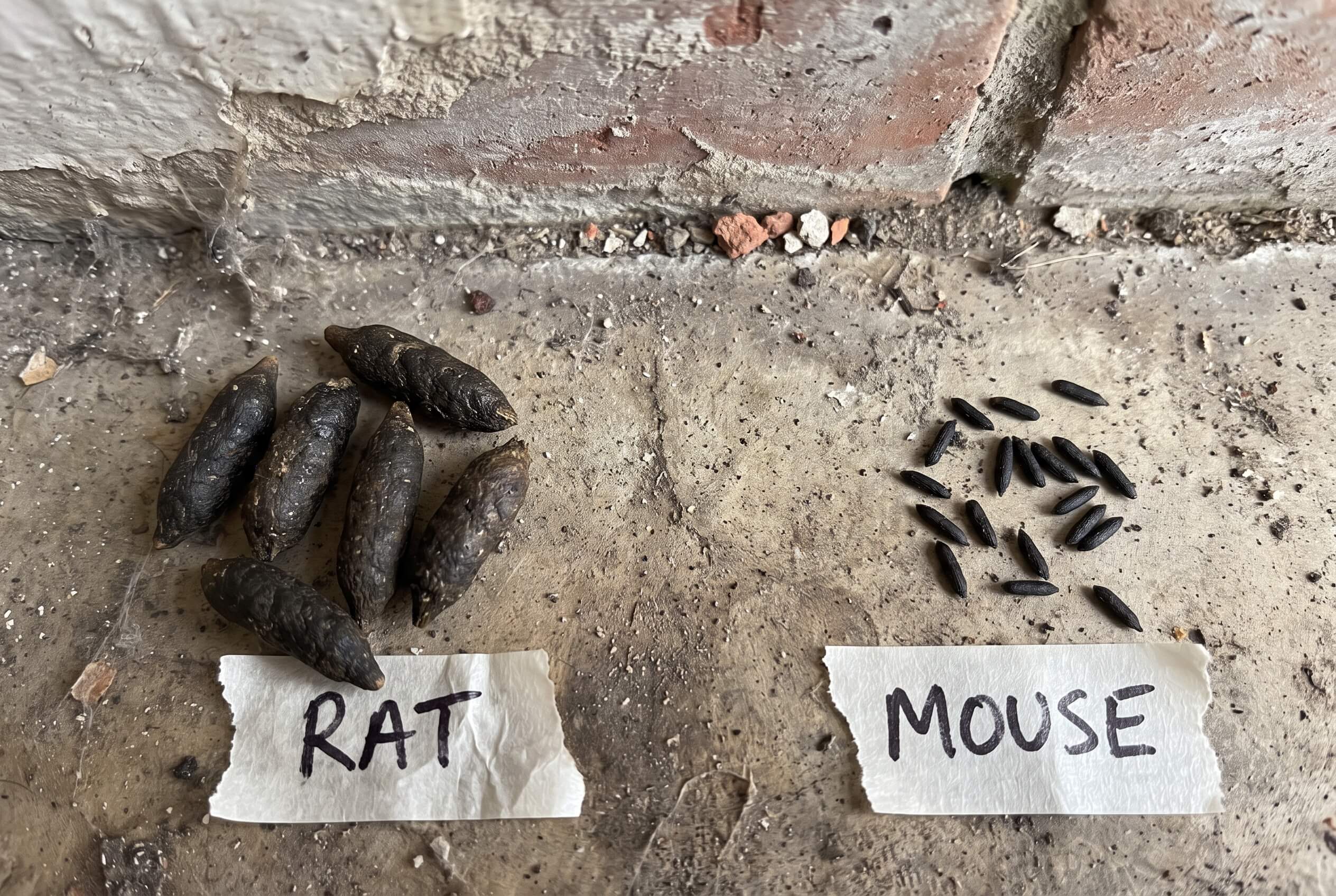
If yours are rice-sized, read our guide to mouse droppings. To compare the animals themselves (body size, tails and ears), see the difference between mice and rats.
How to identify if rat droppings are fresh or old
Fresh rat droppings are dark, shiny and moist. Older droppings dry out, turn dull and crumble when pressed. Fresh droppings mean rats are active right now. If you only find old, crumbly ones, they may be left over from a past problem. Clear them up safely and check the same spot again over the next few days.
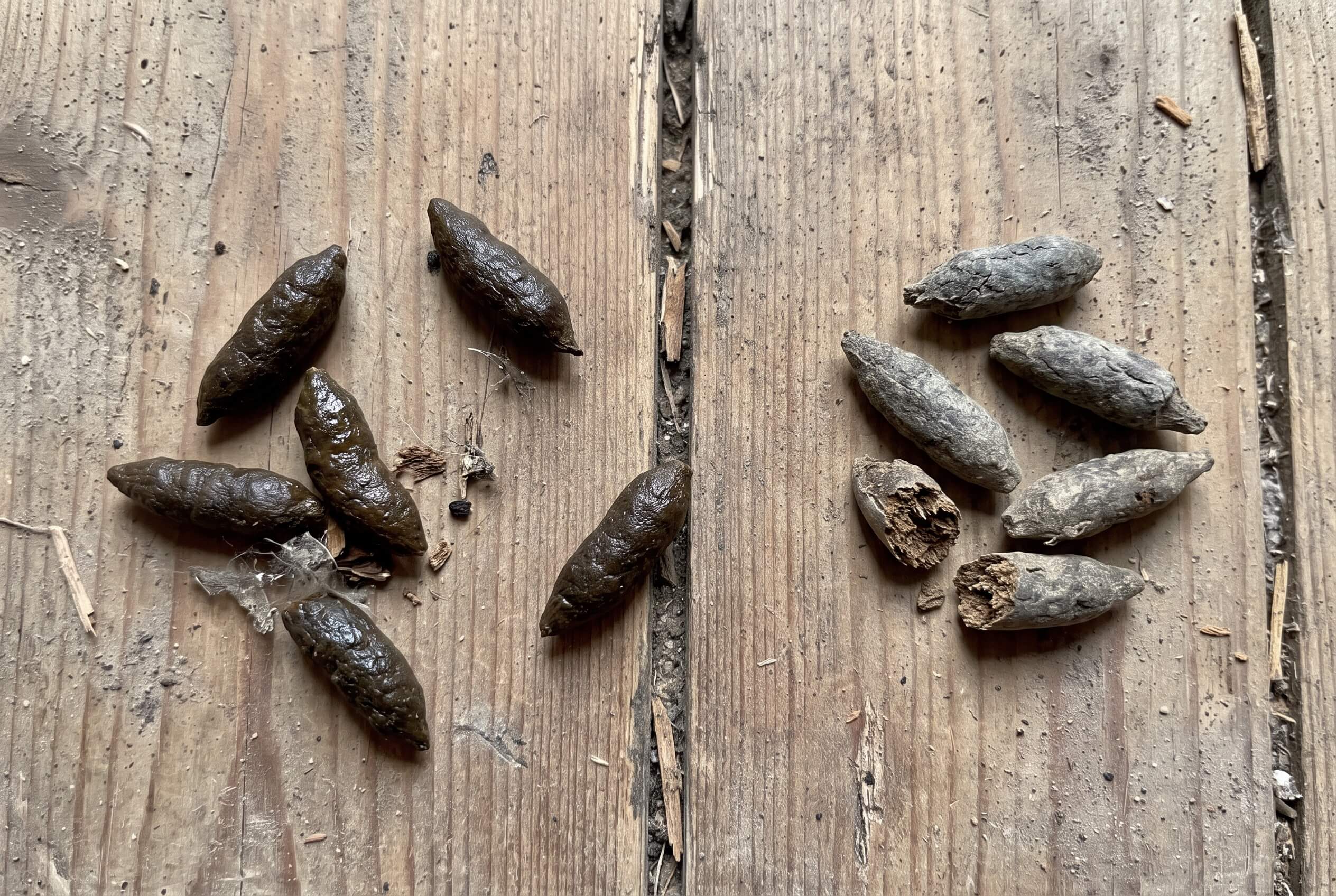
New droppings appearing after a clean-up are the clearest sign the rats are still there.
Where rats leave droppings
Rats leave their poo along the routes they travel every night. Indoors, check beside walls and skirting boards, under kitchen units, behind appliances, in lofts and around pipework under floorboards. Outside, look around sheds, compost heaps, bins and decking, where rats burrow and feed.
Droppings mixed with shredded paper, fabric or insulation can point to a nest close by, so check where rats nest next. Droppings are one of several signs of rats, alongside gnaw marks, greasy smear marks and scratching at night.
Do rat droppings smell?
Yes. Rat droppings smell unpleasant, but the strong, ammonia-like smell most people notice comes mainly from rat urine. It’s usually strongest in enclosed spots such as under kitchen cupboards, and it’s often mistaken for a drain smell. If you have rat poo in your home, you’ll almost always have urine too, so a smell like this is worth checking even before you see droppings.
Are rat droppings dangerous? Diseases to know about
Yes. The main diseases from rat droppings and urine in the UK are leptospirosis, salmonella and, rarely, hantavirus. Infection happens mainly when they contaminate food and surfaces, or when dry droppings are disturbed and the dust is breathed in. Serious infections are rare in the UK, but it’s worth cleaning up carefully and dealing with the rats themselves.
- Leptospirosis (Weil’s disease) is spread in the urine of infected animals, most commonly rats. The NHS says it’s rare in the UK. See a GP if you get flu-like symptoms after contact with rat urine.
- Salmonella can reach people when droppings contaminate food or kitchen surfaces.
- Hantavirus can be passed on through rodent droppings, urine and contaminated dust. It’s rare in the UK.
Are rat droppings dangerous to dogs?
They can be. Dogs can catch leptospirosis from rat urine, which is often found in the same places as droppings. The NHS advises checking your dog is vaccinated against leptospirosis. Keep pets away from droppings until the area has been cleaned, and speak to your vet if your dog seems unwell.
Is it safe to clean rat droppings if you’re pregnant?
No, it’s best not to. Health guidance advises pregnant women to avoid contact with rodents and their droppings, because a virus some rodents carry, lymphocytic choriomeningitis virus (LCMV), can harm an unborn baby. Ask someone else to clean up, or leave it to a professional, and don’t sweep or vacuum. If you’ve already handled droppings and feel unwell, speak to your GP or midwife.
How to safely clean rat droppings
Never sweep or vacuum dry rat poop, because it lifts contaminated dust into the air. Instead, air the room, put on gloves, soak the droppings in disinfectant, give it time to work, then lift them with paper towels and double-bag them. Cleaning removes the mess, not the rats, so deal with the cause too.
- Air the room. Open windows and doors for about 30 minutes before you start.
- Protect yourself. Wear rubber or disposable gloves. In dusty spaces such as lofts, wear a face mask too.
- Don’t sweep or vacuum. Both spread dust from dried droppings and urine.
- Soak the droppings. Spray them and the surrounding area with household disinfectant and leave it for the contact time on the label. Alternatively, use 1 part bleach to 9 parts water. Never mix bleach with other cleaning products.
- Pick them up. Use paper towels, seal everything in a plastic bag, put that inside a second bag and put it in your outside bin.
- Disinfect the area. Wipe surfaces and mop hard floors with disinfectant. Heavily soiled loft insulation may need removing rather than cleaning.
- Wash your hands. Use soap and warm water after you take your gloves off.
Found rat droppings? What to do next
Droppings mean rats are in your home now, or were recently. Clean them up safely, move food into sealed containers and check for other signs, such as gnaw marks, smear marks and scratching in walls or ceilings at night. If fresh droppings keep coming back, the rats are still active and it’s time to call a professional.
Call a professional if:
- fresh droppings reappear after you’ve cleaned
- you find droppings in more than one room, or in both the loft and the kitchen
- you see gnawed food packaging, wood or cables
- you hear scratching in walls, ceilings or under floors
- droppings turn up in a business kitchen or food storage area
Not sure which rat you’re dealing with? See the types of rats in the UK.
Fresh rat droppings in your home?
Our London technicians survey your property, set baited traps out of reach of children and pets, and seal the gaps rats use to get in. The 3-month guaranteed treatment includes two follow-up inspections.
You can also book rat control in London online.
Rat droppings: frequently asked questions
Are rat droppings dangerous to breathe in?
Dry droppings can break into dust that carries bacteria and viruses, and breathing it in is one way infections spread. That’s why UK health guidance says not to sweep or vacuum rodent droppings. Soak them with disinfectant first so they stay damp while you pick them up.
What else looks like rat droppings?
Seed husks, coffee grounds and crumbled soil can look like rat droppings at a glance. The giveaway is consistency: rat droppings are similar in size and shape, while debris isn’t. Squirrel and mouse droppings are the other common mix-ups, so check the size table above.
How many droppings does a rat leave a day?
A single brown rat can leave around 40–50 droppings a day. That’s why droppings build up quickly along the routes rats use. A handful of droppings doesn’t tell you how many rats you have, but fresh droppings in several places suggest steady activity.
What should I do if I find rat droppings in the loft?
Don’t disturb dry insulation or sweep the boards. Wear gloves and a mask, soak the droppings with disinfectant and lift them with paper towels. Heavily soiled insulation may need removing. Rats in lofts usually come in through gaps at roof level or up through wall cavities, so call a professional if fresh droppings come back.
Are old, dry rat droppings still dangerous?
Treat old droppings with the same care as fresh ones. Dry droppings crumble easily, so they’re more likely to turn into dust when disturbed. Use the same wet-cleaning method: gloves, disinfectant, paper towels and a sealed double bag.
Do rat droppings mean I have an infestation?
Fresh droppings mean rats are active in or around your home now. A few old, crumbly droppings may be left from a past problem. Clean up, then check again over the next few days. If new droppings appear, the rats are still there and need treating.
Not sure if you have rats?
Scratching noises, fresh droppings or gnaw marks could point to a rat problem. A professional inspection can help confirm whether rats are active and identify where they’re getting in.
We share useful information according to the experience and know-how of the pest technicians. However, we don’t provide any medical advice.