


Get the GoFantastic app


Rats Nest: What It Looks Like and Where Rats Hide
A rats nest is a loose, untidy heap of shredded material such as loft insulation, cardboard, paper and fabric, usually hidden in a loft, wall cavity, under floorboards or behind kitchen units. Outside, brown rats nest in burrows next to sheds, decking, walls and compost heaps, with entrance holes about 7 to 12 cm across.
Not sure which rat you’re dealing with? See the types of rats in the UK.
What Does a Rat’s Nest Look Like?
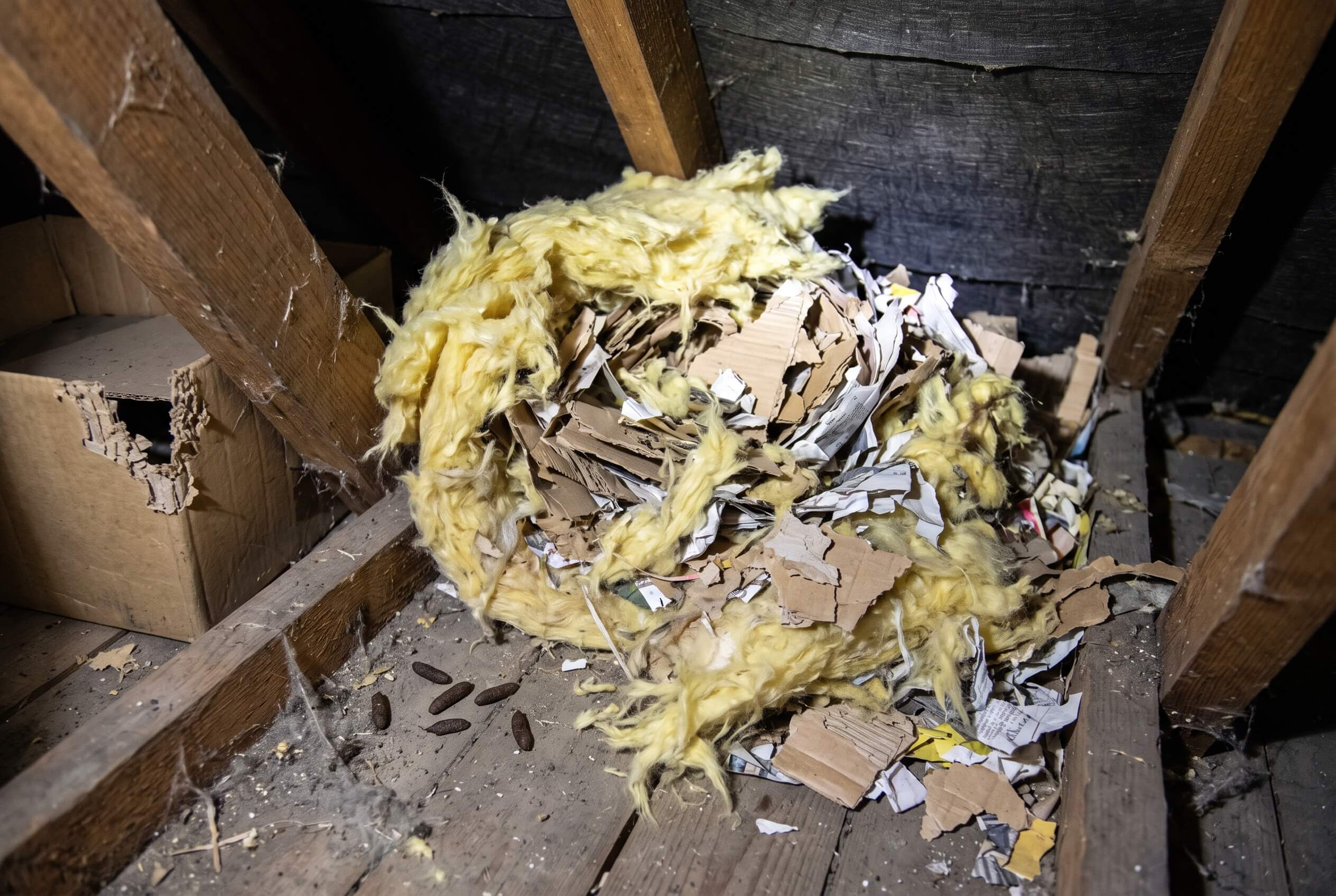
What a rat’s nest looks like inside the house
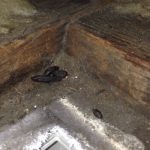
A rat’s nest inside the house looks like a messy pile of shredded material, most often loft insulation, cardboard, paper or fabric, pulled into a dark, hidden corner. You’ll usually find droppings and a strong ammonia-like smell nearby, and you may see gnawed boxes or cables around it.
What a rat’s nest looks like in the garden and in the ground
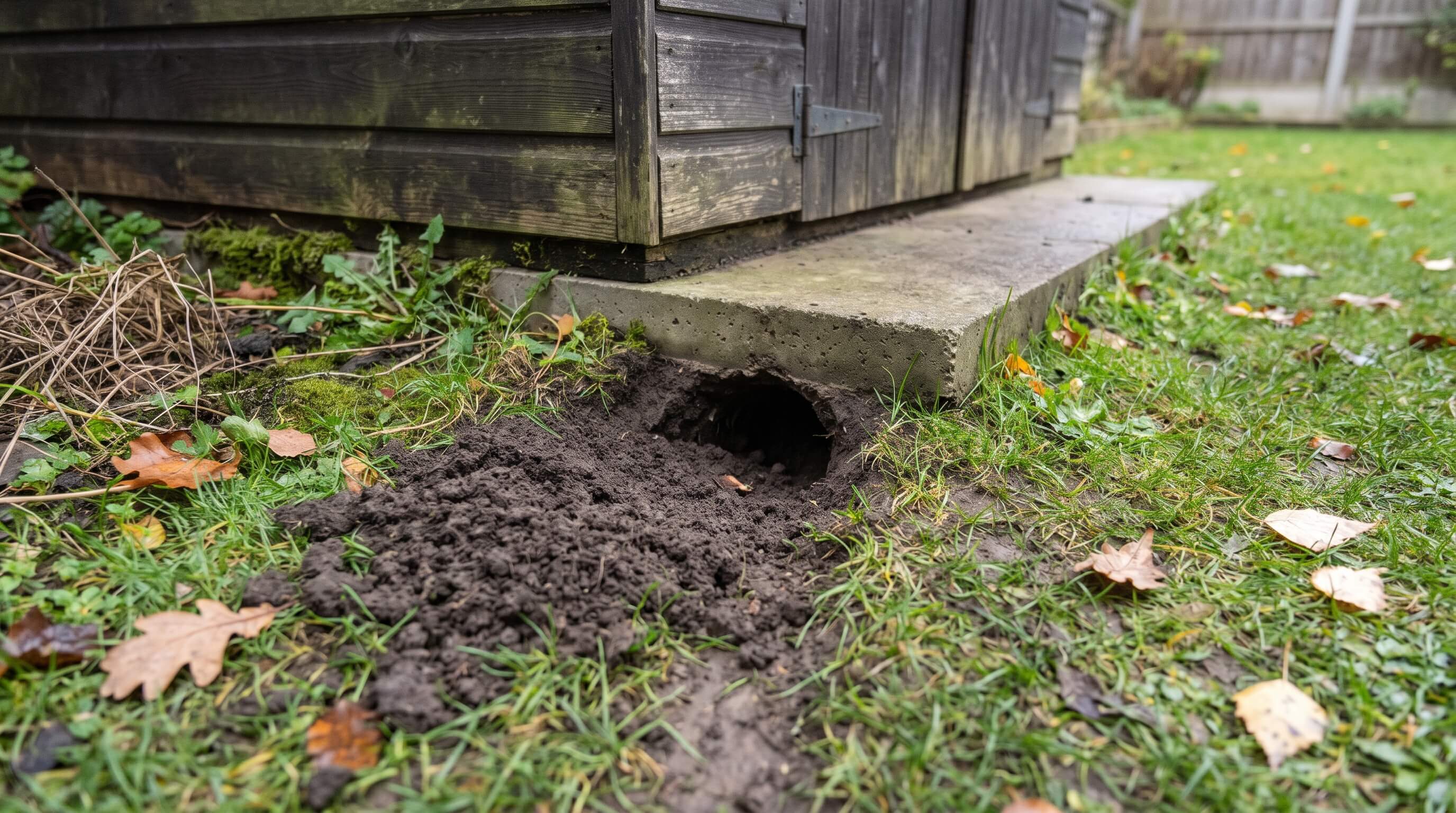
In the garden, brown rats mostly nest in burrows. Look for round holes about 7 to 12 cm across next to something solid, such as a shed base, decking, a wall or a compost heap, often with loose soil around the entrance and a worn run leading to it.
Rats only leave the nest to feed, mostly at night, so you’re more likely to find the nest than to see the rats. If you’ve found one, check the other signs of rats in your house.
The Attic
An attic is a perfect place for a rat’s nest. Since people pay special attention to the structure of their roof, the attic is dry and relatively warm compared to the outside. Attics are full of junk, which serve as good hiding places.
And not only that, but it’s also generally undisturbed by human presence. The perfect place where a rat’s litter would be safe. Also, food and water are nearby once they squeeze through holes in the walls and enter the kitchen.
Read more: What Happens if You Disturb a Rats Nest?
Read more: How to keep rats out of the attic for good.
In the Walls
Depending on the type of your building, there might be gaps between the walls that are not only perfect for rat passages, but also a haven for their young. And, yes rats can chew through concrete. The walls are also generally warmer than the attic. And, if you happen to have a pipe leak within the wall, they also would have a close source of water.
Do you think there are rats in your property?
Take measures and contact a trustworthy rat removal service!
The Garden
The garden is the ultimate food source for any rodent. Rats are omnivores, so they would eat anything, no matter what it is. At the dawn of human civilization, this is where rats first started infesting – the gardens and the storage barns.
Garden sheds
If not maintained properly, sheds will draw the attention of rats. Same as with the attic, if you have lots of clutter, they will find where to hide and it will keep them snuggly and warm. Not to mention, the food from the garden is just outside.
Read more: How to get rid of rats in the garden.
Under Floors and in Cellars
Rats often nest in the space under floorboards and in cellars, where it’s dark, dry and rarely disturbed. They usually get in through damaged air bricks, gaps around pipes or broken drains below the house, and you’re most likely to notice them as scratching or scurrying under the floor at night. Cellars used for storage are especially attractive, because boxes give rats shelter and stored food gives them something to eat. Keep food in sealed glass, metal or hard plastic containers, clear clutter off the floor and check air bricks and pipe gaps for damage.
Drains and Sewers
Rats can squeeze through an opening with a diameter of 4cm, so it’s extremely easy for them to infest drains and sewers for a very long time. They can cause serious structural damage to your piping system. In addition to this, rats are excellent swimmers and can get out through the toilet. Yes, this happens.
The Garage
The garage usually contains rubber, wires, car tires and such are the usual victims of a rat infestation. There’s also enough clutter for them to hide in. Not to mention they might infest the car’s engine compartment.
Read more: How to get rid of rats out of the garage.
Around the Kitchen
Rats can become very brave if they’re hungry and won’t be too shy to directly invade your kitchen. They would climb on your cupboards, hide under the sink (especially if there’s a leak) and get in your garbage can. There’s no way to avoid it – if there’s the food they will know.
For a full checklist on sealing gaps and keeping rats out, see how to keep rats away.
Found a nest? Our technicians can treat the rats and seal the gaps they use to get in. Book rat control.
Check also: What are the most common pests in restaurant kitchens?
As a commercial service provider we only aim to inform you about rats nests according to the professional experience of the pest technicians. However, we cannot guarantee that there are no other hiding places.