


Get the GoFantastic app


Cockroach Eggs: What They Look Like, Where They Hide and How to Kill Them

Cockroaches don’t lay single eggs. They lay them in a hard, brown, bean-shaped case called an ootheca, 5–10 mm long, with up to 40 eggs inside. Finding one usually means cockroaches are breeding nearby, so destroy the case and treat the hiding places before the eggs hatch.
This guide, part of our cockroach guide, shows what cockroach eggs look like, how to tell them from droppings, where cockroaches hide them in UK homes, how long they take to hatch and what actually kills them.
What Do Cockroach Eggs Look Like?
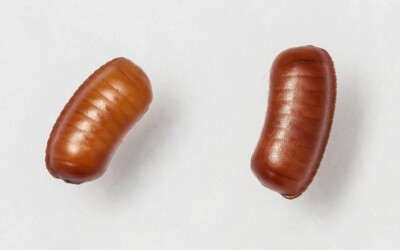
You’ll almost never see a single cockroach egg. The eggs sit in rows inside an egg case (ootheca, plural oothecae), which protects them from drying out and from most sprays. An egg case is:
- Colour: light brown when new, darkening to reddish-brown or almost black depending on the species.
- Size: about 5–10 mm, roughly the size of a grain of rice to a small kidney bean.
- Shape: like a tiny purse or bean, with a ridged seam along one side where the nymphs break out.
- Feel: hard and shiny, not soft or crumbly.
What is an ootheca and how many eggs does one have?
An ootheca is the protective case a female cockroach makes around her eggs. How many eggs it holds depends on the species. In UK homes you’ll almost always find one of two:
| German cockroach | Oriental cockroach | |
|---|---|---|
| Egg case colour | Light brown | Reddish-brown to almost black |
| Length | About 7–9 mm | About 10 mm |
| Eggs inside | About 30–40 | About 16–18 |
| Where it ends up | Carried by the female until just before hatching | Dropped or stuck in a dark, sheltered gap |
| Hatches in | About 4 weeks | About 2 months |
| Nymph to adult | 6–12 weeks | 6–12 months |
Two other species lay egg cases too, but they’re rare in UK homes: the American cockroach (dark brown case, about 8 mm, around 15 eggs) and the brown-banded cockroach (reddish-brown case, about 5 mm, up to 18 eggs). To work out which one you have from the adults, see types of cockroaches in the UK.
Can you see cockroach eggs?
Yes. Egg cases are big enough to see without a magnifying glass, but they’re hard to find because cockroaches leave them in narrow, dark gaps. German cockroach cases are mostly seen sticking out of the back of a female, because she carries hers until the eggs are almost ready to hatch.
Is it a cockroach egg or droppings?
Egg cases are often mistaken for mouse or rat droppings, because they’re a similar size and colour. Look for the ridge along one side and the hard, shiny shell:
| What you found | What it looks like | What it means |
|---|---|---|
| Cockroach egg case | Hard, shiny, bean or purse shape with a ridge along one side | Eggs about to hatch nearby |
| Empty egg case | Split open along the ridge, paler and hollow | Nymphs have already hatched |
| Cockroach droppings | Specks like ground black pepper, or dark smears | Cockroaches are feeding here |
| Mouse droppings | Soft pellets, 3‑6 mm, pointed ends | Mice, not cockroaches |
| Rat droppings | Pellets about 1‑1.5 cm, blunt ends | Rats, not cockroaches |
Whatever you’ve found, wear disposable gloves to pick it up and wash your hands afterwards.
Where do cockroaches lay their eggs?
Cockroaches leave their egg cases close to food, water and warmth, in gaps too narrow for you to see into. The spot depends on the species:
- German cockroaches (warm, kitchens): behind and under fridges, ovens and dishwashers, inside appliance motor housings, in cupboard hinges and along the back of kitchen units.
- Oriental cockroaches (cool, damp): under the bath panel, behind kitchen kickboards, in cellars, floor voids and around pipes and drains. If you’re also seeing them in the sink, read why cockroaches come up through sinks and drains.
- Anywhere they hide: cracks along skirting boards, behind loose tiles, in electrical boxes and inside stacks of cardboard and paper.
Cockroach eggs on walls and furniture
Some females stick their egg cases to surfaces instead of dropping them. Cases glued under shelves, inside drawers, behind pictures or on the back of furniture are a typical sign of brown-banded cockroaches, which spread through a whole home rather than staying in the kitchen.
How do cockroach eggs get into a home?
Egg cases travel well. They come in hidden in cardboard boxes, food and laundry deliveries, second-hand appliances and furniture, and luggage. Unpack deliveries outside the kitchen, flatten and recycle boxes straight away, and check second-hand fridges, cookers and microwaves before you bring them in. Moving house? Read how to avoid taking cockroaches with you.
Facts about cockroach eggs
How many eggs do cockroaches lay?
A German cockroach produces several egg cases in her life, each with about 30–40 eggs, so one female can lead to a few hundred cockroaches. An oriental cockroach lays fewer, up to about 5 cases of 16–18 eggs.
How long do cockroach eggs take to hatch?
German cockroach eggs hatch in about 4 weeks and the nymphs are breeding adults within 6–12 weeks. Oriental cockroach eggs take about 2 months, and the nymphs take 6–12 months to grow up. This is why one treatment is rarely enough: eggs that were safe inside their cases hatch weeks later.
Do cockroaches lay eggs when they’re killed?
No, killing a cockroach doesn’t make it lay eggs. But a female German cockroach killed while carrying her egg case can still leave a case that hatches, because the case protects the eggs. If you squash one, pick up the body and the case and bin them sealed in a bag.
Do cockroaches die after laying eggs?
No. Females keep producing egg cases for months. Adult German cockroaches live around 100–200 days, producing a new egg case about once a month.
Are cockroach eggs dangerous?
The egg cases themselves aren’t poisonous and can’t hurt you. The risk comes from what hatches: cockroaches carry germs onto food and worktops, and their droppings and shed skins can trigger allergies and asthma. Read more about whether cockroaches are dangerous.
Does one cockroach egg case mean an infestation?
Usually, yes. A female only leaves an egg case where she’s living, and she rarely lives alone. Look for droppings, shed skins and live cockroaches at night with a torch. Our guide to the signs of a cockroach infestation shows what else to check.
Found cockroach eggs?
Our technicians find where cockroaches are breeding and treat the eggs, nymphs and adults, with a follow-up visit after the eggs hatch. Cockroach treatment from £184
How to get rid of cockroach eggs
Should you destroy cockroach eggs? Yes, every case you find, but don’t stop there, because for every case you see there are others you can’t reach.
- Find them. Check the places above with a torch at night, when cockroaches are active and easier to trace back to their hiding spots.
- Destroy each case. Wearing gloves, crush it in tissue or seal it in a bag, then put it in your outside bin. Don’t just throw it out whole; it can still hatch.
- Vacuum the gaps. Use the crevice tool along skirting boards, behind appliances and inside cupboards. Empty the vacuum straight away into a sealed bag.
- Clean and seal. Wipe away grease and food residue, then fill cracks and gaps with filler or silicone so new cases have fewer places to go.
- Treat the cockroaches. Eggs keep coming while the adults are alive. See how to get rid of cockroaches for baits and traps.
What kills cockroach eggs?
The egg case is built to protect the eggs, so most things that kill cockroaches don’t kill their eggs.
- Crushing: kills every egg in the case. The most reliable thing you can do yourself.
- Heat: eggs die at sustained high temperatures, which is how professional heat and steam treatments work. Boiling water poured straight onto a case kills it; hot tap water isn’t hot enough.
- Insect growth regulators (IGR): used by professionals. They don’t kill the eggs, but they stop the nymphs that hatch from becoming breeding adults.
- Shop sprays: kill cockroaches they hit, but rarely get through the egg case.
- Vinegar, bicarbonate of soda and sugar, essential oils: don’t kill cockroach eggs.
How to stop cockroaches laying eggs
Cockroaches breed where they have food, water and shelter. Take those away and you slow them down:
- Wipe worktops and hobs, sweep up crumbs and don’t leave dishes or pet food out overnight.
- Store food in sealed containers and keep bins lidded and emptied.
- Fix dripping taps and leaks, and dry out damp cupboards.
- Clear clutter, especially stacks of cardboard, newspapers and paper bags.
- Fill gaps around pipes, skirting boards and kitchen units.
Professional cockroach egg removal
A technician surveys your home to find where the cockroaches are breeding, then applies gel bait and residual treatment into the cracks where egg cases and nymphs hide, often with an insect growth regulator. A follow-up visit is booked for after the eggs hatch, so the new nymphs are killed before they can breed. Book our cockroach control service from £184 or call 020 3746 2723.
FAQ
Can cockroach eggs get into food?
Do baby cockroaches mean there are eggs nearby?
How long can a cockroach egg case last before it hatches?
Can cockroach eggs survive the washing machine?
Can you find cockroach eggs in a car?
Cockroach Pest Control London
- Are Cockroaches Dangerous? Cockroach Bites and Health Risks
- Cockroach Eggs
- Cockroach Infestation: Signs, Causes and Why They Suddenly Appear
- How to Get Rid of Cockroaches in Your House: A Step-by-Step

- Where Do Cockroaches Live
- Types of Cockroaches in the UK: How to Identify Them
- Bugs That Look Like Cockroaches but Aren’t: UK Guide
- Cockroaches in Drains and Sinks: Why They Come Up and How to Stop Them