



That scratching sound from under your feet late at night is hard to ignore. Not behind the wall, not in the attic — right there, beneath the floorboards where you walk every day. If you suspect mice under floorboards, this guide will help you work out what’s going on and what to do about it.
TL;DR
- Mice under floorboards is a common problem in UK homes, especially in older properties with suspended timber floors.
- Scratching sounds at night, droppings near skirting boards, gnaw marks, and a musky smell are the key signs.
- Sealing every entry point is the single most important step — miss one gap and mice will keep using it.
- Snap traps placed along skirting boards with peanut butter as bait outperform most other DIY methods.
- Common mistakes include using poor bait, ignoring food sources, and trusting sonic deterrents that don’t work.
- Professional pest control is the right call when the infestation is established or keeps coming back.
Table of Contents
What Are the Signs of Mice Under Floorboards?
Mice are small and mostly nocturnal, but they leave plenty of evidence behind. Catching the signs early means dealing with a handful of mice rather than a much bigger problem a few months down the line.
Here’s what to look for:
- Scratching or scurrying sounds under the floor. This is usually the first thing people notice. It happens after dark when the house quietens down. Light scratching, the occasional shuffle, sometimes a faint squeak. If it’s coming from below the boards rather than outside, mice are the most likely cause.
- Droppings near skirting boards. Mouse droppings are small, dark, and shaped roughly like a grain of rice. Finding them along the base of walls, especially near gaps or corners, is a strong sign that mice are active nearby. Fresh droppings are dark and slightly soft. Older ones go grey and crumble.
- Gnaw marks on floorboards or nearby woodwork. Mice gnaw constantly to keep their teeth worn down. Look for rough, jagged marks on timber rather than smooth edges. Skirting boards, floorboard edges, and cable sheathing are common targets.
- A musky, ammonia-like smell. Mouse urine has a distinct, sharp smell that builds up over time. If you’re catching a persistent musty odour in a particular area of a room and can’t trace it to anything else, take it seriously.
- Pets acting strangely around certain spots. Dogs and cats pick up on mice long before we do. If your pet is fixated on a patch of floor, sniffing repeatedly or pawing at the skirting board, pay attention. Their nose is giving you useful information.
Spot the signs early and you’re in a manageable position. Leave it a few months and you could be looking at dozens of mice, an established nest, and a far harder job ahead.
Check also:
Does Bleach Really Deter Rats? Uncovering the Truth Behind This Common Belief
How Do You Get Rid of Mice Under Floorboards?
Getting rid of mice under floorboards means cutting off their access, removing what keeps them there, and catching the ones already inside. No single fix does the whole job. It’s a combination of steps, and you need to do all of them.
1. Seal Every Entry Point
This is the most important step, full stop. Block the way in and you stop reinforcements arriving. Mice can squeeze through a gap the size of a pencil, so inspect carefully around pipe entry points, gaps in the foundations, holes in external walls, and spaces behind kitchen units. Don’t assume anything is too small to matter.
Pack wire wool tightly into any gap you find, then apply a firm sealant over the top. Wire wool on its own can be tugged out. Sealant alone can be chewed through. Together, they hold properly.
2. Place Traps Correctly
Snap traps are still the most effective option for most people. They’re cheap, quick, and work well when placed right. Position them along skirting boards with the trigger end facing the wall, because that’s the route mice naturally travel close to. Use peanut butter or chocolate spread as bait. These work far better than cheese, regardless of what every cartoon ever made would have you believe.
Humane traps are an option if you’d rather not kill them. The problem is you need to release any mice well away from your property, check the trap regularly so they don’t suffer, and actually commit to the release distance. Aim for at least a couple of miles. Release them too close and they’ll find their way back.
Placement matters more than quantity. A few traps in the right spots beat a dozen badly positioned ones every time.
3. Use Natural Deterrents as a Supplement
Peppermint oil is the most commonly suggested natural deterrent. Mice genuinely dislike the smell, and placing peppermint oil-soaked cotton wool near entry points or along suspected routes can discourage them from using those areas. It won’t clear an infestation on its own. Don’t rely on it as your main plan.
Think of it as a supporting measure alongside the steps that actually do the heavy lifting.
4. Remove Food Sources
Mice don’t stay where there’s nothing to eat. Keep all food in sealed containers. Clean up crumbs as soon as they happen. Don’t leave pet food out overnight. Check behind appliances and under furniture for forgotten scraps — it takes a surprisingly small amount of food to keep mice interested. Remove the incentive and your home becomes a lot less appealing to them.
Mice under your floors and DIY isn't cutting it?
Our pest control specialists will locate the source, treat the infestation, and stop it coming back.
Contact usCan Mice Actually Live Under Floorboards?
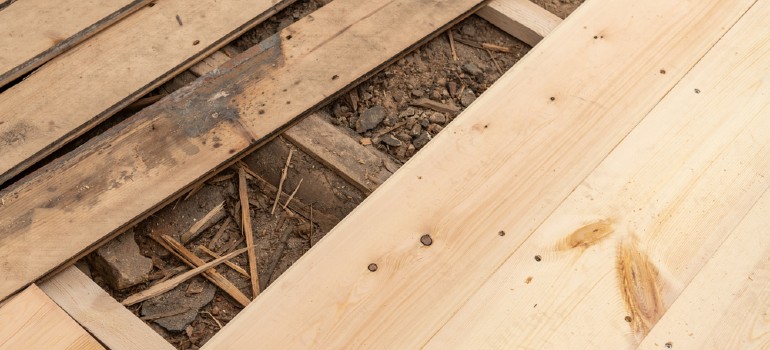
Yes, and it happens more often than most people realise. Suspended timber floors, which are common in older UK properties, create a void beneath the boards that offers exactly what mice need: darkness, warmth, shelter, and easy access to the rest of the house through gaps around pipes and joists.
Mice don’t need much space to get comfortable. A gap the size of a pencil is wide enough for them to squeeze through. Once they’re in the void beneath your floor, they can nest, breed, and move around without you seeing them at all. You’ll hear them before you see any other evidence. That faint scratching or scurrying after dark isn’t random — it’s a mouse running a route it’s already learned.
The void under a suspended floor is particularly attractive because it’s rarely disturbed. There’s no foot traffic, no light, and often insulation material they can pull apart for nesting. From there, they’ll look for ways into your kitchen, walls, and cupboards. The floor void is their base of operations, not their final destination.
Check also:
What Looks Like Mouse Poop but Isn’t: Identifying Pest Droppings
What Mistakes Do People Make When Dealing With Mice Under Floorboards?
The same errors come up again and again. Most come down to using the wrong tools, or not being thorough enough with the right ones.
- Using poor bait. Plain bread or random kitchen scraps won’t get you far. Mice go for high-fat, high-calorie food. Peanut butter works well. Use a small amount so it sticks to the trap and mice can’t grab it and bolt.
- Blocking one gap and calling it done. People find an obvious entry point, fill it, and assume that’s the job. Mice rarely use a single entrance. Inspect the full ground floor perimeter, including awkward spots behind units and under stairs. One missed gap and they’ll keep using it.
- Trusting sonic deterrents. Plug-in ultrasonic devices are marketed as a simple solution. The evidence for them working is very thin. Mice adapt to background noise quickly. Don’t spend money on a gadget and assume it’s handling things.
- Leaving food accessible. You can set every trap you own, but if there’s a reliable food source nearby, mice have every reason to stay. Removing food access isn’t optional. It changes the whole situation.
- Not checking traps regularly. A sprung trap with stale bait catches nothing. Check traps at least once a day, reset them promptly, and dispose of any caught mice hygienically using gloves and a sealed bag.
Check also:
When Should You Call a Professional?
If you’ve sealed the gaps, set the traps, removed food sources, and mice are still active after a couple of weeks, or if the infestation was already well established before you started, it’s time to get professional help. A professional mice control service will locate all active nesting sites, apply treatments that aren’t available to the public, and advise on long-term prevention. It’s not admitting defeat. It’s being practical about a problem that needs more than DIY.
The same goes if you keep having mice come back season after season. That pattern suggests a structural access issue that needs a trained eye to find and fix properly. No amount of peanut butter and snap traps will solve a persistent entry problem you haven’t located yet.
Ready to get your home back?
Don't let the problem grow. Get expert help today and deal with it properly.
Contact usConclusion
Mice under floorboards won’t sort themselves out. They breed fast, cause real structural damage, and get harder to deal with the longer they’re left. But with the right approach, sealing entry points thoroughly, setting traps correctly, and cutting off food sources, most infestations can be brought under control.
Stay consistent and be thorough. If the problem keeps coming back, bring in a professional rather than repeating the same steps and hoping for a different result.