



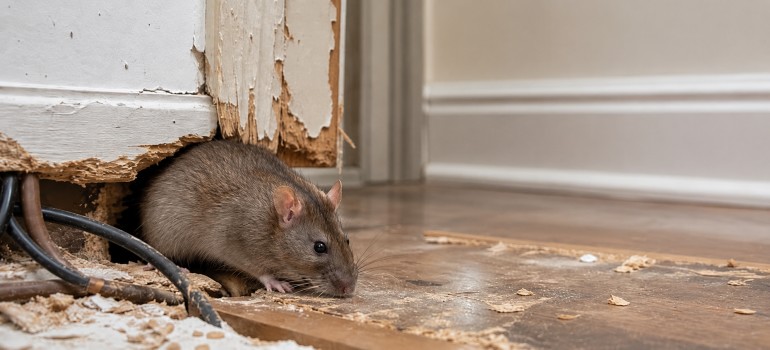
Rats have teeth strong enough to chew through a lead pipe. Let that sink in for a second. These small, unassuming creatures are essentially walking power tools, gnawing through materials that most people would assume are completely off-limits. If you’ve ever wondered what can rats chew through, you’re about to find out the full picture.
It matters more than most people realise. A rat working quietly inside your walls can compromise structural integrity, cut through electrical wiring, and cause thousands of pounds worth of damage before you even spot a single dropping. Knowing what they can and can’t get through is the first step in actually stopping them.
TL;DR
- Rats can chew through wood, plastic, soft metals, and most common wall materials.
- Their incisors never stop growing, so gnawing is a biological necessity, not just a habit.
- Concrete, thick steel, and glass are generally rat-proof when properly installed.
- Rat chewing causes serious structural damage, fire risk from chewed wiring, and potential health hazards.
- Rat-proofing your home means choosing the right materials and sealing entry points properly.
- Professional rat control tackles the source of the problem, not just the symptoms.
Table of Contents
Can Rats Chew Through Common Building Materials?
Rats can chew through wood, plastic, soft metals, plasterboard, and most standard wall materials found in homes and commercial buildings. Their incisors are hard enough to cut through aluminium sheeting, and they’ll happily work through timber framing or a plywood panel if it stands between them and somewhere warm. Very few everyday building materials stop them outright.
Here’s a closer look at how they handle the materials most commonly found in homes and buildings.
Wood
Wood is practically an open invitation. It’s relatively soft, it absorbs moisture over time which makes it even easier to work through, and rats can smell food, warmth, or other rats on the other side of it. Softwoods like pine and chipboard offer almost no resistance. Hardwoods take longer but still won’t stop a determined rat. If you’ve got timber floor joists, wooden skirting boards, or a garden shed, assume a rat could get through them given enough time and motivation.
Plastic
Most standard plastics don’t stand a chance. Thin plastic piping, air vents, food packaging, rubbish bin lids — rats cut through these without much effort. Thicker, hard-grade plastics do slow them down, but they won’t stop them entirely. The real issue is that rats often target plastic pipes, which can cause leaks or flooding on top of the original infestation problem.
Soft Metals
Aluminium and lead are both vulnerable. Aluminium flashing around roof edges, lead flashing around chimney stacks — rats will chew through these if they want access to the roof space. Thin aluminium sheeting used in some ventilation systems is no barrier at all. The exception is hardened steel, which is a different story entirely and covered in the rat-proof section below.
Walls
Most walls in standard UK homes use plasterboard, plywood, or a combination of both. Rats get through plasterboard fairly quickly — it’s essentially layered paper and gypsum. Plywood takes more effort but it’s still chewable. Brick walls are a different matter, but the gaps around pipes, cables, and joinery are often the real weak points. A rat doesn’t need to chew through a brick wall if there’s already a gap around a drainpipe big enough to squeeze through.
Check also:
Who Is Responsible for Rats in Drains? A Clear Guide for UK Homeowners
The Science Behind Rat Chewing Abilities
Rats aren’t chewing through your home out of spite. There’s a solid biological reason behind it, and understanding it makes the behaviour a lot easier to predict and manage.
Incisors That Never Stop Growing
A rat’s front teeth never stop growing. They grow at a rate of roughly 0.4mm per day, which means if a rat stopped gnawing, its teeth would eventually curve back into its skull. Gnawing is how they keep their teeth at a functional length. It’s not optional behaviour. It’s survival. This is why rats will chew even when they’re not hungry or actively looking for a way in. They just need to gnaw.
Gnawing for Access and Nesting
On top of the tooth maintenance side of things, rats also chew to get where they need to go. They gnaw through walls to access food sources, through insulation to create nesting material, and through packaging to reach stored grain or pet food. Every bit of chewing serves a practical purpose. It’s not random or mindless. A rat gnawing at the corner of a kitchen unit has almost certainly smelled something on the other side.
Jaw Strength That Defies Their Size
The bite force of a rat sits at around 12 gigapascals. For context, that’s harder than the bite force of a dog, despite the size difference. Their incisors are coated in iron-reinforced enamel, which is what gives them that distinctive orange-yellow colour and what makes them hard enough to cut through metal. The teeth are also self-sharpening — the upper and lower incisors wear against each other as the rat gnaws, keeping the edges sharp. It’s a remarkably efficient system, which is exactly why it’s such a problem when rats decide your home is worth investigating.
Which Materials Are Rat-Proof?
Some materials genuinely hold up against rats. Concrete, thick steel, and glass are the main ones. Rats can’t chew through solid concrete, hardened steel mesh, or glass, making these the go-to choices when you’re sealing entry points or reinforcing vulnerable areas. That said, even rat-proof materials fail if there are gaps, cracks, or poorly fitted joints for rats to exploit.
| Material | Rat-Proof Status | |
|---|---|---|
| Solid concrete | Yes — rats cannot chew through intact concrete. Cracks or gaps are a different matter. | |
| Hardened steel (thick gauge) | Yes — thick steel is resistant. Thin steel mesh can be chewed through. | |
| Glass | Yes — too hard for rat incisors to make any impact. | |
| Aluminium | No — rats can chew through standard aluminium sheeting and thin piping. | |
| Plasterboard | No — offers very little resistance. | |
| Timber (softwood) | No — easily gnawed through. | |
| Timber (hardwood) | Partially — much slower, but not rat-proof long term. | |
| Standard plastic | No — most plastics are chewable by rats. | |
| Lead | No — soft enough for rats to work through. | |
| Brick (solid, uncracked) | Yes — intact brickwork holds up, but mortar joints can degrade over time. |
The practical takeaway here is that rat-proofing isn’t just about picking the right material. It’s about how well it’s installed. A concrete wall with a poorly sealed pipe running through it is still an entry point. Steel mesh that’s been fitted loosely or corroded at the edges gives rats something to work with. The material is only as good as the installation around it.
Got rats causing damage in your home?
A professional rat control service will locate the source of the infestation and treat it properly, before the damage gets worse.
Contact usThe Real Cost of Ignoring What Rats Can Chew Through
This isn’t just interesting trivia. It has real, expensive, and sometimes dangerous consequences when ignored.
Property Damage
Rats don’t cause damage in one dramatic moment. They cause it slowly, quietly, over weeks and months. They chew through roof joists, floor timbers, and insulation. They hollow out wall cavities for nesting. They gnaw through plastic water pipes, leading to leaks that go unnoticed until the ceiling comes down. The structural damage alone can be significant, but the most dangerous thing rats chew through is electrical wiring.
Rats strip the insulation from cables. Exposed wiring next to insulation or timber is a fire hazard. A significant proportion of unexplained house fires are attributed to rodent damage to wiring. That’s not scaremongering — it’s a well-documented risk that’s entirely preventable with the right precautions.
Financial Impact
The costs add up fast. Replacing chewed wiring isn’t cheap. Repairing water damage from a gnawed pipe is expensive. Fixing structural timber damage can run into thousands of pounds depending on how long the problem was left undetected. Then there’s the cost of the infestation itself — baiting, trapping, proofing. Catching the problem early almost always costs less than dealing with the aftermath of a long-running infestation.
Health Concerns
Rats carry diseases, and the materials they chew through become contaminated with urine, droppings, and saliva. Weil’s disease (leptospirosis) and salmonella are both associated with rat activity in the UK. Contaminated insulation or stored items in a loft aren’t something you want to handle without knowing what’s been living up there. Any area where rats have been active needs proper cleaning and disinfection before it’s safe to use again.
Check also:
How to Get Rid of Rats in the Attic for Good
Does Bleach Really Deter Rats? Uncovering the Truth Behind This Common Belief
Practical Steps to Rat-Proof Your Home
Knowing what rats can chew through gives you a clear starting point. The job is to remove the materials they can breach and replace or reinforce them with ones they can’t. Here’s what that looks like in practice.
- Inspect structural vulnerabilities: Check loft spaces, under-floor areas, cavity walls, and around pipework for signs of gnawing or access points. Pay particular attention to where utilities enter the building — these are common weak spots.
- Reinforce with resistant materials: Replace damaged timber around entry points with concrete, solid brick, or hardened steel mesh. Fill gaps around pipes with steel wool packed tightly and then sealed with mortar or a proper filler. Steel wool alone compresses over time, so it needs to be fixed in place.
- Seal entry points properly: Any gap wider than roughly 1.5cm is large enough for a young rat to squeeze through. Seal gaps under doors with bristle strips or metal kick plates. Use wire mesh over air bricks and ventilation points, making sure the gauge is fine enough and the edges are secured.
- Check roof and drainage access: Rats commonly enter through damaged soffits, gaps in fascia boards, and around soil pipes. Inspect these regularly, especially after storms when materials shift or crack.
- Maintain regular property checks: Rat-proofing isn’t a one-off job. Materials degrade, mortar cracks, mesh corrodes. A seasonal check of vulnerable areas keeps you ahead of potential problems.
- Get professional help when needed: If you’re finding ongoing signs of activity despite your efforts, a professional rat control service will identify entry routes, treat the infestation, and advise on the most effective proofing for your specific property.
Ready to keep rats out for good?
Don't wait for the damage to stack up. Get expert help, seal every entry point, and take back control of your home.
Contact usConclusion
Rats are persistent, capable, and remarkably well-equipped to get through most of the materials found in a standard home. Concrete, thick steel, and glass are your strongest options — but only if they’re properly installed and regularly maintained. Choose the right materials, fit them correctly, and check them before problems develop.
The damage rats cause is slow and quiet, which is exactly what makes it so costly when it’s finally discovered. Stay ahead of it, and you won’t have to deal with the expensive fallout of finding out too late.