




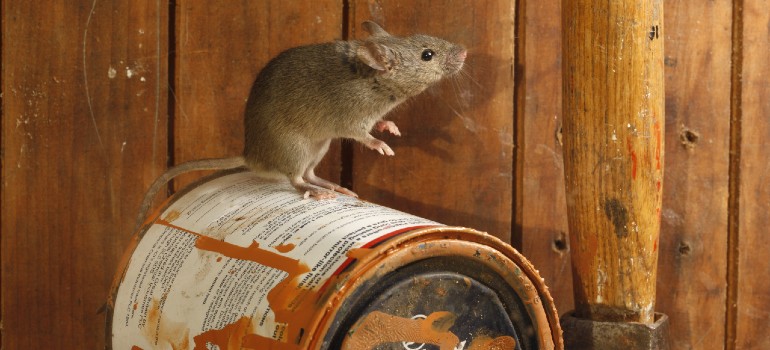
Are mice sneaking into your shed and making themselves at home? Keeping your shed free of these unwanted visitors can feel like a constant battle, especially when they slip in through tiny gaps or holes.
The good news is that with the right approach, you can keep mice out for good. Here’s a guide on how to prevent them from entering and how to remove them if they’ve already moved in.
To keep mice out of your shed naturally: seal all gaps with steel wool or wire mesh, remove food sources and store them in airtight bins, use natural deterrents like peppermint oil or cloves, keep the shed clutter-free, and use humane live-capture traps if mice are already inside. Wooden sheds are especially vulnerable — mice can gnaw through softwood panels, and gaps widen as timber expands and contracts over time.
TL;DR
- Mice can squeeze through a gap as small as 6mm — roughly the width of a pencil.
- Seal all holes with steel wool and wire mesh; mice cannot chew through either material.
- Store birdseed, pet food, and garden produce in airtight metal or thick plastic storage bins.
- Peppermint oil, cloves, and cayenne pepper are effective natural deterrents — reapply every 2–3 weeks.
- Wash the shed interior with a diluted bleach solution to destroy scent trails left by previous mice.
- Wooden sheds are particularly at risk — check base corners and door frames each autumn as gaps open up over time.
- Call a professional pest controller if the infestation persists despite your prevention measures.
Table of Contents
Signs of mice in your shed
Before you act, you need to be sure you’re actually dealing with mice. Here’s what to look for:
- Droppings — small, dark, and tapered at both ends (about 3–6mm long). Rat droppings are much larger and blunter, so size matters here.
- Gnaw marks — on wooden panels, cables, stored cardboard boxes, or plastic containers. Fresh gnaw marks are pale and light-coloured; older ones darken over time.
- Shredded nesting material — mice tear up cardboard, paper, fabric, and insulation to build their nests. Find a loose, shredded pile in a corner and you’ve almost certainly found a nest nearby.
- Grease marks — mice follow the same routes repeatedly. Over time, the oils from their fur leave dark smear marks along walls and skirting boards.
- Ammonia smell — a sharp, unpleasant odour in a confined space is a strong indicator of a mouse presence, particularly if you’ve also spotted any of the above.
- Actual sightings — mice are mostly nocturnal, but you may spot one if you open the shed early in the morning. A motion sensor camera can help confirm nighttime activity.
How to get rid of mice in the shed
So, you’ve discovered mice in your shed — annoying, yes, but totally fixable. With some patience and the right technique, you can send them packing and stop them coming back. Here’s how to deal with them effectively.
- Use humane traps — Once you’re certain there are mice around, use live-capture traps rather than deadly ones. Place them along walls and in areas where you’ve spotted droppings. In wooden sheds, check behind any skirting boards or loose floor panels too — mice often harbour in these spots, so that’s where your traps will be most effective. Peanut butter and chocolate are both excellent bait. Check the traps every day, and if you catch one, release it at least a kilometre away — somewhere open, like a field. Always wear gloves when handling traps or mice, both to protect yourself and to avoid leaving your scent on them.
- Avoid poisons and glue traps — It might be tempting to go for an easy fix like poison, but that can be risky for pets and children — and it causes a lot of unnecessary suffering for the mice. On top of that, poisoned mice often crawl off and die in hidden corners, which means you’re left with awful smells you can’t track down. Humane traps are a much kinder and far more effective option all round.
- Check around the shed — Don’t forget the outside. Compost heaps, log piles, and bird seed or nut feeders positioned close to the shed are the primary external attractants for mice. Clearing these up, or moving feeders further away, makes your shed far less appealing to any new arrivals.
Check also:
How to Get Rid of Mice in Your House
How to keep mice out of the shed naturally
Once you get rid of the little rodents, you need to keep them out. Mice are resourceful animals that can squeeze through even the smallest openings. Prevention is the key, and these six steps cover everything you need.
How to keep mice out of your shed naturally using sealing, cleaning, food removal, scent deterrents, scent trail destruction, and natural predators.
Seal all entry points
Check your shed thoroughly for possible entry points. Mice can fit through a gap as small as 6mm — roughly the width of a pencil. Look closely at the floor, walls, roof, and door frames for any cracks or breaches. For wooden sheds specifically, pay close attention to base corners, the points where the floor meets the walls, and door frames: these are the highest-risk zones, and gaps there tend to open up as timber expands and contracts with the seasons. Check them each autumn. Use caulk or expandable foam for minor openings; use steel wool or wire mesh for larger holes — mice cannot chew through either. Pay particular attention to anywhere cables or pipes enter the shed.
Keep your shed clean and clutter-free
A cluttered shed gives mice plenty of places to build their nests. Remove anything you don’t need and put the rest into airtight containers. Avoid leaving stacks of paper, cardboard, or wood lying around — mice love these materials for nesting.
Remove food sources
Food is the number one attractant. Store birdseed, pet food, nuts, or any garden produce in airtight metal or thick plastic storage bins — not lightweight plastic bags, which mice can chew through easily. Clean up any spills right away, and don’t leave fruit or vegetables in the shed for any length of time.
Use natural scents to deter mice
Several natural scents repel mice effectively. Peppermint oil applied to cotton balls and placed near entry points is one of the most reliable options. Cloves, cayenne pepper, and chilli oil also work well. Mothballs are another option — mice find the smell unbearable. Place them near doors, in corners, and around stored goods. Reapply all scent deterrents every 2–3 weeks as the strength fades. One more option: used cat litter placed in a corner. It’s not pleasant to deal with, but it signals to mice that a predator is nearby, and they won’t hang around. If you use mothballs, keep them well out of reach of children and pets — they contain compounds that can be harmful if swallowed or inhaled in quantity.
Wash away scent trails
Mice leave scent trails that actively guide other mice to the same location. Wash the inside of your shed with a diluted bleach solution or a strong disinfectant to break this cycle. This also kills any bacteria and other contaminants the mice left behind.
Attract natural predators
If you’re open to it, encouraging natural predators can help keep mouse numbers down. Installing an owl box in your garden is an excellent way to attract these birds to nest nearby. A pet cat is another option — though keep in mind that’s a lifetime commitment, not just a pest control measure.
These steps together will keep mice out of your shed and protect your belongings from damage. If the infestation persists despite your best efforts, see a mice control specialist — sometimes you need an expert eye to find what you’ve missed.
Are you dealing with a pest infestation?
You don't have to be alone in the battle against pests. Hire a professional pest expert!
Call usAre wooden sheds more at risk from mice?
Yes, and by quite a margin. Mice can gnaw through softwood panels — the kind used in most standard garden sheds — which means the structure itself becomes an entry point over time, not just the gaps around doors and vents.
The bigger issue is movement. Timber expands in wet weather and contracts when it dries out. Over time, that repeated movement opens up gaps at base corners, along door frames, and where the floor meets the walls. These are exactly the spots mice target first. An older wooden shed with no solid floor is the highest-risk setup of all — there’s often no meaningful barrier between the shed interior and the soil beneath.
Check these areas each autumn, before the colder months push mice indoors to look for shelter. Catching a small gap early costs you ten minutes and a bit of wire mesh. Leaving it costs a lot more.
Check also:
How to Keep Mice Out of the Car Engine Compartment
Frequently Asked Questions
Can mice get into a plastic or metal shed?
Yes. Mice can still enter plastic and metal sheds through gaps around doors, vents, and anywhere pipes or cables pass through the structure. The difference is they can’t gnaw through the material itself the way they can with wood. That said, sealing entry points with wire mesh or caulk is just as important regardless of what your shed is made from — the gaps are the vulnerability, not the panels.
What is the best natural mouse repellent for a shed?
Peppermint oil applied to cotton balls and placed near entry points is one of the most effective natural options. Cloves, cayenne pepper, and used cat litter also deter mice. No single remedy works forever — reapply every 2–3 weeks as the scent fades, and combine it with physical exclusion (sealing gaps) for the best results.
How do I stop mice coming back after removing them?
Wash the shed interior with a diluted bleach solution straight after removal. Mice leave scent trails behind, and those trails actively attract new arrivals. Once the scent is gone, seal every entry point you can find, move storage into airtight metal bins, and clear log piles or compost heaps from directly beside the shed. Do a fresh check of base corners and door frames each autumn — that’s when mice start looking for somewhere warm to settle.
Check also:
Takeaways
- Wooden sheds need a seasonal check at base corners and door frames — timber movement opens gaps over time, and those gaps are exactly where mice get in.
- Removing food sources — birdseed, pet food, garden produce — and storing them in airtight metal or thick plastic bins is the single most effective first step you can take.
- If mice are already inside, use humane live-capture traps, check them daily, and release any catches at least 1km away. Then seal the shed, wash away the scent trails, and you’ve broken the cycle.
Need to know more about preventing pests from entering your shed or greenhouse?
Comment below and get some friendly advice. Alternatively, book our pest control services online or by directly speaking to an expert about your garden shed pest problem, which will be professionally taken care of for you.




Leave a Reply