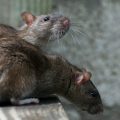




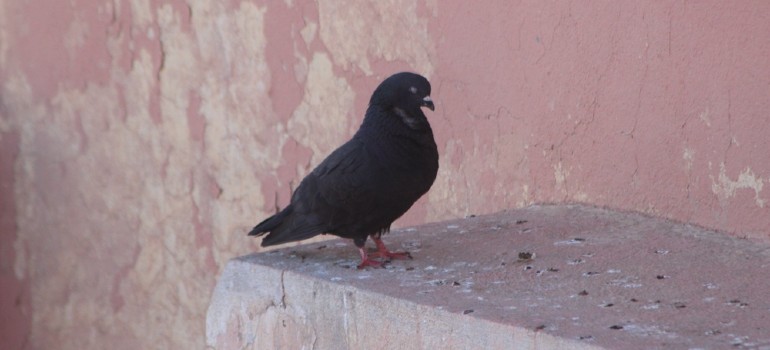
Pigeons are everywhere. On rooftops, window ledges, park benches, and pretty much anywhere you’d rather they weren’t. They’ve shared our cities for centuries, and somewhere along the way they picked up a rather grim reputation. “Flying rats” is the charming nickname some people have given them. But is that reputation actually earned, or is it mostly just urban legend?
The truth about whether pigeons carry diseases is a bit more nuanced than most people think. Some of what you’ve heard is accurate. Some of it is overblown. And knowing the difference genuinely matters, especially if you’re dealing with a pigeon problem at home or work.
TL;DR
- Pigeons do carry diseases that can transfer to humans, mainly through their droppings.
- The birds themselves aren’t the main hazard — their droppings are.
- Histoplasmosis, cryptococcosis, psittacosis, and salmonellosis are the key pigeon-related illnesses.
- Dried droppings become airborne and can be inhaled, which is when the real risk kicks in.
- People with weakened immune systems, the elderly, and young children face the highest risks.
- Practical prevention measures can significantly reduce your exposure.
- Large accumulations of droppings should be handled by professionals, not tackled with a brush and good intentions.
Table of Contents
Do Pigeons Carry Diseases?
Yes, pigeons do carry diseases that can be passed on to humans. They’re known carriers of several zoonotic illnesses, most of which are linked to their droppings rather than direct contact with the birds. The main diseases associated with pigeons are histoplasmosis, cryptococcosis, psittacosis, and salmonellosis. Healthy people exposed to small amounts rarely get seriously ill, but the risk is real and shouldn’t be brushed off entirely.
Here’s a quick breakdown of the key diseases and how they spread:
- Histoplasmosis — caused by a fungus called Histoplasma capsulatum that grows in soil enriched by bird droppings. When dried droppings are disturbed, fungal spores can become airborne. Breathing them in can cause flu-like symptoms or, in serious cases, lung infections. Most healthy adults recover without treatment, but it can be dangerous for anyone with a weakened immune system.
- Cryptococcosis — another fungal infection, this one linked to Cryptococcus neoformans, which thrives in pigeon droppings. Inhalation of contaminated dust is the main route in. It can affect the lungs and, in severe cases, the nervous system.
- Psittacosis — also called ornithosis or parrot fever. It’s a bacterial infection caused by Chlamydophila psittaci. Pigeons can carry this bacterium and shed it in their droppings or feather dust. Symptoms include fever, headache, and a persistent cough that can look a lot like pneumonia.
- Salmonellosis — pigeons can carry Salmonella bacteria, which ends up in their droppings. If droppings contaminate food preparation surfaces or water sources, the bacteria can cause food poisoning with the usual unpleasant symptoms.
None of these is especially easy to catch from a casual encounter with a pigeon in the street. The risk goes up significantly when there’s a large build-up of droppings in an enclosed or poorly ventilated space, and someone goes near it without any protection.
Check also:
The Real Health Risks: It’s All About the Droppings
What makes pigeon droppings genuinely risky isn’t the fresh splat on your windscreen. It’s what happens when droppings build up over weeks, months, or longer in places like loft spaces, ledges, rooftops, or air vents.
Pigeon droppings are rich in nitrogen, which creates conditions that certain fungi and bacteria love. Over time, that build-up becomes a breeding ground for the pathogens mentioned earlier. When the droppings dry out and someone disturbs them — by sweeping, blowing air across them, or even just walking through — the particles go airborne. Those particles can carry fungal spores or bacteria straight into your lungs.
Enclosed or poorly ventilated spaces make this significantly worse. A loft full of dried pigeon droppings that someone opens up and starts clearing without protection is a genuine respiratory hazard. In well-ventilated outdoor spaces, the risk is much lower because particles disperse quickly.
A few factors influence how serious the risk gets:
- Volume of droppings — a larger accumulation means more pathogens and a higher concentration of spores or bacteria when disturbed.
- Ventilation — enclosed spaces trap contaminated particles, making inhalation far more likely.
- Moisture and temperature — warm, damp conditions accelerate fungal growth in droppings.
- Duration — droppings sitting for months are far more hazardous than fresh ones.
It’s also worth noting that droppings near food preparation areas or water supplies create a separate contamination route through ingestion rather than inhalation. Salmonella, in particular, can survive in dried droppings for extended periods.
Check also:
Who Is Most at Risk from Pigeon-Related Diseases?
Most healthy adults with a normally functioning immune system can be exposed to low levels of pigeon droppings without getting seriously ill. Their immune system handles the pathogens before they take hold. But not everyone has that protection, and for some groups the risks are considerably higher.
Immunocompromised individuals
People undergoing chemotherapy, those living with HIV, organ transplant recipients, and anyone on immunosuppressant medication are particularly vulnerable. Cryptococcosis, for example, is rarely serious in healthy people but can be life-threatening for someone with a weakened immune system. The fungus can spread from the lungs to the brain and cause meningitis, which moves fast and needs urgent treatment.
The elderly
Immune function naturally declines with age. Older adults are more likely to develop complications from respiratory infections, and conditions like psittacosis or histoplasmosis can escalate quickly. What might be a mild illness in a 30-year-old could mean a hospital stay for someone in their seventies.
Young children
Children’s immune systems are still developing, which makes them more susceptible to infections generally. Kids also tend to touch surfaces without a second thought and then put their hands near their faces, which increases the chance of ingesting contaminated material. Salmonellosis in particular can cause severe dehydration in young children.
People with chronic respiratory conditions
Anyone with asthma or chronic obstructive pulmonary disease is at greater risk from inhaling pigeon-related dust and particles, even leaving aside the infectious disease angle entirely. Pigeon feather particles and dander can trigger serious respiratory reactions in sensitive individuals.
Check also:
How to Reduce Your Risk from Pigeon Droppings
The good news is that most of the health risks associated with pigeons are manageable with the right approach. You don’t need to panic every time a pigeon lands on your fence. What you do need is a sensible plan to keep them away if they’re roosting on or near your property in significant numbers.
- Don’t feed pigeons — it seems obvious, but feeding them encourages gathering and returning. No food, fewer birds. Fewer birds, fewer droppings.
- Install physical deterrents — bird spikes, netting, and wire systems on ledges, rooftops, and window sills discourage roosting. These work well when fitted properly.
- Block access points — if pigeons are getting into loft spaces or roof voids, seal those entry points. Check for gaps around eaves, broken tiles, and ventilation grilles.
- Clean up droppings carefully — if there’s a small amount to deal with, dampen it first before cleaning to prevent dust becoming airborne. Wear gloves, a face covering, and wash your hands thoroughly afterwards.
- Never dry-sweep large accumulations — sweeping or blowing dried droppings sends particles straight into the air. This is where the health risk is most acute.
- Protect food and water sources — cover water butts, keep outdoor bins sealed, and don’t leave food scraps accessible.
- Ventilate spaces before entering — if you’re about to go into a space where pigeons have been roosting, open windows and doors first. Let it air out before you step inside.
If there’s a significant accumulation of droppings in a loft, on a commercial roof, or anywhere enclosed, this genuinely isn’t a job for a brush and a bit of determination. A professional bird control service will bird-proof the affected area and fit deterrents to stop the birds coming back. Solar panel pigeon proofing can also be needed. Trying to tackle it yourself without the right protective equipment puts your health at real risk. It’s not dramatic to call for help. It’s just the sensible call.
Ready to tackle your pigeon problem properly?
Don't let droppings build up. Take action now and keep your household protected.
Contact usConclusion
Pigeons carry diseases, yes. But the bird landing on your windowsill isn’t about to make you ill. The real risk sits in what accumulates below where they roost, particularly in enclosed spaces with poor ventilation. Focus your concern on the droppings, not the bird itself, and you’ll have a much clearer picture of what you’re actually dealing with.
Keep droppings under control, deter roosting where you can, and don’t take chances with large accumulations. That’s really all there is to it.