




There are more bugs that bite in the UK than most people realise, and stinging insects in the UK are just as varied. From bed bugs and ticks to wasps, bees, and hornets, identifying what’s got you and knowing how to protect yourself can make a real difference. These insects may carry allergens, toxins, or pathogens, so getting clued up on prevention is essential.
Let’s take a look at the most common insect species in the UK that can bite or sting, and how to protect yourself against them.
TL;DR
- The most common bugs that bite in the UK include bed bugs, fleas, midges, mosquitoes, horseflies, ticks, and mites.
- The most common stinging insects in the UK are wasps, bees, and hornets, most active in spring and summer.
- Tick bites can transmit Lyme disease. Remove ticks promptly and look for a bullseye rash as the key warning sign.
- Severe allergic reactions (anaphylaxis) to bee or wasp stings require immediate emergency treatment. Call 999.
- Flea bites typically appear around ankles and legs. Bed bug bites often follow a line or zigzag pattern on exposed skin.
- Most insect bites and stings in the UK are mild and resolve without treatment within a few days.
- Use insect repellent, cover exposed skin, and avoid disturbing nests to reduce your risk of bites and stings.
Table of Contents
What insects bite in the UK?
There are many insects that bite in the UK, including midges, mosquitoes, fleas, bedbugs, flies, mites, and ticks. The most common types of insects that sting people are bees, wasps and hornets.
Insect bites and stings vary in severity depending on what type of insect is biting and how sensitive a person is. Rarely, a bite or sting can cause a serious allergic reaction (anaphylaxis), which requires immediate emergency treatment. If you or someone nearby experiences swelling of the throat, difficulty breathing, or dizziness after a sting, call 999 straight away.
What bit me?
Bites and stings often look alike. Tell us the pattern, where it is and what else you’ve noticed — we’ll narrow it down to the most likely culprit and what to do.
1. What’s the pattern?
Pick the closest match.
2. Where on the body?
Pick all that apply.
3. When did it happen?
Pick all that apply.
4. Any other signs?
Pick all that apply — the more, the better.
Get it confirmed & treated
Bites are easy to mistake. Our technicians identify the source, treat it and guarantee the work — across London, 24/7.
This identifier offers guidance only based on common bite signs — it is not a guaranteed diagnosis and not medical advice. Several pests cause similar marks. If you have a severe reaction (difficulty breathing, spreading swelling), signs of infection, or you feel unwell, seek medical help straight away.
Biting Crawling Insects in the UK
Bed Bugs Bites
Bed bugs are one of the most common biting insects in the UK. They are tiny bugs that can be transferred easily during a trip, second-hand furniture, guests and other ways. Bed bugs are blood-sucking intruders that are attracted to humans and are active during the night. That’s the reason why many people can barely spot and identify the bites the other day.
Bed bug bites can occur anywhere on your body. Anyway, there are certain body areas which will more commonly be exposed during the night such as the neck, face, arms, and legs.
Bed bugs bite in most cases can cause discomfort and itchiness followed by possible inflammation. Of course, some people might experience other symptoms like:
- Small red itchy bumps with a clear or dark centre;
- Zigzag patterns of the bites;
- Painful feeling;
Fleas Bites
Fleas are another well-known biting insect to UK residents. They are small brown to black bugs that can jump extremely fast and high which makes them invisible in many cases. Fleas usually can be brought at home by pets such as cats or dogs but this doesn’t exclude the possibility to latch onto your socks during a nice walk in the park.
Flea bites on humans can appear around the ankle, feet and legs. Other areas can be the waist or the folds of the elbows and knees. Some of the flea bite symptoms are:
- Itching;
- Red marks with halos;
- Blister around the bite;
- Rash;
Flea bites can be in clusters of more than three spots or in a line.
Learn also: Flea Bites vs Bed Bug Bites
Ants Bites
The most generally known type of ant in the UK is the black one which is harmless. Anyway, there are the red (fire) ants and the flying ants that can sting. Mostly, if the insects feel threatened, they can attack you.
Fire ant bites produce a burning sensation that’s more noticeable than a standard ant nip. They carry fewer toxins than bee or wasp stings, but in sensitive individuals they can cause more significant reactions. Fire ants are increasingly reported in the UK but are still relatively uncommon. Most commonly, you will notice only a pink bite on your skin.
Over the next few days, the bitten area will start itching, but most fire ant stings won’t need any special medication or treatment.
Spiders
There are rare cases of spider bites, and usually, such bites are from the native UK false widow spider. Spider bites are small marks which can leave a painful sensation. Other symptoms are that the bites can swell and become red. Some people might feel sick or dizzy, and an allergic reaction is possible. That said, spider bites in the UK almost never require emergency treatment unless anaphylaxis occurs. If symptoms remain mild, monitor them at home and see a GP if they worsen.
Mites Bites
Mites are tiny little arthropods that are present in our everyday life. Usually, you can barely see them with the naked eye, but different types of mites exist and can bite you in some way.
Chigger bites
Chiggers are the larvae of harvest mites, most commonly encountered in late summer in UK grasslands and scrubland. Their bites might occur on your:
- ankles;
- waist;
- armpit.
Scabies
Scabies is caused by Sarcoptes scabiei, a microscopic mite that burrows into the skin. Unlike most entries on this list, it’s a contagious infestation rather than a simple bite, and it requires medical treatment. It typically affects:
- Underneath your feet;
- Around genitals;
- Knees;
- Elbows;
- Between fingers.
Bird Mites Bites
Bird mites are not picky at all, so they can bite you anywhere on your skin.
So, the most common symptoms of mites bites are:
- Red marks;
- Swollen area around the bite;
- Hard blisters;
- Itching or pain-like around the bite;
- Irritation.
Take advantage of professional fumigation!
The fumigation service is ideal for treating flying biting pests and fleas. Book your pest control service today!
Call usTicks Bites
Ticks are another well-known biting bug in the UK. Once they latch onto you, they will move to your armpits, or crotch or will hide in your hair. Then, if they like the spot, they will bite you and start sucking your blood. Most commonly, tick bites are not harmful, but if you have an allergy, the following symptoms can occur:
- Rash;
- Pain;
- Swollen area;
- Shortness of breath (if more serious).
Also, ticks can be highly dangerous as they transmit diseases. One of the most well-known is Lyme disease, a serious bacterial infection that can be difficult to treat. The key warning sign is a circular “bullseye” rash (erythema migrans) spreading outward from the bite site. If you notice this rash, or develop flu-like symptoms such as fever, fatigue, or joint pain in the weeks after a tick bite, see a GP promptly.
Read more: What Bugs Come Out in Spring
Ladybirds Bites
Ladybirds are not known to bite people, but they can surprisingly do so. Actually, they have sharp mouthparts, which on the other hand, won’t cause any serious health issues.
There is a certain ladybird type in the UK called the harlequin ladybird, which can bite much more often than the other types. The aggressive ones can be distinguished by the white marks on their heads.
Biting Flying Insects in the UK
Some flying insects are capable of biting humans as well. We will take a look at flies bites and mosquitoes bites which are common in the UK.
Flies Bites
Flies are not as popular as mosquitoes to bite people, but they can do so. Black flies and horseflies are among the most familiar types of flies that can bite.
Black flies bites
Black flies are common insects in the UK. In some cases, they might bite people by using their mouthparts. Actually, the painful sensation you might experience is since they salivate, and your skin reacts to it. Black fly bites won’t cause diseases, but allergic reactions can be a symptom. Such can be irritation, swelling or bleeding. Most commonly, black flies can bite on the head.
Learn more about Flies
Horseflies bite
Horseflies are way bigger than blackflies, and some can have green heads. Similarly to black flies, they won’t transmit diseases, but their bites can be much more painful because horseflies have mandibles that can cut the skin. Most probably, if you get bitten by horseflies, you might see symptoms such as swollen area, itchiness and redness around the bite.
Midges bites
Midges, small insects resembling mosquitoes, are a diverse group of flies from the Ceratopogonidae family. Often mistaken for gnats, midges are distinguished by their biting behaviour, particularly by female midges who bite to feed on blood.
Bites from midges cause irritation and discomfort because they are itchy, red, and raised. A midge bite looks like a mosquito bite, with a small, raised red lump surrounded by a red patch. The bite may also have a small hole where the skin was punctured. There may be fluid-filled blisters and circular, fluid-filled areas around insect bites in people who are sensitive to insect bites.
Mosquitoes Bites
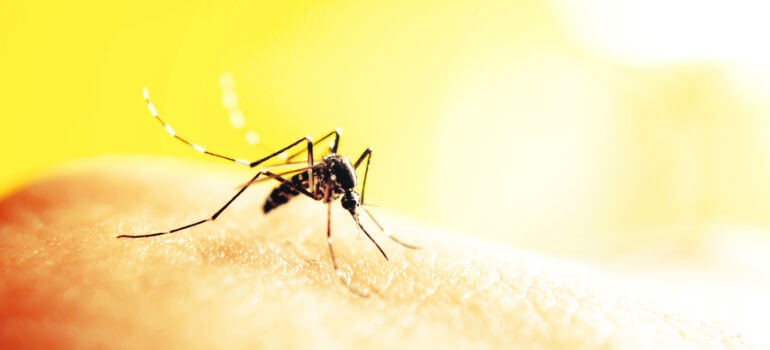
Mosquitoes are popular biters in the UK. Right after they bite you, you might notice a bump which sometimes can have a dot at the centre. In a while, the bitten area will become red, hard and swollen.
While UK mosquitoes do not currently transmit malaria, they are common biters and can cause significant irritation. Globally, mosquitoes are considered the most dangerous animals in the world due to disease transmission in other countries, but in the UK the risk is irritation rather than serious illness.
Stinging Insects in the UK
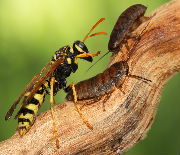
The well-known stingers in the UK are wasps, bees and hornets.
Wasps Stings
Wasp stings are very common, especially during the spring-summer seasons. The stings are sharp and painful in most cases. Around the stung site, redness and itching can occur. Sometimes a white mark with a bump around can appear, and usually within several hours the swelling will decrease. People who are not allergic to such stings usually won’t have serious symptoms.
Bees Stings
Bee stings are as unpleasant as wasp stings are. The reactions to bee stings may vary from short pain and discomfort to an allergic reaction which can be extremely dangerous. Also, every time you are stung by bees it can cause different symptoms, which can get more severe each time.
However, the symptoms that can occur can be:
- Burning and sharp pain;
- Swelling around the sting;
- Redness;
If you have a known bee sting allergy, you should carry an epinephrine auto-injector (EpiPen) at all times. This is standard medical guidance in the UK and could be life-saving.
Hornets Stings
Hornets stings can be much more painful and bad than those that wasps leave. The reason is that the hornets’ stings have a large amount of acetylcholine which makes the sting painful. Unlike bees, hornets (and wasps) can sting multiple times and won’t die after they sting you.
Some certain hornet species can be extremely dangerous to people. Such is the Asian giant hornet, whose stings can be fatal to people who are allergic (note: the Asian giant hornet is not currently established in the UK). The European hornet, which is the species you are likely to encounter in the UK, typically doesn’t cause serious reactions. Some symptoms might be:
- Immediate sharp pain;
- Redness and swollen mark;
- Itchiness.
Are you dealing with a pest infestation?
You don't have to be alone in the battle against pests. Hire a professional pest expert!
Call usHow to Prevent Insect Bites
It’s almost impossible to completely escape or protect yourself from insect bites or stings. However, you can minimise the possibility of getting bitten. Here are some of the preventative measures you can take into account to protect yourself:
Practical steps to reduce your risk of insect bites and stings in the UK, at home and outdoors.
Install window and door nets
Install nets on doors and windows so that insects (especially flying insects) won’t get inside your property.
Remove food and rubbish
Remove trash and exposed food so that insects won’t be attracted to them.
Eliminate standing water
Remove water sources as they also attract insects.
Cover exposed skin outdoors
Cover your legs with long-sleeved trousers during a walk around high, untreated grass where ticks and fleas may be present.
Stay cautious near plants and water
Be cautious around plants, flowers, water or outdoor food, as some bugs can crawl or fly around.
Stay calm near stinging insects
Stay calm while a bee, wasp or hornet is close to you. Don’t shake your hands or try to kill them because you might make them angry.
Avoid strong scents
Avoid using strong perfumes, body lotions, deodorants or other aromatic products on your skin or clothes. The scent can attract insects more easily.
Apply insect repellent
Use insect repellent before going outside.
Never disturb nests
If you come across a nest (ants, bees, wasps etc.), never disturb it, as the insects will feel threatened and most probably will attack you.
Check more:
Frequently Asked Questions
How do I know if I’ve been bitten by a tick and need to see a doctor?
Look for a circular bullseye rash (erythema migrans) spreading from the bite site. This is the key sign of Lyme disease and requires prompt GP attention. Even without a rash, if you feel flu-like symptoms such as fever, fatigue, or joint pain within weeks of a tick bite, see a doctor. Remove ticks promptly by gripping close to the skin with fine-tipped tweezers and pulling steadily upward.
What should I do if I’m stung by a wasp or bee and feel unwell?
Mild reactions such as localised swelling, redness, and itching can usually be managed at home with a cold compress and antihistamine. If you experience swelling of the throat or tongue, difficulty breathing, dizziness, or a rapid heartbeat, call 999 immediately. These are signs of anaphylaxis, which is a medical emergency.
Are there any dangerous spiders in the UK that bite?
The false widow spider (Steatoda nobilis) is the UK’s most venomous spider capable of biting humans, but serious reactions are rare. Bites typically cause localised pain, redness, and swelling. Medical attention is only needed if symptoms are severe or worsen over time.
What is the difference between a flea bite and a bed bug bite?
Flea bites typically appear in clusters around the ankles, feet, and lower legs, often with a red halo. Bed bug bites tend to appear in a line or zigzag pattern on exposed skin such as the face, neck, and arms, and are usually discovered in the morning. Both cause itching and red marks. See our full guide on Flea Bites vs Bed Bug Bites for more detail.
Takeaways
Whatever insect bites or stings you, don’t panic. Most of the time, they are not dangerous. Anyway, if you feel much more serious symptoms and they won’t go away for days (and even get worse), always search for medical help. Don’t experiment at home, especially with severe reactions!
If you have a crawling or flying insect infestation, or have spotted a wasp nest, professional pest control can help identify and safely remove the problem.



Leave a Reply