




Drain flies are one of those pests that sneak up on you. One day you spot a tiny moth-like insect near your bathroom sink. A week later, there are a dozen of them hovering around your kitchen plughole. They’re not dangerous, but they’re deeply annoying, and if you ignore them, the numbers keep climbing. Getting rid of drain flies properly means understanding where they actually come from — and most people get that part wrong.
Don’t just swat the adults and hope for the best. That buys you a day at most. The real problem is happening inside your pipes, and once you know how to deal with it, the whole thing becomes a lot more manageable.
TL;DR
- Drain flies breed in the organic sludge that builds up inside damp drains and pipes.
- Enzyme-based drain cleaners are one of the most effective treatments available.
- Natural remedies like boiling water, vinegar, and baking soda can help with mild infestations, but rarely fix the problem on their own.
- Drain fly larvae are small, pale, and worm-like, and they live in the film lining your pipes.
- Drain flies and fruit flies are different insects requiring different treatments.
- Regular drain cleaning is the single most effective way to prevent reinfestation.
- Spotting adult flies near plugs or drains early is your best chance to act before numbers explode.
Table of Contents
What are Drain Flies?
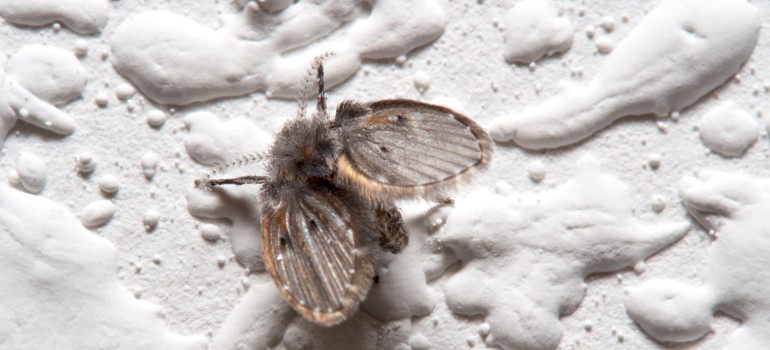
Psychodidae is the most common fly species in the UK and looks much like a moth. They are black, grey, or brown-grey in colour. Additionally, their antennae have hairs arranged neatly on the sides, resembling feathers piled up together.
Although drain flies look like moths, they cannot fly far. They make large hops from one place to another instead of buzzing around your home as other insect pests might do.
In size, they are similar to gnats and fruit flies. What makes them different are their small, moth-like wings and round, fuzzy bodies. These flies are a real nuisance and can be found in residential and commercial properties. Drain flies are also called sink flies or sewer flies.
In just 48 hours, drain flies lay and hatch 300 eggs, so it’s important to prevent them from spreading through your pipes.
How to Get Rid of Drain Flies
Both natural and chemical methods, such as fogging and professional fumigation service, can be used to get rid of a drain fly infestation. And what you decide to use will largely depend on its severity. It is often possible to eliminate drain flies quickly using everyday items found under your kitchen sink.
In most cases, the best control method for these flies is to eliminate the breeding sites, which are, in fact, the organic matter collected in the drain. It is crucial to locate and clean this source. In the event of an infestation, homeowners should take the appropriate steps to eliminate it, as well as create a plan to maintain their drains regularly to avoid future issues.
So, it’s best to clean the drains regularly to deter adult flies from finding an easy breeding spot.
It is possible to get rid of any remaining flies with an aerosol insect spray.
Now, let’s have a look at the way you can clean your drain pipes in order to control and eliminate a drain fly infestation.
- Boiling water flush: Pour a full kettle of boiling water slowly down the affected drain. Do this twice a day for a week. It won’t fix things on its own, but it softens and disrupts the organic film the larvae need to survive.
- Drain brush scrub: Use a long-handled bottle brush or drain cleaning brush to physically scrub the inside of the pipe. This dislodges the biofilm where eggs and larvae live. Don’t skip this step — water alone won’t shift compacted slime.
- Enzyme drain cleaner: Pour an enzyme-based drain cleaner down the pipe and leave it overnight. These products break down organic matter biologically, which starves larvae of their habitat. Follow the label instructions and repeat every few days until flies are gone.
- Baking soda and vinegar: Pour half a cup of baking soda down the drain, follow it with half a cup of white vinegar, then flush with boiling water after 15 minutes. The fizzing reaction helps loosen debris. Decent as a supporting measure, but not a standalone fix for a heavy infestation.
- Sticky traps near the drain: Place sticky fly traps close to the affected sink or plughole to catch adult flies. This doesn’t treat the source, but it reduces the flying population while you work on the pipes.
- Chemical drain insecticide: For more severe infestations, a drain-specific insecticide can be used directly in the pipe. More aggressive but effective. Use as directed, ventilate the area well, and keep children and pets out during application.
If the infestation is coming from a drain you rarely use, such as a spare bathroom or utility room sink, the fix is often simpler. Run water through it regularly to prevent the standing moisture that lets biofilm build up in the first place.
Are you dealing with a pest infestation?
You don't have to be alone in the battle against pests. Hire a professional pest expert!
Call usNatural vs Chemical Methods: Which Works Better?
Not every approach is equal, and what works in a mild case might not cut it for a full-blown infestation. Here’s how natural and chemical methods compare.
| Method | Effectiveness | Environmental Impact | Cost | Ease of Use | |
|---|---|---|---|---|---|
| Boiling water | Low to moderate (supporting measure) | None | Free | Very easy | |
| Baking soda and vinegar | Low to moderate | None | Very low | Easy | |
| Enzyme drain cleaner | High | Minimal (biodegradable) | Low to medium | Easy | |
| Sticky traps | Moderate (catches adults only) | Low | Low | Very easy | |
| Chemical drain insecticide | High | Moderate to high | Medium | Moderate |
For a mild case, the natural route is worth trying first. Boiling water, a good scrub, and an enzyme cleaner will sort most early infestations without introducing harsh chemicals into your home. If you’ve got kids or pets around, that matters.
Chemical insecticides are for when natural methods haven’t shifted the problem after a week or two of consistent effort. They’re more powerful, but they should be a last resort, not a first move. Never mix products, and always keep the area well ventilated after use.
Signs of Drain Flies Infestation
The earlier you catch a drain fly problem, the easier it is to fix. Left alone for a few weeks, a small cluster of breeding flies can turn into a persistent infestation across multiple drains. Keep an eye out for these signs in the future, especially in bathrooms and kitchens.
- Adult flies near drains or sinks: Drain flies are small, fuzzy, and moth-like, roughly 2mm long, with distinctive veined wings. They tend to rest on walls near plugholes rather than flying around actively.
- Flies in the same spot repeatedly: Seeing one fly is nothing. Seeing them in the same location day after day means there’s a nearby breeding source.
- Visible larvae: Tiny pale worm-like creatures in or around the drain opening. These are easy to miss, but they confirm the problem is active.
- Flies present in the morning: Drain flies are most active at night. Finding them on walls or near sinks first thing in the morning is a tell-tale sign.
- Slow-draining water: Not a direct sign of drain flies, but heavily clogged drains are prime breeding territory. Slow drainage and drain flies often go hand in hand.
What Causes Drain Flies
Drain flies are attracted to stagnant, shallow water and organic debris and are most often found near their sources of food, such as sinks and showers, where bacteria can build up. Decomposing matter, such as sewage, is ideal for drain flies. So, we can safely say that poor maintenance of your drain pipes can cause the uncontrollable breeding of drain flies.
Are Drain Flies Harmful?
No, drain flies are not harmful but can be quite a nuisance when there are a lot of them. They do not bite, and disease transmission is not a concern when it comes to them. However, they can spread bacteria, considering where they breed and live – in sewer pipes and wastewater drains. Still, their short lifespan prevents them from travelling long distances, anyhow, so it’s less likely that they will cross-contaminate surfaces around your home.
Warning: Some of these products contain caustic chemicals. It is advised to keep them away from the kitchen and be aware that they could damage your drains.
Preventing Drain Flies from Coming Back
Once you’ve cleared an infestation, keeping it clear comes down to one thing: don’t let organic matter build up in your drains again. Drain flies don’t appear out of nowhere. They find a habitat that suits them, and if you give them one, they’ll be back. Regular maintenance closes that door.
Here’s a simple schedule you can actually stick to:
Weekly
- Flush all household drains with boiling water, including those you don’t use often.
- Wipe down drain covers and remove any visible debris or hair.
- Keep sink areas dry between uses where possible.
Monthly
- Use an enzyme-based drain cleaner on all plugholes in bathrooms and the kitchen.
- Scrub overflow holes in sinks with a small brush.
- Check under sink units for any leaks or damp patches that could attract flies.
Every Three Months
- Deep clean all drain pipes with a drain brush.
- Inspect seldom-used drains, such as a guest bathroom, and flush them properly.
- Check that all drains have functioning covers in good condition.
It sounds like a lot written out, but most of this takes less than five minutes. The monthly enzyme cleaner treatment is the most important step. These products break down organic matter continuously, so biofilm never gets a chance to accumulate to the point where it becomes a breeding ground. Keep a bottle under the sink permanently. It’s the cheapest prevention you’ve got.
Check also:
What’s the Best Way to Get Rid of Drain Flies? Hire An Exterminator or A Plumber!
You may want to consider hiring a flies pest control specialist if you’ve already tried to treat drain flies on your own without success. A professional exterminator will be able to handle the problem and eliminate the drain flies effectively.
However, when a plumbing issue is identified, you need to call a certified plumber. If nothing seems to work, you may be dealing with a broken sewer line under your home’s slabs. This will require an expert to remove the soil, break open the concrete flooring, and repair the pipe in this case.
Depending on the situation, you may need to hire both types of professionals.
Are you dealing with a pest infestation?
You don't have to be alone in the battle against pests. Hire a professional pest expert!
Call usConclusion
Drain flies are a nuisance, but they’re a manageable one. The key is going after the source — the biofilm inside your drains — rather than just swatting the adults you can see. Combine physical scrubbing, enzyme treatments, and a bit of consistency, and you’ll clear most infestations within a couple of weeks.
Prevention is where most people fall short. A monthly enzyme cleaner and a weekly boiling water flush will keep your drains hostile to any fly looking for a place to breed. Keep at it, and you’re unlikely to have this problem again.




Leave a Reply