




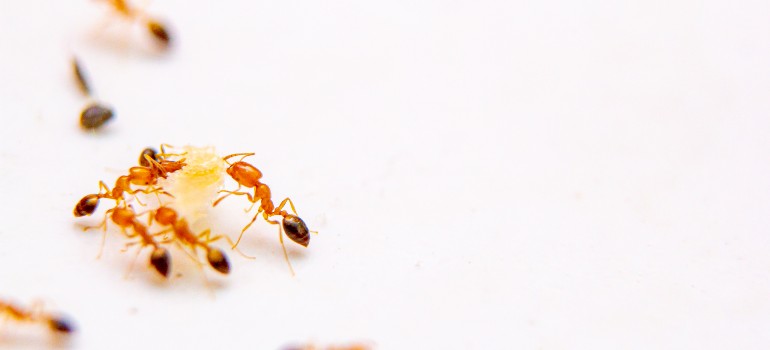
Getting rid of sugar ants in your home requires a combination of sealing entry points, removing food sources, and applying targeted repellents or baits. When they find their way into your kitchen, they can become a persistent problem quickly. This guide covers natural remedies, commercial options, and prevention steps — all relevant to a UK home context.
TL;DR
- Sugar ants are attracted to sweet foods, sticky residues, pet water bowls, and overripe fruit left on the counter.
- The most effective natural options are a borax and sugar bait (1 tsp borax to 3 tsp sugar) and a white vinegar spray to break scent trails.
- Sugar ants do not cause structural damage to your home, though they will chew through packaging to reach food.
- Sugar ant bites are harmless to most people — a brief pinch with no sting and no lasting mark.
- Sealing entry points around doors, window frames, and pipe gaps is the single most important first step.
- In the UK, small dark ants behaving this way are most often black garden ants (Lasius niger), not the Australian sugar ant species.
- If DIY methods haven’t resolved the infestation within a few weeks, call a professional pest controller.
Table of Contents
Do sugar ants actually like sugar?
Yes. Sugar ants are named for their strong preference for sweet foods including sugar, syrup, honey, and fruit residues. When they find a food source, they leave behind a scent trail for other ants to follow, which is how a handful of foragers quickly turns into a visible trail across your worktop.
What do sugar ants look like?
Sugar ants are an ant species with a light brown to yellowish colour. As their name implies, they like sweet food, such as sugar, honey, jelly, and cakes.
The male ants can reach a length of 1.5–2 mm, and the females can reach a length of 4–5 mm. Three pairs of legs and long, moving antennae are some of the characteristics of sugar ants. Being their most sensitive organ, the antennae can detect smells, motions below the ground, and air currents.
In the UK, small dark ants found trailing across kitchen counters are most often black garden ants (Lasius niger), which behave in exactly the same sugar-seeking way. The true sugar ant (Camponotus consobrinus) is native to Australia. If you’re dealing with a small dark ant in a UK kitchen, it’s almost certainly Lasius niger, but the same treatments apply either way.
Check also:
How do you find a sugar ant’s nest?
Nests of sugar ants are usually found in moist or protected areas, such as under sinks, behind baseboards, or in wall voids. You can track down the nest by following ant trails, which lead to where the queen ant resides deep inside, or you can hire a professional pest control service. Ant trails are most active in the early morning or around dusk, so that’s the best time to observe them. Follow a trail back toward the nest rather than toward the food source — that’s the direction that leads you somewhere useful.
Are you dealing with a pest infestation?
You don't have to be alone in the battle against pests. Hire a professional pest expert!
Call usDo sugar ants bite?
Sugar ant bites are harmless to most people. The ant uses its mandibles to pinch skin if disturbed but cannot sting. The bite leaves no lasting mark and causes only brief, mild irritation in most cases.
On your skin, a sugar ant bite typically appears as a small red mark, sometimes with mild itching around it. It fades quickly and rarely needs any treatment beyond cleaning the area. People with ant venom allergies or particularly sensitive skin may experience localised swelling that persists a little longer. In that case, use antibiotic cream on the bite site and keep an eye on it. If symptoms worsen, spread, or you experience anything beyond local irritation, seek medical advice. For the vast majority of people, though, a sugar ant bite is a minor nuisance and nothing more. You can read more about ant bites on our dedicated page.
Can sugar ants cause damage?
A question frequently asked by customers is, “Can sugar ants damage my house?”. While sugar ants won’t damage the structure of your house, they will chew through paper, plastic or even cardboard to get to their contents.
However, if they find a reliable food source inside your home, sugar ants can be a nuisance.
What attracts sugar ants to your home?
Anything from spilt juice to a slice of cake left out will get the ants’ attention. During the summer, ants go on a food-foraging expedition throughout their environment. Once they take a fancy to your home, it doesn’t take much to keep them coming back. Pet water bowls and overripe fruit left on the counter are also common attractants in UK kitchens that people often overlook. Clean up any food immediately and don’t give them a reason to stay.
Check also:
How to get rid of sugar ants
Work through these steps in order. The earlier ones tackle the root causes; the later ones deal with ants that are already inside.
A step-by-step process for getting rid of sugar ants using natural remedies and commercial options, covering entry point control, food removal, repellents, baits, and insecticides.
Seal entry points
The first step to resolving your ant problem is to figure out how the ants are getting in. Doorways, window frames, and pipe entry points where utilities pass through walls are the most common gaps in UK homes. Seal cracks and openings in floors and walls from the outside first. Trim any branches touching your property’s windows, and cut back vines or vegetation growing up the side of the house — ants use these as a direct route indoors.
Remove food sources
Store food in airtight containers. Wipe down all spills of food and drink immediately. Clean inside and underneath kitchen cabinets regularly. Don’t leave a pile of unwashed dishes by the sink. Wash your pet’s bowls after every feeding and remove any leftover pet food promptly. Check around the cooker for oil splatters and clear away any dead insects, as ants are opportunistic and will use either as a food source. Take out your bin regularly and keep the lid tightly closed.
Use herbs and essential oils
Cinnamon, peppermint, or black pepper can deter sugar ants when applied to entry points as powder or diluted in water. Peppermint and tea tree oil are the most effective natural repellents — mix roughly 10–15 drops of peppermint essential oil per 200 ml of water and spray around entry points, kitchen counters, and other active areas. The strong scent disrupts ant pheromone trails and deters them from following previous routes. These work as short-term deterrents rather than colony-elimination methods, so combine with the steps above and below.
Apply ground coffee
Coffee grounds are known for keeping sugar ants away. Place them on windowsills to discourage entry. For best results, use coffee grounds outside around entryways rather than inside the house.
Spray a white vinegar solution
One of the most effective natural remedies for sugar ants is white vinegar. The strong scent disrupts the ant’s scent trails, making it harder for them to find their way back to food sources. Fill a spray bottle with equal parts white vinegar and distilled water. Spray directly on ants and apply the solution to entry points and the trails they take. This destroys pheromone trails and makes them less likely to return. As vinegar is acidic, you can store the mixture in a dark, cool spot and reuse it as needed.
Set a borax bait
Borax (sodium tetraborate) is a highly effective natural solution for eliminating sugar ants at colony level. Mix 1 teaspoon of borax with 3 teaspoons of sugar and enough warm water to dissolve both. Place the bait near active trails. Worker ants carry the mixture back to the colony, which eliminates the problem over time. Leave the bait station undisturbed — removing it too early stops the process before it reaches the queen.
Draw chalk or talcum powder barriers
Draw chalk lines or sprinkle talcum powder around cracks near windows and under doors where you see sugar ants. Both act as a physical barrier and will prevent ants from crossing. Reapply after cleaning or if the barrier gets wet.
Apply commercial insecticides
If you decide to use insecticide in your home, don’t take it lightly. When not correctly applied, it can cause serious harm to you and your household. Make sure any bait is clearly labelled for use against ants. The most common active ingredients in sugar ant baits are abamectin, fipronil, and propoxur. Read the directions carefully and wear protective gloves when handling bait. An aerosol spray can kill ants on contact but will not reach the colony. If you use one, check the label to confirm it’s approved for indoor use.
Frequently Asked Questions
Are sugar ants the same as black garden ants in the UK?
In the UK, “sugar ants” is an informal name most often applied to small dark ants like Lasius niger (black garden ant) — the same species you’ll find trailing across kitchen counters toward sweet food. The true sugar ant (Camponotus consobrinus) is native to Australia and isn’t found in the UK. The treatments described in this guide work for whichever species you’re dealing with.
How long does it take to get rid of sugar ants with a borax bait?
Borax baits typically begin reducing ant activity within 3–7 days, as worker ants carry the bait back to the colony. Full colony elimination can take 2–4 weeks depending on colony size. Patience matters here — disturbing or moving the bait station too early reduces its effectiveness significantly.
What smell do sugar ants hate most?
Peppermint is the most widely reported natural deterrent. Its strong volatile compounds disrupt ant pheromone trails effectively. White vinegar, cinnamon, and tea tree oil also deter sugar ants. These are useful as short-term deterrents, but they won’t eliminate a colony on their own — combine them with a borax bait for lasting results.
Are you dealing with a pest infestation?
You don't have to be alone in the battle against pests. Hire a professional pest expert!
Call usSummary
Sugar ants are persistent but manageable. Cut off their food supply, seal the gaps they’re using to get in, and use a borax bait or vinegar spray to deal with the ants already inside. If you’ve worked through these steps and the infestation is still going strong after a few weeks, it’s time to call in the professionals. A persistent colony usually means the nest is somewhere you can’t easily reach. For reliable, targeted treatment, ant control professionals can locate and eliminate it properly.



Nice article! Thanks for sharing this informative post. Keep posting!
Thanks for sharing this useful information! Hope that you will continue with the kind of stuff you are doing.