




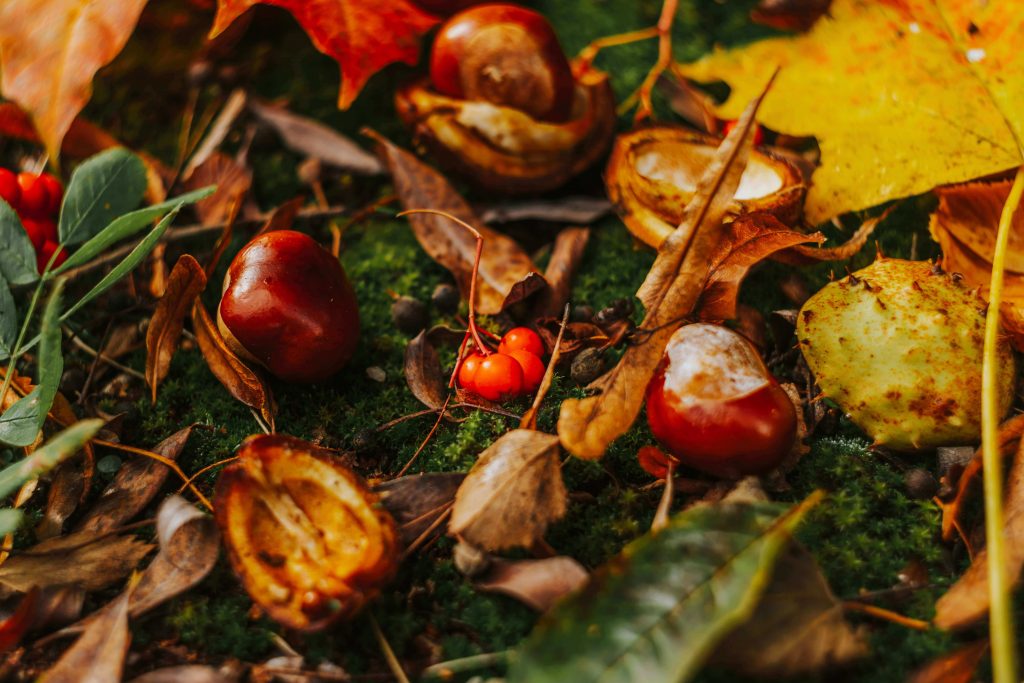
Every autumn, something quietly predictable happens across Britain. Conkers drop from horse chestnut trees, kids fill their pockets, and somewhere in a kitchen or living room, a person places a handful of shiny brown conkers along the windowsill. The hope? That spiders will take one look and promptly leave the building. It’s one of the most enduring home remedies in the country, passed down through generations like a family recipe nobody’s actually tested. But does it hold up? That’s exactly what we’re going to dig into.
TL;DR – Spiders and conkers myth
- The belief that conkers repel spiders is a long-standing UK myth with no scientific backing.
- No credible research has confirmed that conkers deter spiders in any reliable or consistent way.
- Conkers contain a compound called saponin, but its effect on spiders remains unproven.
- The myth likely spread through British folklore and seasonal timing rather than observed results.
- Natural methods like essential oils, regular cleaning, and sealing gaps are more effective.
- Spiders enter homes in autumn looking for warmth and mates, not because conkers aren’t present.
- If spiders are a persistent problem, professional pest control can locate and address the root cause.
Table of Contents
Do Conkers Really Keep Spiders Away?
No, conkers don’t keep spiders away. There is no scientific evidence that placing conkers around your home deters spiders in any meaningful or consistent way. Despite being one of Britain’s most persistent autumn traditions, the idea has never been proven to work, and the one notable attempt to test it found no supporting evidence at all.
Back in 2010, pupils at Roselyon School in Par, Cornwall, ran an experiment for a Royal Society of Chemistry challenge specifically testing whether spiders avoided conkers. The result? Spiders walked right over the conkers without any sign of distress or avoidance — in one test, they even preferred crossing a conker “bridge” over a wooden one. It wasn’t a large-scale controlled study, but it was rigorous enough to win the RSC’s prize for the most convincing evidence, and it cast serious doubt on something millions of people had taken as given. No follow-up research has come along since to rescue the myth.
So if you’ve been dutifully placing conkers on every windowsill each September, you’re not alone. But you’re also not doing much for the spider situation. The conkers are just sitting there looking glossy while the spiders go about their business.
Chestnuts also have a green shell, but it has finer points and more than a conker’s. You can safely eat chestnuts. Conkers, on the other hand, can be used as medicine because of their toxicity.
The Origins of the Spiders and Conkers Myth
Pinning down exactly where this belief started is tricky. It didn’t appear in a textbook. Nobody published a paper on it. Like most folk remedies, it spread the old-fashioned way: word of mouth, passing seasons, and the very human habit of connecting two things that happen around the same time.
Horse chestnuts ripen and fall in autumn. Spiders become more visible in autumn. Put those two things together, add a few generations of people who noticed conkers lying around when spiders appeared, and you’ve got the recipe for a myth that feels perfectly logical even though it isn’t.
There’s also something about the look and smell of conkers that feels like it should work. They have a faint, slightly bitter scent. The shells are spiky. The whole thing has a wild, natural quality that makes it easy to imagine spiders wanting nothing to do with them. Folklore has always leaned on that kind of intuitive reasoning. If it smells strange, something probably doesn’t like it. That’s not science. It’s pattern recognition, which is useful in a lot of situations, just not this one.
British culture also has a strong tradition of home remedies and natural deterrents. There’s real warmth in the idea of using something you found on a walk to sort out a household problem. It costs nothing, it’s seasonal, and it feels clever. That emotional appeal keeps myths like this alive long after any practical scrutiny would have finished them off.
Check also:
What Actually Works: Effective Spider Deterrents
If you want fewer spiders in your home, some things genuinely make a difference. None of them involves a trip to the park in October. Here’s what’s actually worth your time.
Peppermint oil
Spiders are sensitive to strong scents, and peppermint oil is one that consistently gets positive results in practice. Mix a few drops with water in a spray bottle and apply it around windows, skirting boards, and entry points. It smells pleasant to most people and seems to discourage spiders from lingering. You’ll need to reapply every week or so to keep the effect going.
If you’re interested in reading a scientific article, this one is about the experiments with natural scents scientists did a couple of years ago. The article also mentions horse chestnuts as a way to keep spiders away.
Regular cleaning and decluttering
Spiders love undisturbed corners. Clutter, boxes, and dusty spaces give them exactly the kind of sheltered spot they’re looking for. Vacuuming regularly, moving things around in storage areas, and keeping corners clear removes both the spiders and their webs. It also disrupts the insects they feed on, which makes your home less appealing overall.
Sealing entry points
Spiders don’t materialise from thin air. They come in through gaps around windows, poorly fitted doors, cracks in walls, and spaces around pipes. A tube of sealant and some draught excluders will do more to reduce spider numbers than any amount of conkers. Block the routes in, and fewer spiders make it inside in the first place.
Citrus peel
Spiders reportedly dislike citrus scents. Rubbing fresh lemon or orange peel along windowsills and skirting boards is a cheap, natural option. The effect is short-lived since the scent fades quickly, but it works reasonably well as a supplement to other measures rather than a standalone fix.
Turning off outdoor lights near entry points
This one’s indirect but effective. Lights attract flying insects, flying insects attract spiders, and spiders set up camp near your windows and doors. Switching to yellow or warm-toned outdoor lights, or simply turning them off when not needed, reduces the insect buffet that draws spiders in.
If spiders keep appearing despite your best efforts, a professional spider control service will locate the source of the problem, identify the species involved, and treat the infestation properly rather than just shifting individual spiders around.
Check also:
Spider Bite or a Bed Bug Bite? Here’s How to Tell the Differences
Why Do Spiders Come Inside in Autumn Anyway?
Most of the large house spiders you see in September and October are males. They’ve spent the warmer months living quietly outside or tucked away in undisturbed corners, but as temperatures drop, they become active and start moving around looking for mates. That instinct drives them across living room floors at speed. They’re not interested in you. They’re looking for a female.
Your home offers warmth, shelter, and usually a decent supply of insects to eat. From a spider’s perspective, it’s a reasonable option. They’re not choosing your house over some other spot because it lacks conkers. They’re following warmth and opportunity, the same as any creature trying to survive the colder months.
Understanding this makes it easier to approach deterrence sensibly. The goal isn’t to create a magical barrier. It’s to make your home less welcoming by removing what actually attracts them: heat leaking through gaps, insects gathering near lights, undisturbed corners to settle into. Tackle those things, and you’ll see results. Rely on conkers, and you’ll see spiders.
Are you dealing with a pest infestation?
You don't have to be alone in the battle against pests. Hire a professional pest expert!
Call usTakeaways
Conkers are a genuine joy of the British autumn. They’re satisfying to hold, fun for kids, and deeply tied to the season. But as spider repellents, they don’t hold up. The science isn’t there; the only real test produced nothing useful, and the chemistry doesn’t support the idea either. It’s a myth that’s survived on tradition, timing, and wishful thinking, not results.
You can see that not everything you hear or read about spider control is true. Throw away your bag of conkers if you’ve already collected some to try them. As a professional pest company, our advice is to contact your local extermination team if you are dealing with a spider infestation.
Image source: Oskar Kadaksoo on Unsplash



I can understand pest control for mice and rats, but spiders do no harm. They themselves are pest controllers.
I agree, spiders ARE nature’s pest control. They are to be welcomed in the main as long as they don’t bite!