




Fleas in the carpet are one of those problems that can start small and turn irritating very quickly. They hide deep in the fibres, especially around edges, rugs, and pet resting spots, so a quick clean usually won’t be enough. If you want to know how to get rid of fleas in carpet properly, the key is to remove the visible fleas while also dealing with the eggs and larvae hiding underneath.
TL;DR
To get rid of fleas in carpet, vacuum thoroughly, wash nearby fabrics, treat pets at the same time, then apply a carpet-safe flea treatment. Keep vacuuming daily for at least one to two weeks because flea eggs, larvae, and pupae can stay hidden deep in the fibres. If fleas keep coming back, call a professional flea control service. Most flea infestations take 3–8 weeks to fully clear, even with correct treatment.
Table of Contents
Can fleas live in carpet?
Yes, fleas can live on the carpet. The carpet provides an ideal environment for fleas to hide, reproduce, and wait for a new host.
Fleas lay their eggs on the host animal (such as a pet), but these eggs can easily fall off and end up on the carpet. As larvae hatch, they spin cocoons and develop into pupae. A flea emerges from its pupal form when it detects the presence of a host nearby.
Check What Insects Can Bite You in Bed
Can fleas live in carpet without pets?
In spite of the fact that fleas prefer to feed on the blood of animals, they can survive without a host for a limited period of time. They are, however, significantly less likely to survive and reproduce without a continuous supply of blood.
A home without a pet is not guaranteed to be flea-free. Fleas can infest your house in a variety of ways:
- Fleas from outside: Pets aren’t the only way fleas can infest your house. A flea may enter your home through an open door or window or be brought inside on clothing or shoes if you have been in a flea-ridden area; Fleas can get into your carpet once they are inside.
- Previous flea infestation: The eggs, larvae, and pupae of fleas may still be present in the carpet after you’ve moved into an apartment or house that had pets before;
- Fleas from outside: When friends or family visit with their pets, they can bring fleas into your home. Infestation of the carpet can still occur even if the pets are not regularly present in your home.
- Nearby flea infestations: Fleas can migrate from other homes or buildings with pet owners with flea problems to your property and infest your carpet;
Check also:
How to tell if you have fleas in your carpet
Different signs can indicate the presence of fleas in the carpet. The following are some signs to look out for:
- Unpleasant odour: Flea-infested areas may have a musty or slightly sweet scent. Large flea populations often produce this odour.
- Itchy bites: Itchy bites on the feet and lower legs may be a sign of flea activity in the carpet;
- Flea droppings: Flea droppings, also known as flea dirt, are tiny black specks that resemble ground black pepper. In areas where pets spend time, flea excrement may be visible on the carpet;
- Flea eggs: A flea egg or larvae can be challenging to spot because they are tiny. You may, however, notice small white or translucent oval-shaped eggs or tiny worm-like larvae if you inspect the carpet closely;
- Jumping fleas: Adult fleas are agile and can jump a long distance. Observing tiny insects jumping or moving quickly on the carpet’s surface is a sign that you are dealing with a flea infestation;
- Pet scratching: If you have a pet, be aware if they frequently scratch, bite, or lick themselves, especially around their lower backs, tail bases, or abdomens. Fleas can cause excessive scratching;
Learn How to Get Rid of Fleas in the House
How to get rid of fleas in carpet step by step
The mistake most people make is focusing on the fleas they can see. Unfortunately, the bigger problem is often hiding deep in the carpet fibres. To get rid of fleas in the carpet properly, you need to tackle every stage of their life cycle.
Here’s what works.
Step 1: Vacuum the carpet thoroughly
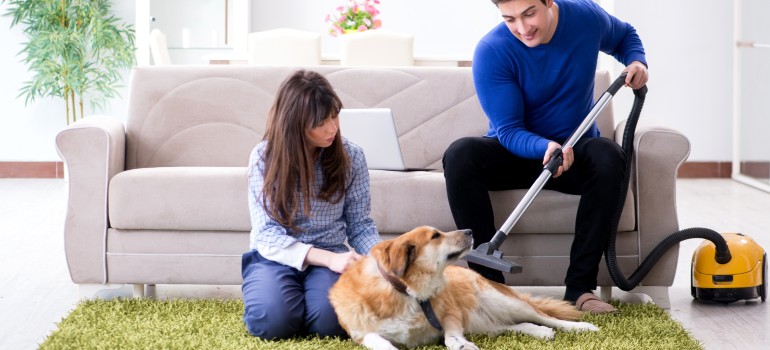
Start with a thorough vacuum. Not a quick five-minute pass through the middle of the room. A proper one.
Go around skirting boards. Get into corners. Move chairs if you can. Run the vacuum anywhere dust tends to gather. Those quiet, forgotten spots are exactly where flea eggs and larvae like to hide.
Vacuuming won’t wipe out an infestation on its own, but it removes a surprising number of fleas. It also disturbs the ones hiding deeper down, which makes the next steps much more effective.
Once you’re done, empty the vacuum outside immediately. Nobody wants hundreds of angry fleas sitting in a warm vacuum bag plotting their comeback.
Step 2: Wash nearby fabrics
Fleas don’t care whether they’re in the carpet, on a blanket, or tucked into the dog’s favourite bed.
Anything soft nearby is worth checking.
Wash pet bedding, throws, cushion covers, blankets, or any removable fabric that may have been exposed. If the care label allows it, use a hot wash. Then dry everything thoroughly.
This step can feel like an endless pile of laundry. Still, it’s a lot less frustrating than finally clearing the carpet only to have fleas crawl back from a blanket that got overlooked.
Step 3: Treat pets at the same time
Got a dog or a cat? Then this step is essential.
Adult fleas often spend their time feeding on pets while their eggs fall into carpets, rugs, cracks in the floor, pretty much anywhere nearby. That’s why some people think they’ve solved the problem, only to see fleas reappear a week later.
Treat every pet in the home using a flea treatment recommended by your vet. Even if only one pet seems affected, it’s best to treat them all together.
Otherwise, you’re dealing with the symptom rather than the source.
Step 4: Apply a flea treatment to the carpet
Once the carpet has been vacuumed, it’s time for treatment.
A flea spray or powder designed for carpets can help kill the fleas hiding where the vacuum couldn’t reach. Products that contain an insect growth regulator, often called an IGR, are particularly useful because they stop young fleas from developing into adults.
Follow the instructions carefully.
Keep pets away from the area while the flea treatment is being applied. Children should stay clear too. Wait until everything is fully dry before using the room again.
It’s tempting to rush this part. Don’t. Giving the treatment time to work makes a real difference.
Step 5: Continue vacuuming after treatment
This is where many people lose patience.
The carpet has been treated. The room looks clean. Surely the job’s done?
Not quite.
Some flea pupae can stay protected inside their cocoons for days or even weeks. When they finally emerge, it can look as though the treatment failed when, in reality, they’re only just appearing.
Keep vacuuming every day for at least a week or two after treatment. It helps expose newly emerged fleas so they come into contact with treated areas.
Step 6: Call a professional for heavy infestations
Sometimes, fleas are simply too established for DIY methods to deal with effectively.
If you’ve vacuumed, washed, treated, repeated the process, then still see fleas jumping around, it may be time to call in a professional flea control service.
Large infestations can spread throughout a property.
A professional treatment targets the entire infestation at once, which is often faster, more reliable, and far less frustrating than spending another weekend chasing fleas around the house.
Because let’s be honest, there are better ways to spend a Saturday than vacuuming the same carpet for the tenth time.
What kills fleas in carpet naturally?
It is possible to kill fleas in carpets with several homemade remedies.
- Diatomaceous earth: You can sprinkle food-grade diatomaceous earth on carpets. This product is derived from fossilised aquatic organisms and works by dehydrating and killing fleas. Sprinkle on the carpet, let it sit 24-48 hours, and then vacuum it;
- Salt: Salt is an effective flea killer. Sprinkle salt generously on the carpet and leave it for 1-2 days. In addition to dehydrating fleas, salt also kills their eggs. Remove dead fleas and eggs by vacuuming the salt thoroughly;
- Baking soda: A carpet can be treated with baking soda to get rid of fleas and control odours. Allow the carpet to sit for a few hours or overnight after extensively applying baking soda. To remove the baking soda and dead fleas, vacuum thoroughly;
- Heat treatment: Non-chemical heat treatment is an effective way to eradicate fleas and other stubborn insects. It is a natural and environmentally friendly pest control method, appealing to those seeking a safer chemical alternative. Heat treatment can deliver rapid results as fleas and their eggs are killed at elevated temperatures. Particularly beneficial when dealing with severe infestations or the need for immediate relief. The high temperature kills adult fleas, larvae, and eggs throughout the treated area, including the carpet.
Keep in mind that home remedies for fleas could be helpful, but they may not be as powerful or effective as chemical insecticides.
Learn How Do I Get Rid of Fleas in My Garden Naturally?
How long can fleas live in carpet?
Fleas can live in carpet for around 2 to 3 months if they have regular access to a host, such as a cat, dog, or person. Adult fleas need blood to survive, so if there’s something warm nearby to feed on, they’ll happily stick around. Annoying, but true.
So, how long can fleas live in carpet without a host? Usually, adult fleas only survive for a few days to around two weeks without a blood meal. Warm, humid rooms can help them last longer. Dry, less comfortable conditions can shorten their time.
Due to the distinct stages of the flea life cycle and the varying durations of each stage, fleas can remain on the carpet for an extended time. Therefore, taking effective control measures to break the life cycle of fleas is necessary for complete elimination.
Takeaways
- A carpet is ideal for fleas to hide, reproduce, and await a new host;
- Unpleasant odours, itchy bites, and jumping fleas often detect infestations of fleas;
- Natural remedies such as salt, baking soda, and DE (Diatomaceous earth) can kill fleas in carpets;
- High temperatures will kill fleas at all stages of their life cycle;
- Infestation of fleas can occur even if you don’t own a pet;



Leave a Reply