




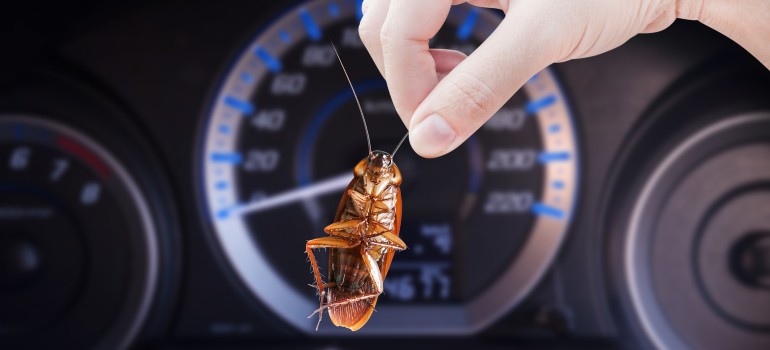
Finding a cockroach in a car is unsettling, and it can happen more easily than most people realise. Cockroaches don’t usually take up residence in vehicles, but given the right conditions — warmth, food crumbs, and a few undisturbed hiding spots — they absolutely will. German cockroaches are the species most frequently found in cars in the UK, hitchhiking in on bags, boxes, or groceries before settling in for the long haul.
Fortunately, you can get rid of cockroaches in your car with several proven methods. This guide covers exactly what to do, what signs to look for, and how to keep them from coming back.
TL;DR
- German cockroaches are the most common species found in cars in the UK — they spread easily via infested bags, boxes, and groceries.
- Roaches enter vehicles through open windows and doors, or by hitchhiking in on items brought inside; parking near drains, skips, or food waste bins also increases the risk.
- Key hiding spots include under seats, inside the dashboard, glove compartment, floor mats, the boot, and air vents.
- Signs of infestation include dark pepper-like droppings, egg casings (oothecae), a musty smell, shed exoskeletons, and visible live roaches.
- Effective DIY removal follows this sequence: declutter, deep vacuum, gel bait, insecticide spray, then diatomaceous earth in hard-to-reach voids.
- Bug bombs and foggers are generally not recommended for cars — poor penetration into voids and surface residue make them ineffective and potentially harmful in enclosed spaces.
- Prevention centres on not eating in the car, keeping it clutter-free, closing vents and windows, and checking items before bringing them inside.
Table of Contents
How do cockroaches get into your car and why?
Cockroaches get into cars the same way they get into homes: they’re searching for food, warmth, and somewhere safe to breed. German cockroaches in particular are expert hitchhikers — small enough to go unnoticed inside a shopping bag or a cardboard box, and fast enough to disappear into a seat crevice before you’ve even closed the car door.
The most common entry points are:
- Open windows or doors: Some species of cockroaches can fly, so they can enter through an open car window or a crack, even if it’s tiny. Cockroaches can quickly enter your car if the doors are left open, as well.
- Items brought in from outside: Cockroaches can live in luggage, boxes, or even shopping bags that you bring into the vehicle. Unknowingly to humans, roaches could also climb on clothing or belongings and get carried into a car.
- Where you park: Parking regularly near drains, skips, food waste bins, or commercial food premises gives cockroaches a short, easy route to your vehicle. This is one of the most overlooked entry routes.
Once inside, the exact reasons cockroaches invade our homes apply just as well to cars: a reliable source of food crumbs, a warm sheltered space, and somewhere dark and undisturbed to lay their eggs.
Where do cockroaches hide in vehicles?
Cockroaches are highly skilled at finding hiding places in cars and houses, where they can breed and remain undetected. The areas where cockroaches usually hide in cars are:
- Car seats and cushions with folds and crevices;
- A car’s dashboard because it’s warm and cosy;
- A glove compartment, as it provides cockroaches with a dark, enclosed space to shelter;
- Under or between floor mats;
- The boot of a car, as the roaches can hide in the spare tyre compartment;
- Car air vents, which provide an easy entry point for cockroaches, which can then hide inside the heating and ventilation system;
Read about: How To Avoid Cockroaches When Moving
Signs of cockroach infestation in car
Listed below are some telling signs that could give away whether there’s a serious cockroach infestation in your vehicle:
- Seeing many live cockroaches: A car infestation is easily identified if you see more than one living cockroach scurrying around your car’s interior.
- Cockroach droppings: Droppings from small species like German cockroaches resemble dark pepper grains or coffee grounds. Larger species leave cylindrical droppings with ridged edges. Check around the dashboard, steering wheel, seats, and floor mats.
- A musty smell: Cockroaches emit musty odours that can be particularly strong in enclosed spaces like a car interior.
- Cockroach egg casings: A cockroach egg casing, known as oothecae, is small, brown, and capsule-shaped. You may find these in the same areas as droppings.
- Shed exoskeletons: As cockroaches grow, they moult and leave behind cast skins. Finding these pale, hollow casings under seats or in vents is a strong sign of an active infestation. Cockroach shed skins are also a significant allergen trigger — more on that below.
- Car upholstery or wiring damage: Cockroaches can damage car upholstery, especially leather seats, wiring, and other components.
When you suspect a cockroach infestation in your car, act quickly. Removing cockroaches becomes significantly harder once they’ve spread into the dashboard, vents, or wiring — that’s when a professional pest controller really does need to step in.
Read also: When Is Cockroach Season in UK and How to Prepare
Steps to get rid of cockroaches in the car
Taking action quickly is crucial. Here’s the most effective sequence for clearing a cockroach infestation from a car:
A step-by-step process for removing a cockroach infestation from a car interior, from initial declutter through to targeted treatment.
Declutter the interior
Remove any unnecessary items from your car — bags, packaging, old receipts, sports kit, anything that gives roaches somewhere to hide. Cockroaches thrive in clutter, so clearing it out immediately reduces their shelter options and makes the following steps more effective.
Deep vacuum
Vacuum the entire interior thoroughly: upholstery, carpeting, under seats, the dashboard, and around the glove compartment. Pay particular attention to seams, folds, and crevices. Follow up by wiping down hard surfaces with a disinfectant cleaning solution to remove grease and food residue that cockroaches feed on.
Apply gel bait
Gel bait is the most effective DIY treatment for cockroaches in a car. Apply small pea-sized amounts under seats, inside the glove compartment, along dashboard edges, and near air vents — anywhere you’ve spotted droppings or activity. Cockroaches feed on the bait and carry it back to the nest, which kills others. Replace bait every few days until activity stops. You can also mix baking soda and sugar and place it in similar spots: the sugar attracts the roaches and the baking soda kills them.
Use insecticide spray
If the infestation is severe, use an insecticide spray specifically labelled for cockroaches. Apply it to cracks, voids, and hiding spots with the car windows open to ensure ventilation. Keep the car unoccupied until the product has dried fully and follow the manufacturer’s instructions carefully. Note on bug bombs and foggers: these are generally not recommended for car interiors. In an enclosed space, foggers leave heavy surface residue on upholstery and controls, and the aerosol doesn’t penetrate into the voids where cockroaches actually hide. They tend to scatter rather than eliminate the infestation.
Apply diatomaceous earth
Diatomaceous earth (DE) is a non-toxic powder that damages cockroaches’ exoskeletons and kills them through dehydration. Sprinkle it lightly in hard-to-reach voids: under seats, inside air vents, and along the base of the dashboard. Avoid heavy application on surfaces you touch regularly. DE works slowly but effectively and keeps working as long as it stays dry.
Monitor and repeat
Check bait and traps every few days. A mild infestation treated with gel bait typically clears within one to two weeks. If you’re still seeing live cockroaches or fresh droppings after two weeks of consistent treatment, the infestation has likely spread beyond what DIY methods can reach.
At that point, it’s worth calling in a professional. If roaches have reached the dashboard, heating vents, or wiring, a pest technician can identify the full extent of the infestation and apply targeted treatments that get into spaces you simply can’t reach yourself. It’s not admitting defeat. It’s being sensible.
Read about: 6 Common Bugs in Cars and How to Get Rid of Them
Health risks of cockroaches in a car
A cockroach in a car isn’t just an unpleasant surprise. Cockroaches in an enclosed space like a vehicle carry real health and safety consequences that get worse the longer they’re left.
- Transmission of harmful bacteria. Cockroaches are known to carry and spread Salmonella, E. coli, and Staphylococcus, contaminating any surface they walk across — including your steering wheel, gear stick, and seats. The saliva of cockroaches, along with their droppings, can deposit these pathogens directly onto surfaces you touch daily.
- Allergen and asthma triggers. Cockroach droppings, shed exoskeletons, and saliva all contain proteins that are well-documented triggers for asthma attacks and allergic reactions. In a small enclosed space like a car, these allergens concentrate quickly and can cause real problems, especially for children or anyone with respiratory conditions.
- Damage to your car’s interior. Roaches can chew through upholstery and fabrics, leaving holes and damage that’s expensive to fix.
- Danger to the car’s functionality. Cockroaches can damage electrical components including wiring and sensors, which creates safety risks as well as repair costs.
- Unpleasant odour. The smell of cockroaches can linger in your car for a long time after they’ve been dealt with.
- Further infestation. Their rapid reproduction makes them difficult to eradicate, and an untreated car infestation can spread to your home or other vehicles.
Preventing cockroaches from getting into your car
The simplest way to avoid cockroaches in a car is to make it an unattractive place to be. Here’s what actually works:
- Avoid eating in the car. Food residue and crumbs are the number one attraction for cockroaches, even when you think you’ve been careful.
- Clean the interior regularly. A thorough vacuum and wipe-down removes the food traces and grease that cockroaches feed on.
- Wipe up spills immediately. Cockroaches are attracted to moisture as well as food, so a damp floor mat or spilled drink is an open invitation.
- Keep the car clutter-free. Old receipts, cardboard, newspapers, and sports equipment are all prime cockroach hiding spots.
- Block entry points. Keep windows and doors closed when the car is parked, and where possible block air conditioning vents when the vehicle is left overnight.
- Mind where you park. Avoid parking regularly near drains, sewage openings, skips, or food waste bins where cockroach populations are highest.
- Inspect items before bringing them in. Check second-hand goods, grocery bags, cardboard boxes, and luggage before loading them into the car — this is one of the most common ways German cockroaches spread.
These steps will significantly reduce the risk, but there’s no absolute guarantee. If cockroaches do find their way in despite your best efforts, act quickly — the sooner you deal with it, the easier it is.
Check also: How to Keep Mice Out of the Car Engine Compartment
Frequently Asked Questions
Are German cockroaches the most common species found in cars?
Yes. German cockroaches are the species most frequently found in cars in the UK. They’re small, fast-breeding, and expert hitchhikers — easily transported inside shopping bags, cardboard boxes, or luggage without being noticed. Once inside a vehicle, they reproduce quickly and spread into voids that are hard to treat.
Can I treat a cockroach infestation in my car with a bug bomb?
Generally, no. Bug bombs and foggers are not recommended for car interiors. In an enclosed space, the aerosol doesn’t penetrate into the seat crevices, dashboard voids, and air vents where cockroaches actually hide. They also leave a heavy chemical residue on every surface inside the car, including the steering wheel and controls. Gel bait placed in targeted locations is significantly more effective and far safer for an enclosed environment.
How long does it take to get rid of cockroaches in a car?
It depends on the severity of the infestation. A mild infestation treated promptly with gel bait typically clears within one to two weeks. A more established infestation — particularly one that has spread into the dashboard, vents, or wiring — usually requires professional treatment and may take two to four weeks with follow-up visits to confirm the colony has been eliminated.
Takeaways
- German cockroaches are the most common species found in cars in the UK, spreading primarily via infested bags, boxes, and groceries;
- Gel bait is the most effective DIY removal method — bug bombs are not recommended for enclosed car interiors;
- Cockroach droppings, shed exoskeletons, and saliva contain allergens that can trigger asthma and allergic reactions, particularly in a small enclosed space;
- A mild infestation treated early with gel bait typically clears within one to two weeks;
- If the infestation has reached the dashboard, vents, or wiring, professional treatment is the right call — not a last resort.




Leave a Reply