



If you’ve noticed birds disappearing into the gap where your soffit meets the roofline, you’re not imagining things. Birds nesting in soffits is one of the most common property headaches UK homeowners deal with, and it tends to get worse every year if nothing changes. The scratching sounds at 5am are irritating enough. The structural damage quietly building up in the background is the part that really stings.
Here’s the thing though: you can’t just block them off whenever you feel like it. The UK has legal protections around nesting birds that you need to understand before you pick up a ladder or reach for a roll of mesh. Get the timing wrong and you could be breaking the law without realising it. This guide walks you through how to stop birds nesting in your soffit properly, legally, and in a way that actually lasts.
TL;DR
- Inspect your soffits for gaps and entry points before nesting season begins.
- Only seal or repair soffits between September and February, outside the active nesting season.
- Use soffit mesh, comb fillers, or bird guards to block entry points permanently.
- Never disturb or remove an active nest, it’s illegal under the Wildlife and Countryside Act 1981.
Table of Contents
Why Do Birds Choose Soffits for Nesting?
Soffits suit nesting birds well. They offer shelter from rain, cover from predators, and an enclosed space that’s easy to miss from the ground. A gap in an ageing soffit board is an open invitation.
The most common visitors in UK gardens are house sparrows and starlings. Both are cavity nesters, so they actively look for enclosed spaces. They’re also persistent. Block one gap and they’ll test the rest of the roofline for another.
Swifts behave differently. They return to the same nest sites year after year, sometimes for decades. If swifts have used your eaves before, expect them back, and get specialist advice before blocking anything.
Nesting birds cause real problems beyond noise and mess. Nesting material can block ventilation, droppings are corrosive, bird mites can move from the nest into the house, and moisture from nesting activity speeds up rot in older boards.
Check also:
Is It Legal to Remove Birds Nesting in Your Soffit?
The Wildlife and Countryside Act 1981 makes it an offence to intentionally or recklessly damage, destroy, or take a wild bird’s nest while it’s in use or being built. This covers every wild bird in the UK, including common garden species. It also covers eggs and chicks.
The nesting season broadly runs from February to August, though it varies by species. House sparrows can start building as early as February or March in mild years. Swifts usually arrive in May and leave by August. If birds are going in and out of the soffit during this period, leave the area alone until they’ve finished.
Sealing an empty gap is a different matter from disturbing a nest. Even so, the safest approach is to work outside the nesting season and check thoroughly first. Identify the species before you act, especially if you think swifts are involved. Swifts receive the same nest protection as other wild birds, but because they’re faithful to their sites and their nests are often in hard-to-reach places, a specialist should advise on any work.
The window for proofing without legal risk is roughly September to January. Aim to finish by the end of January, and check for activity again before you start, since nesting can begin in February.

Most soffit bird problems we’re called to could have been prevented with comb filler and mesh installed the previous autumn. Homeowners consistently underestimate how small a gap needs to be, sparrows can squeeze through an opening of around 32mm and starlings not much more, which is far smaller than most people assume when they’re inspecting their roofline.
How to Stop Birds Nesting in Your Soffit: Step-by-Step
Most of this is genuinely DIY-friendly if you’re comfortable on a ladder and willing to put in a couple of afternoons. The key is doing things in the right order and at the right time of year. Here’s exactly how to approach it.
A step-by-step process for identifying entry points, choosing the right bird proofing method, and preventing birds from nesting in your soffit without breaking UK wildlife law.
Observation
Spend a few mornings watching your roofline from a distance, ideally with binoculars. You’re looking for birds repeatedly returning to the same gap, carrying nesting material, or disappearing into the soffit. Do this across several days in late summer or early autumn before nesting season kicks in. Photos help enormously if you later need to consult a professional.
Soffits are common bat roosts, and bats are protected year-round, including when they’re hibernating. If you find any signs of bats, stop and contact a licensed bat ecologist before you do anything else.
Documentation and Recording
Keep a simple log of what you’ve seen and when. Note which parts of the roofline birds are visiting, how often, and what species you think they are. This sounds over the top, but it’s genuinely useful. If the situation involves a protected species like swifts, this record helps any professional you bring in assess the situation properly and advise on legal obligations.
Identify Risk Areas
Get up close and inspect your soffits carefully. You’re looking for gaps between the soffit board and the fascia, cracked or warped boards, missing sections, open joints at corners, and any gaps where pipes or cables enter the roofline. Even a gap the width of your finger is large enough for a sparrow or starling to squeeze through. Mark problem spots with chalk or tape so you don’t lose track.
Some birds, including sparrows, starlings, and wrens, use soffit gaps as winter roosts. Sealing a gap with birds inside can trap or injure them. Before closing any gap in colder months, check for droppings, feathers, and movement in the early morning or evening. If you’re unsure, wait for milder weather or ask a specialist to check.
Bird Proofing Method Selection
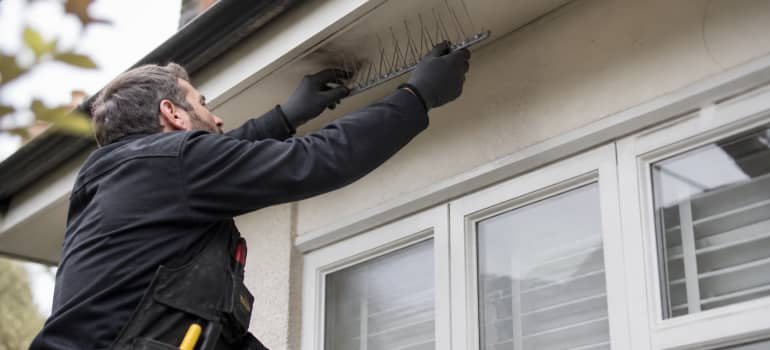
Choose your materials based on the size and location of the gaps you’ve found. Comb fillers are a neat solution for the gap between the roofline and the top of the soffit board. They let air through but block birds completely. Soffit mesh fixed behind open sections works well for larger gaps or broken panels. Bird guards fit over open fascia box ends and vents. For most standard homes with uPVC or timber soffits, a combination of comb filler and mesh will cover the majority of access points. Make sure any mesh used has small enough holes to block the specific bird species you’ve identified.
Professional Consultation
If you’ve found evidence of swifts, or if the problem is large and spread across a long roofline, bring in a professional before doing anything. A specialist in bird control can identify species correctly, confirm whether active nesting is taking place, and advise on the legal position. This isn’t admitting defeat. It’s the sensible move when wildlife law or significant structural work is involved.
Check also:
What Are the Best Bird Proofing Materials for Soffits?
The right material depends on the gap size, the bird species involved, and the type of soffit you have. There isn’t one product that works universally, but the options below cover almost every situation a homeowner is likely to encounter.
| Method | Best For | DIY-Friendly? | |
|---|---|---|---|
| Comb filler / eave comb | Gap between roof tiles and soffit board | Yes, straightforward to fit | |
| Soffit mesh / wire mesh | Larger open sections or damaged panels | Yes, fixable with staples or screws | |
| Bird guards / vent covers | Fascia box ends and roof vent openings | Yes, clip or screw fit | |
| Full soffit board replacement | Rotten or badly cracked timber boards | Depends on access and DIY skill |
Comb fillers are the most underrated option. They’re designed specifically to fill the gap where the last roof tile meets the top of the soffit, and they allow ventilation to pass through while blocking birds completely. If you’ve never seen one, they look like a length of rigid plastic comb strip that you push into place. For most semi-detached and terraced houses, this one product solves the main entry point.
Mesh is the go-to for any larger gap or section where a board has warped away from the fascia. Use a mesh with openings small enough for the species you’re dealing with. A mesh that stops pigeons won’t necessarily stop a determined sparrow.
If your timber soffits are rotting, no amount of mesh will fix the underlying issue. Birds will find new gaps as the wood continues to deteriorate. Replacing damaged boards properly, outside the nesting season, is the most permanent solution and protects the structure of your roof at the same time.
Not sure which bird is nesting in your soffit?
Our team can identify the species and advise on the safest, most effective solution for your home.
Contact usMaintenance and Repairs That Keep Birds Out Long-Term
Bird proofing isn’t a one-off job. Soffits take a beating from weather and materials degrade. A mesh that’s properly fixed in October can work loose by the following spring if it wasn’t installed carefully. Building a simple annual check into your routine is what separates a permanent fix from a temporary one.
Here’s what to check each year, ideally in September or October:
- Check all previously installed mesh and comb fillers for gaps, loose fixings, or damage.
- Clean out gutters, blocked gutters cause water to back up under soffits, accelerating rot and creating soft spots birds can exploit.
- Inspect soffit boards for cracking, warping, or peeling paint, which signals moisture getting in.
- Look at fascia boards too. If the fascia is failing, the soffit won’t be far behind, and the gap between them widens over time.
- Check around any pipes or cables entering the roofline and reseal any gaps that have opened up.
If you have uPVC soffits, they’re lower maintenance than timber but not maintenance-free. Joints can separate, and end caps can blow off in high winds. Those open ends are exactly what starlings are looking for.
A professional bird control service will carry out a full survey of your property, locate all access points, and treat the problem properly, particularly useful on larger detached homes where sections of roofline aren’t easily visible from ground level.
Frequently Asked Questions
Is it legal to remove a bird’s nest from my soffit in the UK?
No. Under the Wildlife and Countryside Act 1981, it’s a criminal offence to intentionally take, damage, or destroy the nest of any wild bird while that nest is being built or is in use. You also cannot block access to an active nest. Wait until nesting season has ended, typically from September onwards, before carrying out any work on the soffit.
How can I tell if birds are starting to nest in my soffit?
Watch for birds regularly flying in and out of the same spot on your roofline, particularly if they’re carrying nesting material. You may also notice droppings gathering beneath a specific section of soffit, dried grass or moss poking out of gaps, or hear scratching and chirping sounds from inside the eaves. Early morning is the best time to observe activity.
Can bird proofing affect the ventilation of my loft?
It can, if done incorrectly. Loft spaces need ventilation to prevent condensation and moisture build-up. Comb fillers are designed specifically to block birds while maintaining airflow, which is why they’re a better choice than simply stuffing gaps with foam or filler. If you’re replacing soffit boards, ensure ventilation is built into the new installation. When in doubt, get a professional to check.
When is the best time to install bird proofing measures?
September to February is your window. This sits outside the main nesting season, meaning you’re not at risk of disturbing active nests and you’re ahead of birds beginning to scout for sites in late winter. Installing in autumn also gives you time to spot any missed gaps before the following spring without time pressure.
Ready to bird-proof your home properly?
Book a survey and let our specialists secure your soffits before nesting season begins.
Contact usConclusion
Stopping birds from nesting in your soffit is entirely achievable without professional help in most cases, but timing is everything. Do the observation work in late summer, carry out repairs and proofing between September and February, and choose the right materials for your specific situation. Miss that window and you’re waiting another year.
The legal side isn’t something to brush past. The Wildlife and Countryside Act 1981 protects every wild bird nest in use, and the penalties are real. Work with the law, not against it, and you’ll end up with a permanently secured roofline and a clear conscience. Put up a bird box while you’re at it. It costs almost nothing and gives those persistent sparrows somewhere better to be.