



Most people assume mice are a winter problem. The heating kicks on, the nights get bitter, and suddenly you’re hearing scratching behind the skirting board. It feels like an obvious connection. But the truth about when mice actually come inside is a bit more interesting than that, and a bit earlier in the year than most homeowners expect.
Understanding what time of year do mice come inside isn’t just trivia. It’s the difference between catching a problem before it starts and dealing with a full-blown infestation in February. Get ahead of it, and you’re handling one or two curious mice. Miss the window, and you might be sharing your home with an entire settled family.
TL;DR
- Mice predominantly enter homes in autumn, not winter, as food and warmth outdoors decline.
- Dropping temperatures and shorter days in September and October are the biggest triggers.
- Once inside during winter, mice settle quickly and are harder to remove.
- Spring can still see mouse activity indoors if a colony established itself over winter.
- Cluttered spaces, accessible food, and gaps in walls are the main things that attract mice.
- Proactive steps taken in late summer and early autumn are your most effective defence.
Table of Contents
What Time of Year Do Mice Come Inside?
Mice start coming inside in early-to-mid autumn, typically from September onwards, as outdoor temperatures drop and natural food sources begin to dry up. Winter is not the main invasion period — it’s the result of missing the autumn window. By the time it’s properly cold, mice are often already settled indoors.
Think of it this way. A mouse isn’t waiting until it’s freezing to make a move. It’s opportunistic and forward-thinking in the most inconvenient way possible. As soon as the nights start cooling, around late August into September, mice begin scouting for somewhere safer to spend the coming months. They’re not reacting to cold. They’re preparing for it.
Outdoor food sources peak in summer and then fall off a cliff as harvest ends and vegetation dies back. That’s the real trigger. Less food outside, warmth radiating from your walls, and the smell of whatever you’ve got in your kitchen cupboards. It’s an obvious destination for them.
By November, many households have already had mice move in without noticing. The scratching behind the walls, the tiny droppings near the back of a cupboard, the chewed corner of a cereal box — these often appear in late autumn or early winter, but the entry point usually happened weeks earlier.
Why Do Mice Invade Homes in Autumn?
Autumn is when everything shifts for mice. Shorter days, cooler evenings, and a sharp drop in outdoor food availability all hit at once. Berries, seeds, and insects become scarce. The fields and gardens that supported mice through the warmer months stop delivering. So they start looking elsewhere.
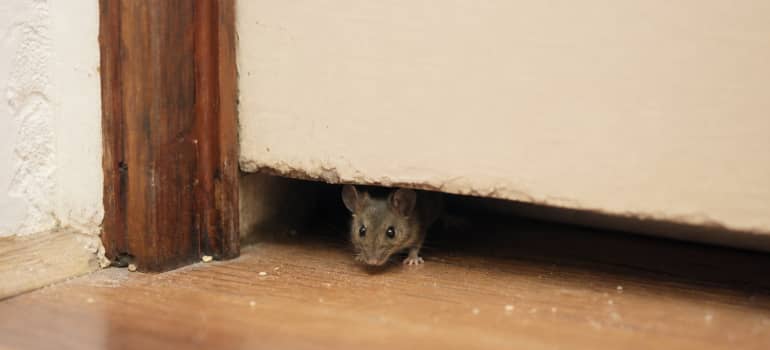
Your home, meanwhile, is doing exactly the opposite. It’s warm, it smells of food, and it’s got plenty of hidden corners. From a mouse’s perspective, it’s ideal. They don’t need a wide-open invitation. A gap the width of a pencil is enough to squeeze through, and they’ll find it.
September and October are when most entry happens. It tends to be quiet at first — one or two mice exploring. But mice breed fast, and a pair left undisturbed for a few months can become a proper problem before spring. Catch them early in autumn, and you’re dealing with stragglers. Leave it until December, and you may have a colony.
Check also:
What Happens Once Mice Are Inside in Winter?
Once mice are inside, winter actually suits them rather well. The temperature indoors stays consistent, there’s no predation, and there’s usually food available somewhere. They don’t hibernate. They settle in and get on with things.
Loft spaces, wall cavities, under kitchen units, and behind boilers are all popular spots. These areas stay warm, stay quiet, and are rarely disturbed. A mouse that finds a good spot in October will still be there in January, probably with company.
The consistent warmth of central heating is a bigger draw than most people realise. It’s not just about surviving the cold. It’s about having a stable, predictable environment. Mice thrive under those conditions. That’s why an indoor infestation doesn’t naturally resolve itself over winter. Without intervention, it tends to grow.
Common Myths About Mice and Seasonal Behaviour
There’s a lot of bad information floating around about when and why mice come indoors. Let’s clear a few things up.
Myth: Mice only come inside when it’s freezing. Not true. Autumn is the real invasion season, and temperatures don’t need to be extreme for mice to start exploring your home. A cool evening in late September is enough.
Myth: If you don’t see mice in winter, you don’t have them. Mice are mostly nocturnal and excellent at staying out of sight. Not seeing one doesn’t mean they’re not there. Look for droppings, gnaw marks, and greasy smear marks along skirting boards instead.
Myth: Mice go back outside in spring. Some might, but any that have settled indoors, found food, and bred are unlikely to leave voluntarily. A colony that established itself over autumn and winter will often stay put unless something changes.
Myth: Only old or dirty homes get mice. Mice aren’t judging your housekeeping. They’re looking for access, warmth, and food. A well-maintained modern home with a small gap around a pipe is just as vulnerable as anywhere else.
Myth: Central heating only attracts mice in the cold months. Heating creates a consistent indoor climate year-round. Even in mild weather, that stable warmth makes your home more attractive than an outdoor environment full of variables and predators.
Check also:
What Makes Your Home Attractive to Mice?
Mice aren’t random. They show up where conditions work in their favour. Here’s what actually draws them in:
- Easy food access: Unsealed packets in cupboards, crumbs under appliances, pet food left out overnight, and open compost bins are all reliable sources. Mice don’t need much — even small amounts of accessible food are enough to encourage them to stay.
- Gaps and entry points: Any gap around pipes, vents, or where cables enter the walls is a potential doorway. Mice can squeeze through a hole roughly the size of a 50p coin, sometimes smaller.
- Clutter and undisturbed spaces: Piles of boxes in a garage, stacked items in a loft, or rarely touched storage under the stairs give mice safe, quiet nesting spots with minimal disturbance.
- Warmth from appliances: The back of a fridge, around a boiler, or near a tumble dryer are warm, quiet spots that mice actively seek out.
- Proximity to outdoor food sources: Bird feeders close to the house, fallen fruit in the garden, and unsealed outdoor bins all bring mice close to your home before they find their way in.
- Dense vegetation or overgrown borders: Thick shrubs, ivy on walls, and overgrown areas give mice cover to approach your home undetected and time to find entry points without feeling exposed.
- Water sources: Dripping pipes, condensation around windows, or pet water bowls left outside all provide what mice need beyond food and shelter.
Go through that list and honestly check your own home. Most people find at least two or three things that apply. That’s normal. The point isn’t to feel bad about it. It’s to know what to change before autumn arrives.
Heard scratching in the walls?
Mice can settle fast — don't wait until it's a bigger problem.
Contact usHow Can You Stop Mice Getting In Before They Try?
The outdoor environment around your home matters more than most people think. If your garden gives mice food, shelter, and a clear path to your walls, you’ve done half their job for them. A few straightforward changes make a real difference well before autumn kicks in.
- Trim back vegetation near the house: Overgrown shrubs and ivy against your walls give mice cover and an easy climb towards gaps higher up. Keep plants cut back and away from the brickwork.
- Remove debris and wood piles from close to the building: Stacked logs, old pallets, and general garden clutter are prime nesting spots. Move them well away from the house, or get rid of anything you’re not using.
- Seal outdoor storage: Garden sheds and storage boxes are often ignored, but they make excellent winter accommodation for mice. Make sure they’re properly sealed and check them regularly.
- Manage your compost bin: A compost heap is basically a free buffet. Use a bin with a sealed base rather than an open heap, and avoid adding cooked food or anything that smells particularly appealing.
- Move bird feeders away from the house: Fallen seed on the ground is a reliable food source for mice. Position feeders further from the building and use trays underneath to catch spillage.
- Clear fallen fruit regularly: If you have fruit trees or berry-producing shrubs, pick up fallen fruit promptly. Left to rot on the ground, it draws mice in consistently.
How Do You Seal Your Home Against Mice?
Once the outdoor environment is sorted, turn your attention to the building itself. Most mice enter through gaps that are easy to miss but simple to fix.
- Seal gaps around pipes and cables: Where anything enters or exits your walls, check for gaps around it. Pack wire wool tightly into the space, then finish with a suitable sealant. Mice can chew through foam alone, so the wire wool is key.
- Install door sweeps on exterior doors: The gap under an external door is often wide enough for a mouse to slip through. A brush or rubber sweep fixed to the bottom removes that route.
- Check and replace damaged weatherstripping: Around door and window frames, worn weather strips leave gaps. Replace them if they’re cracked, compressed, or no longer sealing properly.
- Inspect the roof line and eaves: Mice can and do climb. Check for gaps where the roof meets the walls, around fascia boards, and near any roof vents. These are surprisingly common entry points.
- Fit mesh over air bricks and vents: Air bricks are necessary for ventilation, but they’re also an open door for mice. Fit fine wire mesh over them — it lets air through but keeps mice out.
Check also:
Keeping Mice Out for Good: Long-Term Habits That Work
Sealing gaps and tidying the garden will get you a long way, but keeping mice out over the long term comes down to consistent habits. Nothing dramatic — just a few things done regularly.
Store food in sealed hard-sided containers rather than leaving it in original packaging. Cardboard and thin plastic are no obstacle for a mouse. Clean under and behind appliances every few months — crumbs accumulate in places you don’t see. Don’t leave pet food out overnight.
Reduce clutter in loft spaces, garages, and under stairs. Not just because clutter attracts mice, but because it hides signs of them. If you can see the floor of your loft, you’ll notice droppings or damage far sooner.
Check around the outside of your home once or twice a year, ideally in late summer before autumn arrives. Look for new gaps, damaged seals, or anything that’s changed. A quick thirty-minute walk around the building in August could save you a serious headache by November. If you do spot an active infestation rather than just a risk, a professional pest control service will locate the nesting sites and deal with the problem properly rather than leaving you chasing it from room to room.
Ready to take back your home?
Book a visit and get a proper assessment before the problem grows.
Contact usConclusion
Mice don’t wait for winter. They come inside in autumn, quietly and efficiently, while most homeowners are still thinking about other things. Knowing that tells you exactly when to act. Late summer and early autumn are your window to check the building, sort the garden, and close off the routes mice would otherwise use.
Prevention is always easier than dealing with an infestation. A bit of effort in September beats a stressful winter of scratching noises and chewed wiring. Get ahead of it, and the colder months become a non-issue.