



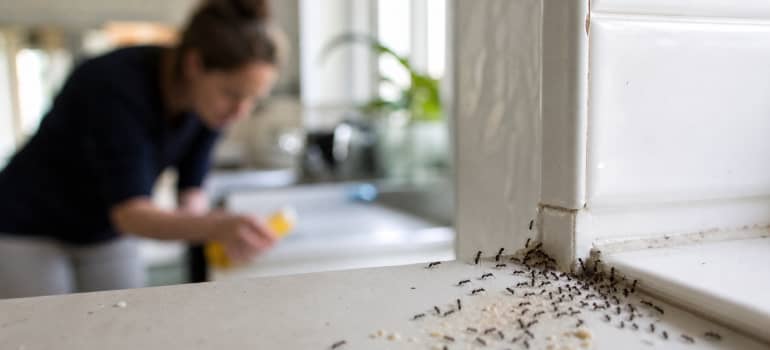
Ants are easy to ignore. You spot one on the kitchen counter, brush it away, and get on with your day. But where there’s one ant, there’s rarely just one ant. These tiny creatures travel in and out of your home constantly, walking across drains, soil, rubbish, and food all in the same afternoon. So it’s worth asking: do ants carry disease, and should you actually be worried?
Most people assume ants are more of a nuisance than a health risk. That assumption isn’t entirely wrong, but it’s not entirely right either. The truth is a bit more uncomfortable than that.
Understanding what ants actually pick up and deposit as they forage through your home can change how seriously you take an infestation. Let’s get into it.
TL;DR
- Ants can act as mechanical vectors, carrying bacteria from dirty environments to your food and surfaces.
- Common pathogens spread by ants include Salmonella and E. coli, both capable of causing food poisoning.
- Pharaoh ants are considered the highest-risk species in the UK due to their nesting habits in hospitals and homes.
- Ant activity in the UK peaks in spring and summer, making those months the highest risk period.
- Good kitchen hygiene and proper food storage are your first line of defence against ant contamination.
- Professional pest control is worth considering when an infestation is established and recurring.
Table of Contents
Do Ants Carry Disease?
Ants don’t carry disease in the same direct way mosquitoes do. They won’t bite you and inject a pathogen into your bloodstream. But they can, and do, act as mechanical vectors, picking up bacteria and other harmful microorganisms from contaminated environments and transferring them to food, surfaces, and utensils in your home.
Think about where ants have been before they reach your kitchen worktop. They’ve crossed outdoor drains, crawled through decaying organic matter, walked over animal waste, and explored the inside of your bin. Every surface they touch along the way can leave something behind on their legs and bodies. When they walk across your bread, your fruit bowl, or your child’s plate, that contamination comes with them.
So, do ants carry disease? Not in the clinical, bite-and-infect sense. But they absolutely can contaminate your food and contribute to illness. That distinction matters, but it doesn’t mean you should relax about having them in your kitchen.
Check also:
How Do Ants Spread Bacteria?
Ants are relentless foragers. A single worker ant can travel surprisingly large distances relative to its size, exploring every crack, crevice, and surface it encounters on the hunt for food and water. That foraging behaviour is exactly what makes them a contamination risk.
As they move through the environment, bacteria and other pathogens cling to their legs, bodies, and mouthparts. Ants don’t have any way of cleaning themselves thoroughly enough to remove harmful microorganisms, so whatever they pick up in the garden, the bin, or a drain gets carried right into your home with them.
Once inside, they head for food sources. Crumbs on the counter, a sticky spot near the hob, fruit left out on the side, an uncovered bowl of pet food. They walk across all of it, leaving traces of whatever they’ve picked up along the way. Some species also regurgitate food for nestmates, which means contamination can spread quickly within a colony too.
The real issue isn’t one ant making one journey. It’s hundreds of ants making hundreds of journeys, every single day, in and out of the same spaces where you prepare and eat food.
Check also:
Health Risks of Ant Infestations
The health risks aren’t dramatic, but they’re real. Here’s what an ant infestation can actually put you at risk of:
- Food poisoning from Salmonella: Ants have been found to carry Salmonella, which causes nausea, vomiting, diarrhoea, and stomach cramps. It spreads when contaminated ants walk across food you later eat without knowing.
- E. coli contamination: Ants foraging through waste areas can pick up E. coli and deposit it on kitchen surfaces and food. Certain strains of E. coli cause serious gastrointestinal illness.
- Staphylococcus bacteria: Some species of ants have been shown to carry Staphylococcus bacteria, which can cause skin infections and food-borne illness in vulnerable individuals.
- Clostridium contamination: Research has found ants in clinical settings carrying Clostridium species, which are associated with serious gut infections, particularly in people with weakened immune systems.
- Cross-contamination of surfaces: Even if ants don’t directly touch your food, they leave trails across worktops, chopping boards, and utensils, spreading bacteria that can transfer to food during preparation.
- Allergic reactions from stings: Certain ant species can sting, causing localised pain and swelling. In rare cases, an allergic reaction can be more severe, particularly in people already prone to them.
Most healthy adults who accidentally ingest a small amount of ant-contaminated food won’t notice anything. But for children, older people, pregnant women, and anyone with a compromised immune system, the risks are considerably higher. That’s when an ant infestation stops being a minor annoyance and becomes something worth taking seriously.
Are Certain Ant Species More Dangerous?
Yes, some ant species pose a noticeably higher contamination risk than others. It comes down to where they nest, how far they forage, and what environments they pass through. Here’s how the most common UK species compare:
| Species | Common Habitat | Contamination Risk | |
|---|---|---|---|
| Black Garden Ant | Gardens, wall cavities, patios | Low to moderate | |
| Pharaoh Ant | Hospitals, heated buildings, kitchens | High | |
| Ghost Ant | Indoor spaces, particularly kitchens | Moderate | |
| Roger’s Ant | Heated buildings, similar to Pharaoh Ants | Moderate to high |
The Black Garden Ant is the one you’ll spot most often in British gardens and homes during summer. It mostly nests outdoors, which limits its contact with truly filthy environments. It’s still capable of carrying bacteria, but the risk is generally lower compared to species that nest indoors.
Pharaoh Ants are a different story entirely. These tiny, pale ants are notorious for nesting inside buildings, including hospitals, care homes, and domestic properties. They’re yellowish-brown, roughly 2mm long, and easy to miss at first glance. They thrive in warm environments and have a habit of infiltrating sterile areas, food packaging, and medical equipment. Studies have found Pharaoh Ants carrying a wide range of pathogens, including Salmonella, Staphylococcus, Clostridium, and Streptococcus. In a hospital setting, that’s genuinely dangerous. In your home, it’s a serious hygiene concern. If you spot what looks like a very small, yellowish-brown ant in your kitchen, it’s worth investigating properly rather than hoping it goes away on its own.
A professional ant control service will locate the colony, treat it at the source, and prevent the infestation from re-establishing. Colonies can be deeply embedded in walls or flooring, well out of reach of anything you’d try yourself.
Check also:
Preventing Ant-Related Contamination
The good news is that most ant-related health risks are preventable with some consistent habits. None of this is complicated, but it does need to be regular.
- Keep kitchen surfaces clean: Wipe down worktops, the hob, and the inside of cupboards regularly. Even a thin layer of grease or a few crumbs is enough to attract scouts.
- Store food in sealed containers: Ants can get into cardboard packaging, thin plastic bags, and loosely closed packets. Move dried goods into airtight containers.
- Don’t leave food out uncovered: Fruit bowls, pet food dishes, and anything sitting open on the counter are an invitation. Cover food or refrigerate it when it’s not being eaten.
- Empty bins regularly: A full kitchen bin is one of the best food sources ants could ask for. Use a bin with a lid and empty it frequently, especially in warmer months.
- Clean up spills immediately: Sweet liquids in particular attract ants fast. A sticky splash of juice left overnight is enough to have a trail forming by morning.
- Seal entry points: Check for gaps around skirting boards, window frames, pipes, and doors. A bit of sealant in the right places can stop scout ants finding a way in.
- Don’t leave dirty dishes overnight: Plates and pans left in the sink give foraging ants exactly what they’re looking for. Wash up before bed.
- Remove standing water: Ants need water as much as food. Fix dripping taps, don’t leave water sitting in sinks, and keep the area under your sink dry.
These steps won’t guarantee you never see an ant again. But they significantly reduce the chances of an infestation taking hold, and they cut the risk of contamination considerably.
Ready to sort the problem for good?
Don't let an ant infestation put your household's health at risk — get expert help today.
Contact usConclusion
Ants aren’t the most threatening pest you’ll ever face, but dismissing them completely is a mistake. They move through dirty environments and into your kitchen without hesitation, carrying bacteria that can cause real illness, especially for anyone vulnerable in your household. Knowing which species you’re dealing with, when activity is highest, and how to keep them out puts you in a much stronger position.
Good hygiene habits go a long way. Keep things clean, store food properly, and deal with any infestation early before it becomes entrenched. If the ants keep coming back or you suspect an indoor-nesting species, calling in professional help isn’t an overreaction. It’s just the sensible next step.