


Get the GoFantastic app


Bed Bug Eggs: What They Look Like, Where They Hide and What Kills Them
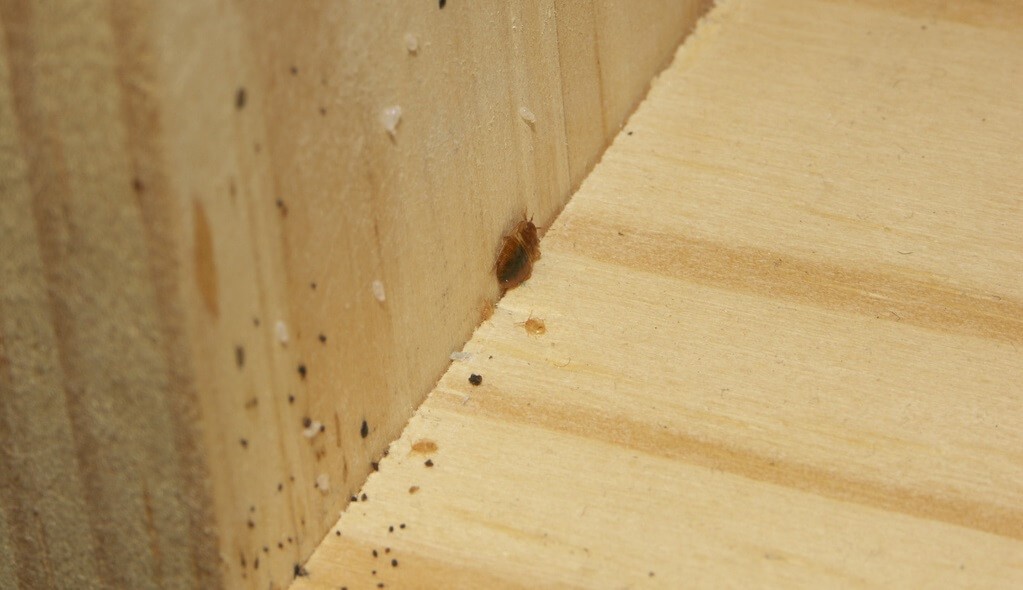
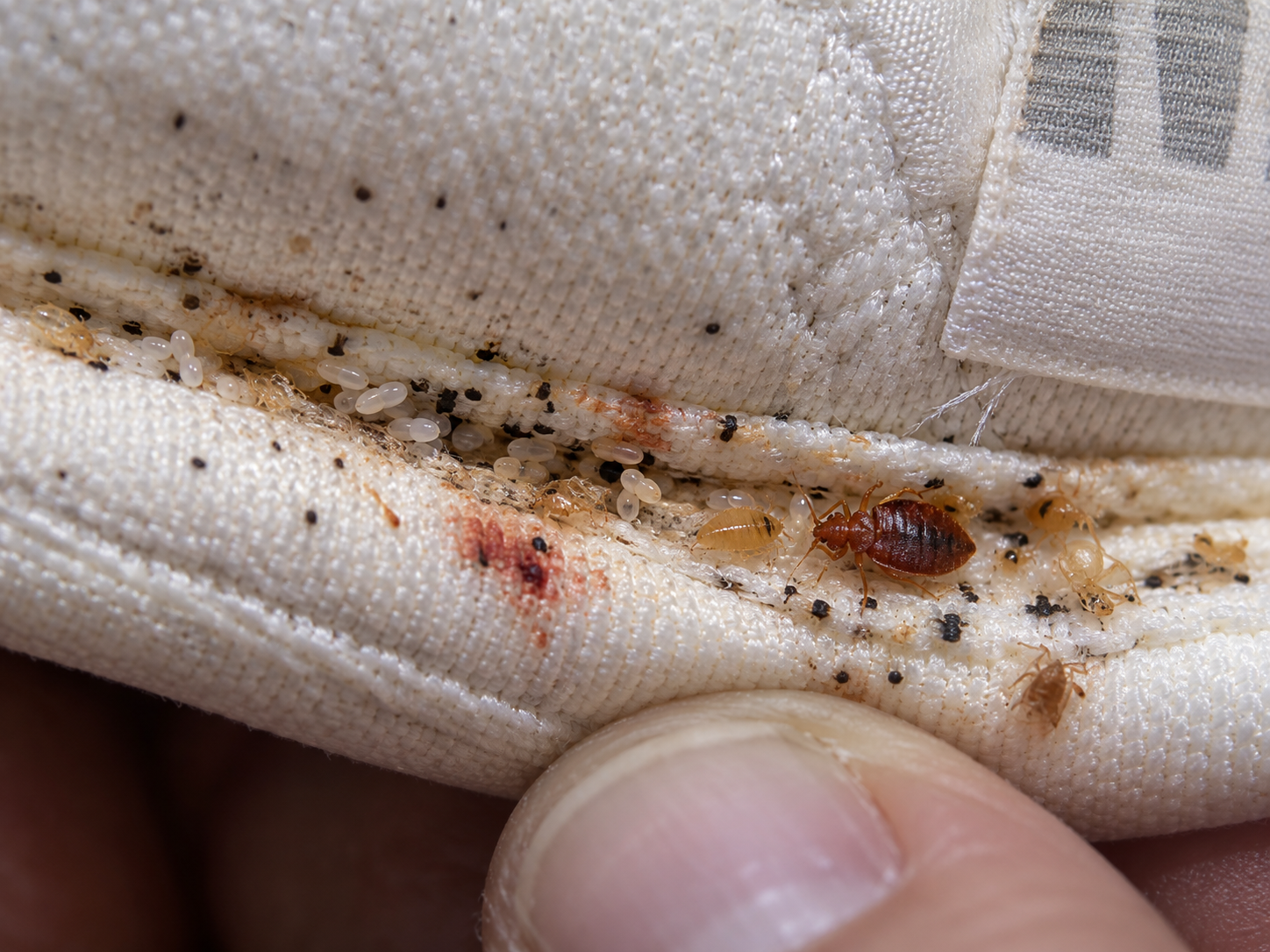
Bed bug eggs are pearly white, about 1 mm long (the size of a pinhead) and shaped like a tiny grain of rice. They’re laid in small clusters and glued into seams, joints and cracks close to the bed, so they don’t brush off. Eggs hatch in about a week in a warm home, and one female can lay 200–500 in her life, which is why an infestation grows so quickly.
Finding eggs means bed bugs are breeding where you sleep. For the adults and young bugs, see what bed bugs look like.
What Do Bed Bug Eggs Look Like?
Bed bug eggs are small but visible to the naked eye. These are the details that set them apart from dust, fluff and other specks:
| What to check | What bed bug eggs look like |
|---|---|
| Size | About 1 mm, the size of a pinhead |
| Shape | A long oval, like a tiny grain of rice, slightly curved |
| Colour | Pearly white and a little see-through when fresh |
| Close to hatching | A small dark eye spot shows through the shell |
| Surface | Smooth and shiny, glued firmly to the surface |
| How they are laid | In small clusters of 10–50, packed into seams, joints and cracks |
Because they’re glued down, eggs stay put when you brush the fabric or shake the sheet. That’s one of the quickest ways to tell them apart from crumbs or fluff.
What do bed bug egg shells look like?
Once a nymph has hatched, the empty shell stays glued in place. Shells look flatter and more see-through than unhatched eggs, with an open end where the lid has come off. Because they can stay put for months, a few shells on their own don’t prove the infestation is still active.
What do dead or dried bed bug eggs look like?
Dead or dried eggs look dull, dented or shrivelled, and turn yellowish or brown instead of pearly white. A healthy egg is plump and firm. You can’t be sure an egg is dead just by looking at it, so treat any eggs you find as live.
Bed bug eggs or something else?
Flea eggs are smaller and loose, so they roll off fabric and collect around pet beds. Clothes moth eggs are laid on wool and other natural fabrics in wardrobes, and head lice eggs are stuck to hair, not furniture. If the white specks are glued into the seams of your mattress or bed frame, bed bugs are the likely cause.
Where do bed bugs lay eggs?
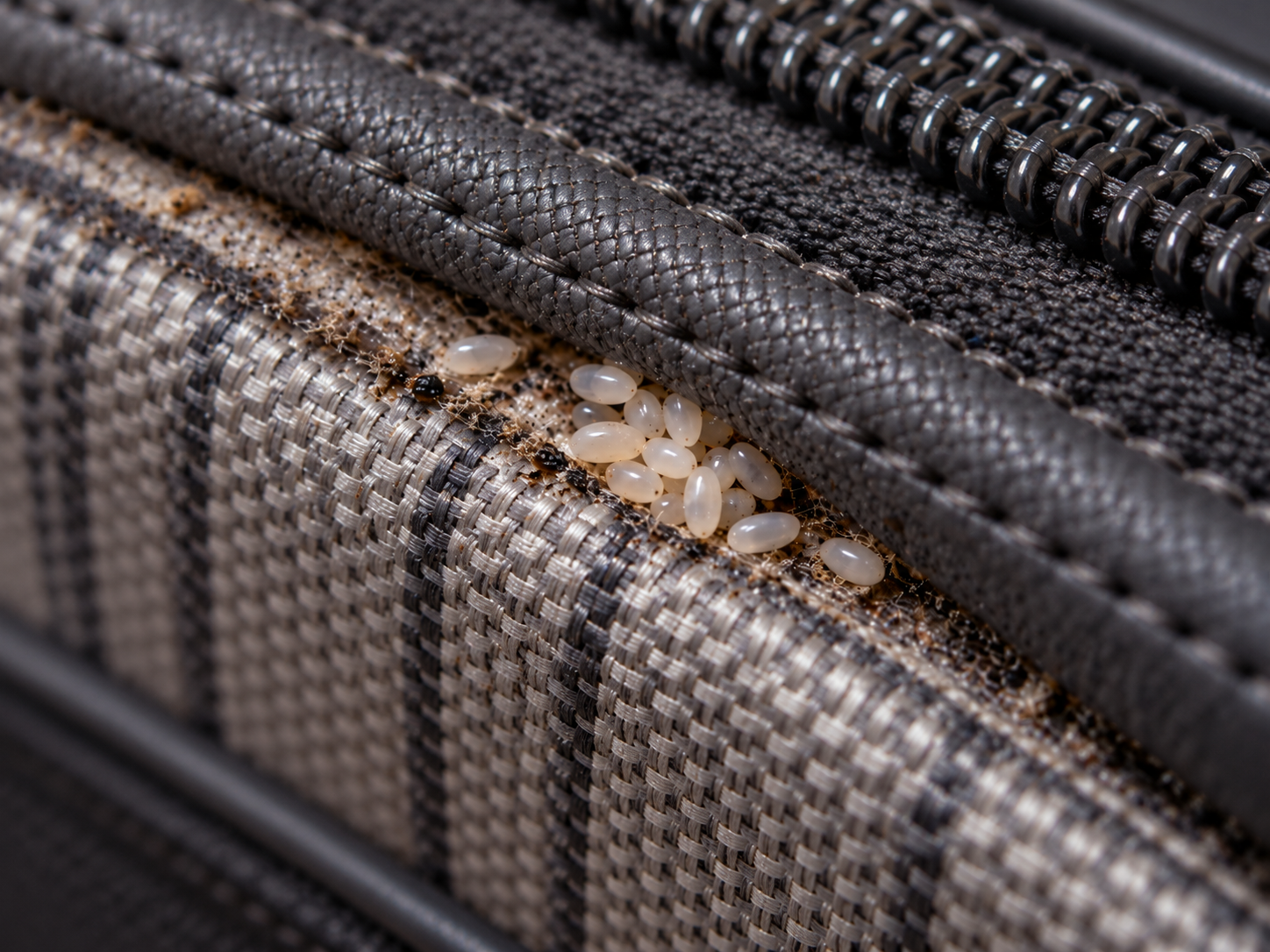
Female bed bugs lay their eggs where they hide, as close as they can to the person they feed on. The most common places are:
- mattress seams, piping, labels and buttons;
- the box spring or base, especially the corners and the underside;
- joints, screw holes and cracks in the bed frame and headboard;
- bedside tables and drawers;
- the seams of sofas and upholstered chairs;
- cracks along skirting boards, behind loose wallpaper, pictures and plug sockets;
- the seams and linings of suitcases and bags.
To search these places step by step, follow our guide on how to check for bed bugs.
Bed bug eggs on a mattress
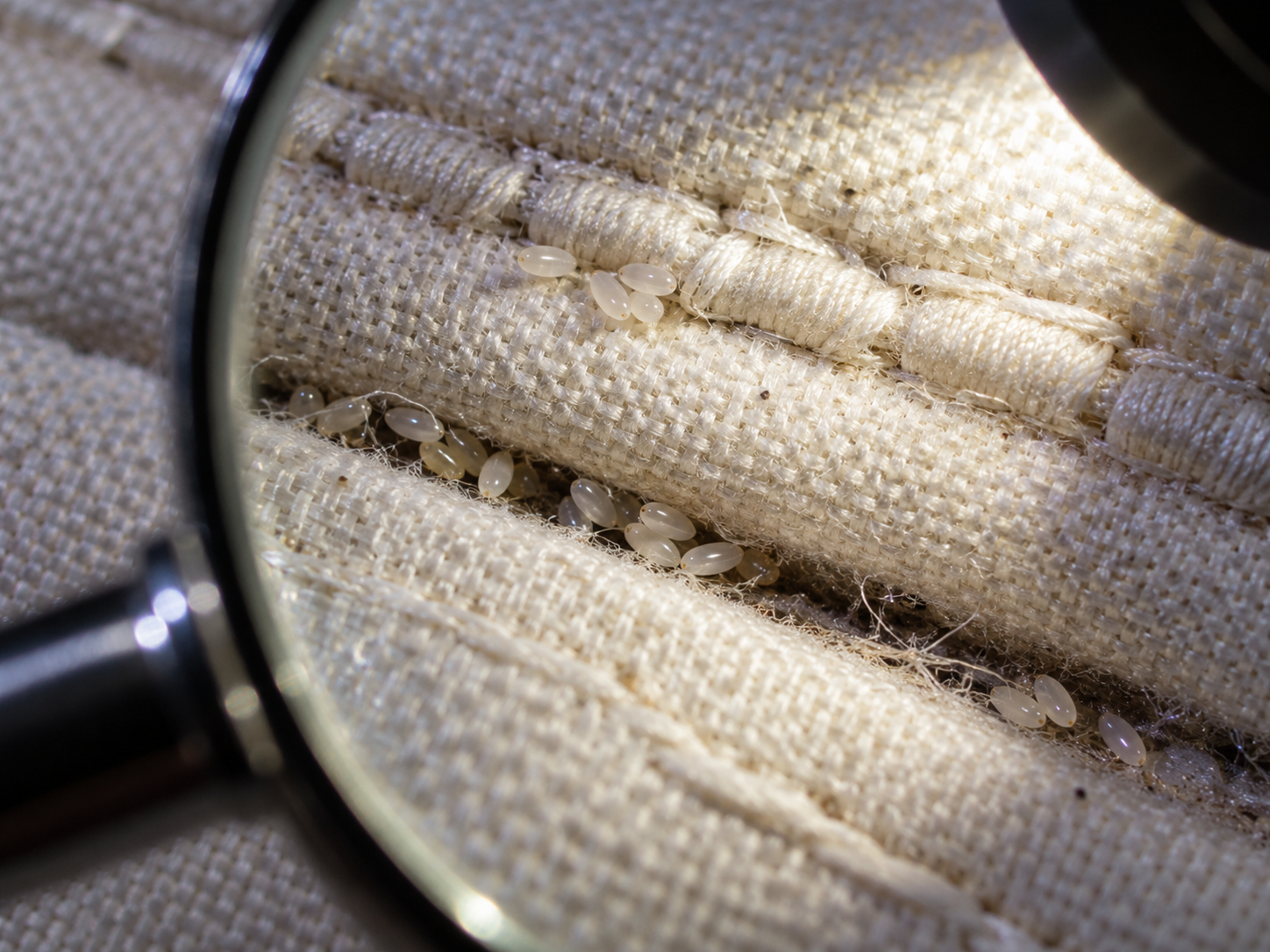
On a mattress, eggs are usually tucked into the piping and seams, under labels, around buttons and in the corners, often next to dark spots and shed skins.
They’re easiest to see on the underside and along the edge nearest the headboard. If you find them, read bed bugs on a mattress: what to do now.
Bed bug eggs on sheets and clothes
Bed bugs rarely lay eggs on sheets you change often, because they prefer rough, undisturbed surfaces such as seams and wood. Eggs on sheets or clothes usually mean the bedding or clothes have been left in a pile near the bed, or stored in an infested room. Bed bugs don’t lay eggs on clothes you’re wearing. Washing at 60°C and tumble drying on hot kills any eggs on fabric.
What does a bed bug nest look like?
Bed bugs don’t build nests. What people call a nest is a spot where they gather: live bugs of different sizes, eggs, empty shells, shed skins and dark spots all packed into one seam, joint or crack. Finding one means bed bugs have been breeding there for a while. For the other marks they leave, see the signs of bed bugs.
How long do bed bug eggs take to hatch?
Bed bug eggs hatch in about a week in a warm home. They hatch faster in summer and more slowly in a cold room. The eggs in a cluster don’t all hatch at once, so you’ll often find empty shells next to eggs that haven’t hatched yet.
What helps bed bug eggs hatch?
Warmth. Bed bugs do best between about 21°C and 32°C, so in a heated home eggs hatch and young bugs grow all year round. In a cold room, hatching slows down, but it doesn’t stop an infestation, and turning the heating off won’t get rid of eggs that are already there.
The bed bug life cycle
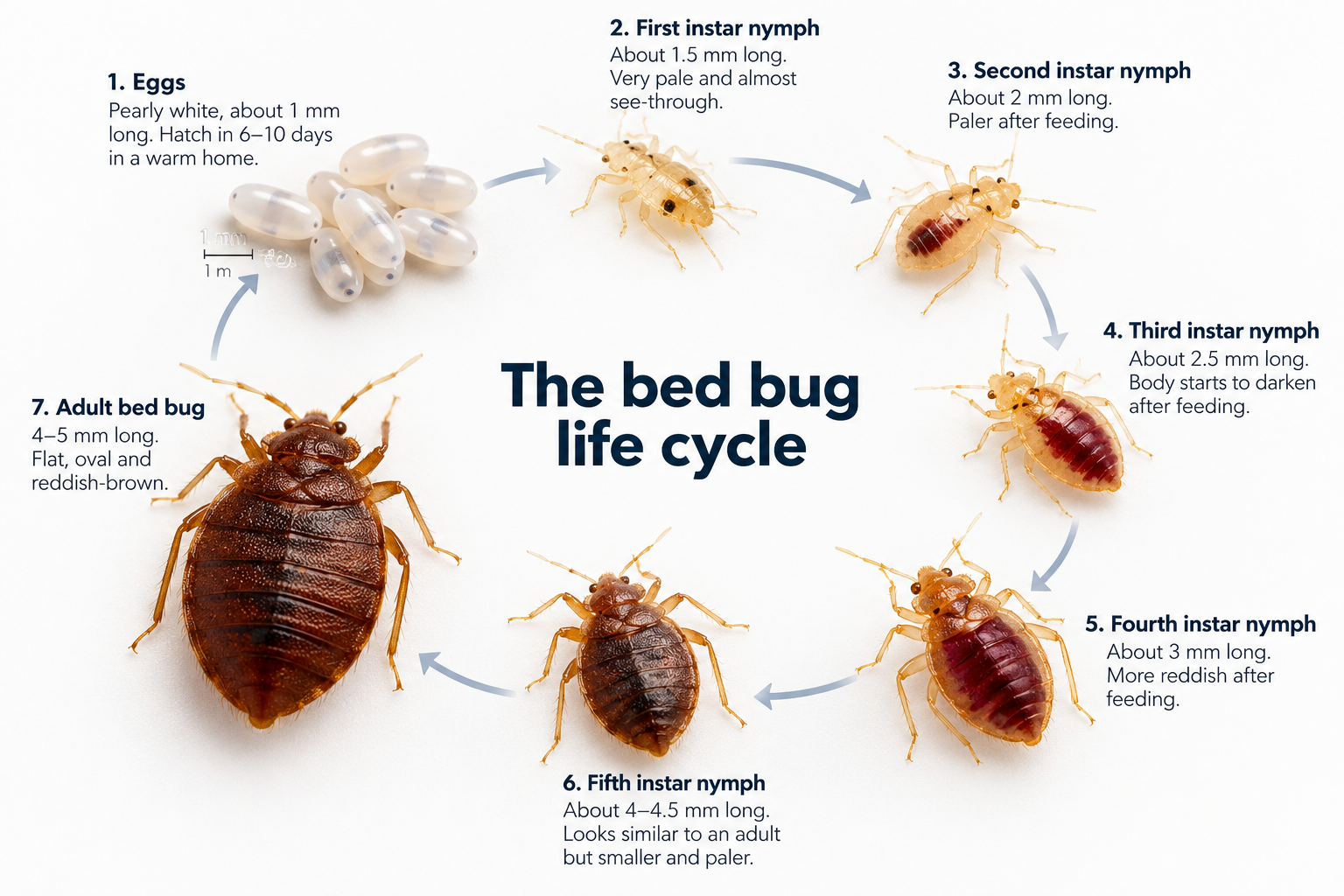
| Stage | How long | What happens |
|---|---|---|
| Egg | About a week in a warm home | A pale nymph about 1 mm long pushes out through a lid at one end |
| Nymph (5 stages) | From about a month in total | It needs a blood meal before each of its five moults, and grows darker each time |
| Adult | Around 10 months | Females lay 200–500 eggs over their life, in batches of 10–50 |
Can bed bug eggs survive on their own?
Yes. Eggs don’t need the adults to hatch, so they keep hatching even if every adult has gone. The young bugs then look for someone to feed on, which is why an infestation can come back weeks after the adults seem to have disappeared, and why treatment needs a follow-up visit.
What kills bed bug eggs?
Bed bug eggs are harder to kill than the bugs themselves. Their shell protects them from most sprays, and they’re glued into places that are hard to reach.
| Method | Kills eggs? | What to know |
|---|---|---|
| Professional heat treatment | Yes, in one visit | Heat reaches eggs deep in seams and cracks; sensors check the coldest spots |
| Steam | Yes, where it touches | Work slowly along seams; it can’t reach eggs deep inside furniture |
| 60°C wash and hot tumble dry | Yes | For bedding, clothes, curtains and soft toys |
| Freezer | Yes, given time | Seal small items in a bag and leave them for 2–3 weeks |
| Professional insecticide | Not usually | Most don’t kill eggs, but a residual treatment kills young bugs as they hatch, so a follow-up visit is part of the plan |
| Shop sprays, foggers and alcohol | No | The shell protects the egg; alcohol and foggers are also a fire risk |
| Vacuuming | Removes some | Eggs are glued down; empty the vacuum into a sealed bag outside |
What temperature kills bed bug eggs?
Heat kills bed bug eggs when the egg itself, not just the air around it, gets hot enough for long enough. Professional heat treatments hold the hiding places at about 50°C for two hours, or 52°C for one hour, measured with sensors in the coldest spots. Eggs survive in any spot that stays cooler, which is why a badly run treatment fails. At home, a 60°C wash and a hot tumble dryer are the practical ways to reach those temperatures. Before a treatment, read how to prepare for bed bug heat treatment.
Does steam kill bed bug eggs?
Yes, steam kills the eggs it reaches, as long as you move slowly enough for the surface to heat right through. It works well on mattress seams and upholstery, but it can’t reach eggs deep in cracks, inside furniture or behind skirting boards, so on its own it rarely clears an infestation.
Can you squish bed bug eggs?
Yes, but it isn’t a practical way to deal with them. The eggs are tiny and glued into seams and cracks, so you’ll miss most of them, and squashing them can smear the surface without removing every egg.
How to kill bed bug eggs in furniture
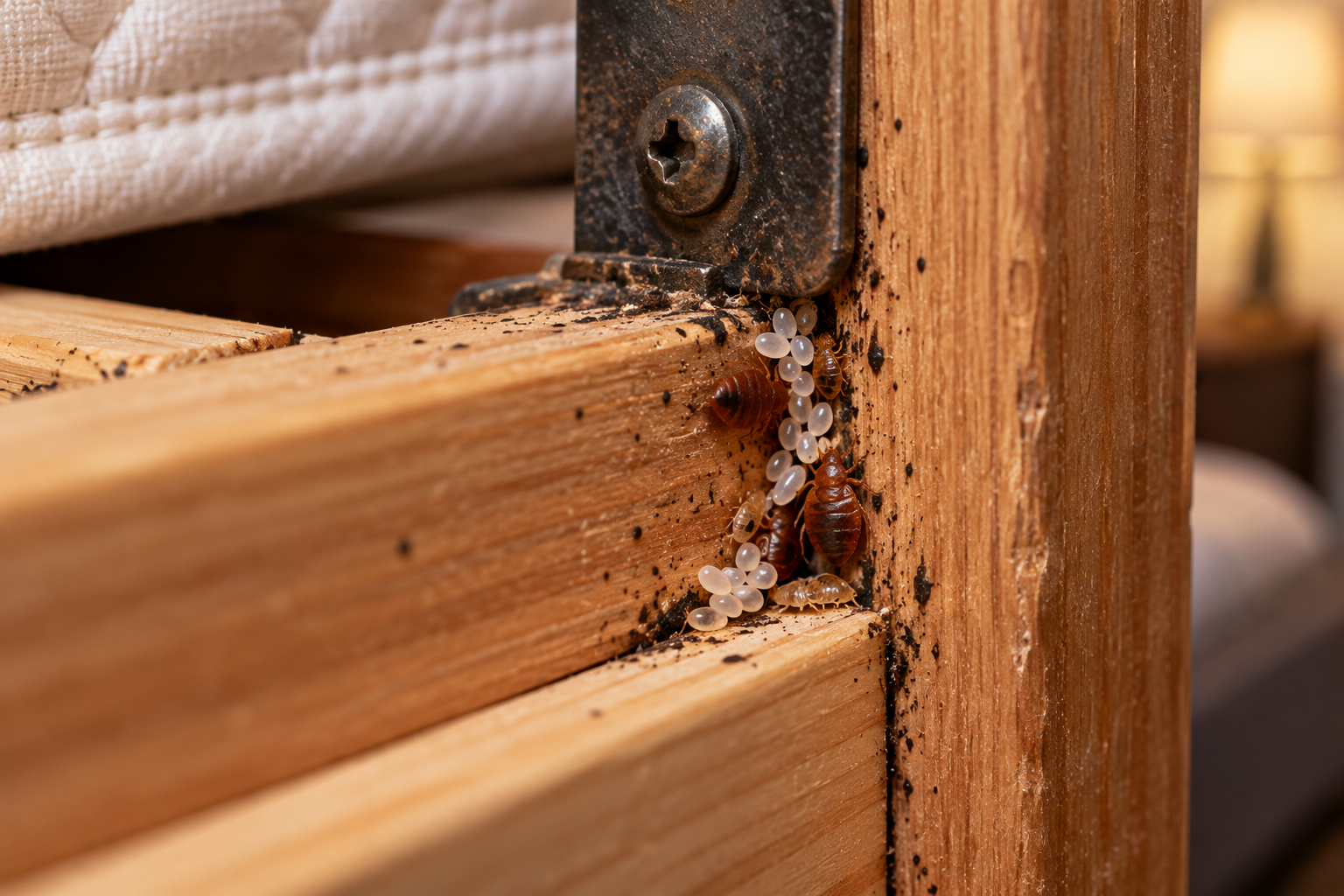
Upholstered furniture is the hardest to treat, because eggs sit deep in the seams and the frame. Steam and vacuuming can reduce the numbers on the surface, but a sofa or bed frame with eggs inside usually needs professional heat treatment.
Don’t throw the furniture out or move it to another room, as both can spread bed bugs further.
How to get rid of bed bug eggs
Eggs mean the infestation is breeding, so it won’t go away on its own. If you’ve found them:
- Leave furniture where it is, so you don’t carry eggs into other rooms.
- Bag bedding, clothes and curtains from the room, then wash them at 60°C and tumble dry on hot.
- Vacuum the seams and cracks where you found eggs, and empty the vacuum into a sealed bag outside.
- Book a survey, so a technician can find every hiding place and plan a treatment that deals with the eggs, usually heat treatment or an insecticide treatment with a follow-up visit.
Our bed bugs guide explains the first steps in more detail, and you can book bed bug treatment or call us on 020 3746 2723.