



You’ve set the trap, gone to bed, and woken up to a small furry prisoner staring back at you with those big, glassy eyes. It’s a moment most people aren’t prepared for. You wanted the mouse gone, not a starring role in its rescue story.
Finding a live mouse at home is more common than you’d think, especially as temperatures drop and mice start looking for somewhere warm to settle in. The tricky part isn’t catching them. It’s knowing how to dispose of a live mouse ethically, safely, and within the law. There’s more to consider than just walking outside and opening the trap.
This guide covers everything you need to handle the situation calmly, humanely, and without drama.
TL;DR
- Use a catch-and-release trap to capture a live mouse without harming it.
- Always release a captured mouse at least 2 miles from your home to stop it returning.
- Check live traps every few hours — leaving a mouse confined too long causes real suffering.
- Relocating mice in the UK is legal, but releasing them onto private land without permission is not.
- Wear gloves when handling traps and wash your hands thoroughly afterwards.
- Release mice into natural habitats like woodland or hedgerows, well away from other homes.
- If mice keep coming back or you’re hearing scratching in walls, it’s worth getting a professional involved.
Table of Contents
How Do You Safely Capture a Live Mouse?
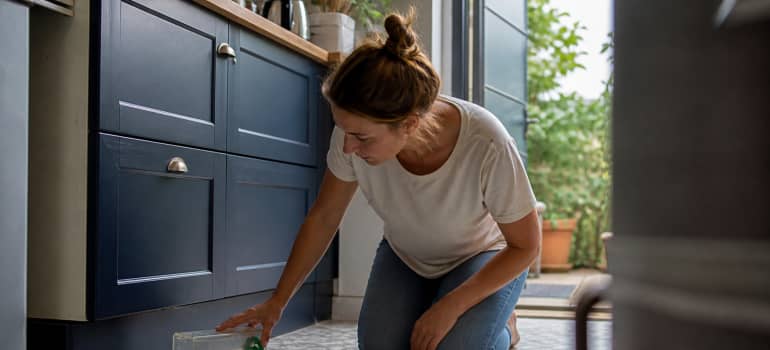
To safely capture a live mouse, use a catch-and-release trap. These are enclosed box-style traps that let a mouse enter but not escape. Place them along walls or skirting boards, bait them with peanut butter or chocolate, and check them every few hours. The mouse stays unharmed until you release it.
Most hardware shops and pet stores stock catch-and-release traps, and they’re genuinely effective. Mice tend to run along edges rather than across open floor space, so placement matters a lot. Push the trap flat against a wall where you’ve noticed droppings or heard scratching. That’s your sweet spot.
A few things that make a real difference:
- Bait choice: Peanut butter works brilliantly. It’s sticky, so the mouse has to work for it and triggers the mechanism reliably. Chocolate or a small piece of biscuit is a solid alternative.
- Check frequency: This is the big one. Don’t set a trap and forget about it overnight. Check every two to four hours if you can. A mouse left in a small enclosed space for hours will suffer from stress, dehydration, and fear. That’s not humane.
- Number of traps: If you suspect more than one mouse, set multiple traps. One trap covering a large kitchen won’t cut it.
- Quiet placement: Put the trap somewhere undisturbed. Heavy foot traffic near the trap will spook the mouse and slow things down.
Once you’ve got a catch, resist the urge to open the trap indoors. Keep it closed until you’re at the release site. Moving the trap calmly and avoiding sudden jolts keeps the mouse’s stress levels down too.
Check also:
How Far Away Should You Release a Mouse?
Release the mouse at least 2 miles from your home. Mice have a strong homing instinct, and those released closer than a mile frequently find their way back. Two miles gives you a real buffer, particularly in urban or suburban areas where food and shelter aren’t scarce.
If two miles feels like a lot of effort for one mouse, think of it this way: the alternative is catching the same mouse three times. A short drive to a nearby park, woodland edge, or open green space sorts the problem properly in one go. It’s worth the ten minutes.
Check also:
Is It Legal to Relocate a Mouse in the UK?
Yes, relocating a house mouse in the UK is perfectly legal. There’s no law against catching and releasing one. That said, there are a couple of things worth keeping in mind before you decide where to drop it off.
You cannot release a mouse onto private land without the landowner’s permission. A farmer’s field or someone’s garden is off limits unless you’ve asked. Public green spaces, woodland, and nature reserves are generally fine, but use your judgement. Releasing a mouse directly outside someone else’s home is, well, not exactly neighbourly.
The Animal Welfare Act 2006 is also worth knowing about. It places a duty of care on anyone who takes responsibility for an animal, even temporarily. That means if you’ve caught a mouse in a live trap, you’re responsible for its welfare until it’s released. Leaving it in a hot car or a sealed trap for hours could technically breach this. Keep it cool, keep it calm, and release it promptly.
Check also:
Where Should You Release a Mouse?
Where you release the mouse matters as much as how far you go. Dropping it in the middle of an open car park isn’t going to end well for the mouse.
Aim for somewhere with natural cover: a hedgerow, the edge of a woodland, a grassy bank near a stream. These environments give the mouse food, shelter, and a genuine chance at survival. Avoid releasing mice near other houses, farms, or food storage areas. That just shifts the problem rather than solving it.
Also think about the season. Releasing a mouse in mid-winter into an exposed field with no cover is kinder in intention than in practice. If it’s cold, find somewhere with dense vegetation or a natural windbreak.
Open the trap gently, point it toward the vegetation, and let the mouse leave at its own pace. Don’t tip it out. Give it a moment to orientate and it’ll disappear into the undergrowth quickly enough.
Check also:
How Do You Handle a Live Mouse Without Getting Bitten?
To handle a live mouse safely, always wear thick gloves and avoid direct skin contact. Move slowly and calmly, since sudden movements trigger biting as a defensive reflex. Carry the trap rather than the mouse itself, keeping your hands well away from the entry point.
Most people won’t need to handle the mouse directly at all. The whole point of a catch-and-release trap is that you carry the trap, not the animal. But if you do find yourself in a situation where that’s not possible, here’s what matters.
- Wear gloves: Thick rubber or gardening gloves are fine. Thin latex offers little protection from a determined bite.
- Move slowly: A mouse in fight-or-flight mode will bite without much warning. Calm, deliberate movements reduce its fear response.
- Don’t corner it: A cornered mouse bites. Give it a direction to move toward and guide rather than grab.
- Wash your hands: Even with gloves, wash thoroughly with soap and warm water afterwards. Mice can carry bacteria and, in rare cases, diseases like leptospirosis. It’s not something to be dramatic about, but basic hygiene applies.
If a mouse does bite you, clean the wound immediately with soap and running water. It’s unlikely to cause serious harm, but if the skin is broken, it’s worth mentioning to your GP, particularly if you’re immunocompromised.
Got mice and not sure where to start?
We know it can feel overwhelming. Our team sorts mouse problems quickly, humanely, and properly — so you're not playing catch-and-release indefinitely.
Contact usWhy Does It Matter How You Dispose of a Mouse?
It’s easy to see a mouse as just a pest and leave the ethics there. But there’s a practical case for taking the humane route, and it doesn’t require being sentimental.
Poison baits, for instance, don’t just affect mice. A barn owl, a kestrel, or a fox can eat a poisoned mouse that dies outside. Secondary poisoning is a real and documented problem in the UK, particularly affecting barn owls and red kites. Catch-and-release sidesteps that entirely, which matters if you care about what’s living in your garden or nearby countryside.
There’s also a practical argument: humane disposal pushes you toward actually solving the problem. Releasing a mouse two miles away doesn’t stop the next one from coming in. Sealing entry points, removing food sources, and keeping storage areas tidy are the things that prevent repeat visits. Killing mice can become a habit that never addresses why they’re there in the first place.
If you’re catching mouse after mouse and the problem keeps returning, that’s a sign there’s an entry point or food source you haven’t found yet. A professional pest control service can locate the source of the infestation and treat it properly, rather than just managing the symptoms. Calling someone in at that point isn’t giving up. It’s being sensible about a problem that’s grown past a single trap.
What Are the Most Common Mistakes When Disposing of a Live Mouse?
Most mistakes come from rushing. People catch the mouse, open the trap in the garden, and call it done. Then they’re surprised to find another mouse three days later. Sometimes it’s the same one.
The most common errors worth avoiding:
| Mistake | Why It’s a Problem | |
|---|---|---|
| Releasing too close to home | Mice have a strong homing instinct and often return within days | |
| Checking the trap too infrequently | A mouse left confined for hours suffers from stress and dehydration | |
| Releasing onto private land | Illegal without the landowner’s permission under UK law | |
| Releasing in open, exposed ground | Leaves the mouse vulnerable with no cover or shelter | |
| Handling without gloves | Risk of bites and exposure to bacteria like leptospirosis | |
| Ignoring entry points after release | More mice will follow if the access route stays open |
Every one of these is avoidable. Get the distance right, check the trap regularly, release into decent habitat, and seal the gap the mouse came through. Those four things cover the problem properly.
Ready to get this sorted properly?
Don't wait for a small mouse problem to turn into something bigger. Get expert help and have it dealt with the right way.
Contact usConclusion
Knowing how to dispose of a live mouse properly isn’t complicated, but it does take a little thought. Catch it humanely, check the trap often, release it well away from your home, and pick a spot that gives it a real chance. That covers the basics and keeps you on the right side of both the law and your own conscience.
The bigger win is making sure the same problem doesn’t keep coming back. Seal gaps, store food properly, and deal with any signs of a repeat visit quickly. Treat the animal decently while it’s in your care, fix the root cause, and move on.