




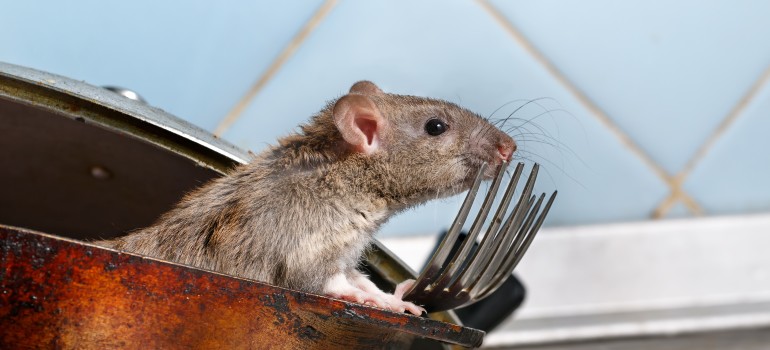
Homemade rat poison is one of the most searched DIY fixes when a rat turns up in the kitchen or garage. Whether you decide to deal with them yourself or prefer to use professional pest control, this guide walks you through the most effective homemade recipes, how to use them safely, and how long they actually take to work. Rats come inside looking for warmth and food — but you can deal with them without reaching straight for commercial chemicals.
TL;DR
- Homemade rat poison can be made from baking soda + sugar + flour, boric acid + sugar + peanut butter, or plaster of Paris + cornmeal + milk.
- Baking soda kills rats by reacting with stomach acid to produce gas they cannot expel — the pressure is lethal.
- Plaster of Paris bait balls harden within a few days; check and replace them regularly or they become useless.
- Commercial rodenticides typically work faster than DIY methods; homemade options suit mild infestations best.
- Most rat poisons take 7–8 days to kill a rat after sufficient ingestion, because the lethal dose requires multiple feedings.
- Always wear gloves when handling bait and disposing of dead rodents to avoid disease transmission.
- If you have pets or children, use enclosed bait stations and place poison only in inaccessible locations.
Table of Contents
DIY or store-bought rat poison
Homemade rat poison is slower-acting and cheaper than commercial rodenticides, but better suited to mild infestations. Commercial poisons work faster and handle large infestations more reliably, but carry greater risk to children, pets, and non-target wildlife.
| Homemade rat poison | Commercial rodenticide | |
|---|---|---|
| Speed | 7–10 days typically | 3–8 days depending on type |
| Safety for pets/children | Lower risk (natural ingredients) | Higher risk (toxic chemicals) |
| Cost | Pence per batch | £5–£20+ per pack |
If you’re wondering how to get rid of rats safely and effectively, there are various non-toxic substances you can try. They may not prove effective if you have a full-blown infestation at hand — in that case, a commercial poison or professional treatment is likely your only real option.
All rodenticides, commercial or otherwise, are potentially toxic to people, pets, wildlife, and non-target species. Products used for rodent control should be stored out of children’s and pets’ reach. Most commercial rodenticides are toxic when swallowed, inhaled, or when they come into contact with skin — which is why professional exterminators are trained to handle them correctly.
There are several active compounds used in commercial rat control, including Cholecalciferol (Vitamin D3), metal phosphides, and anticoagulants that prevent blood from clotting. So, let’s take a look at the best home remedies and DIY methods any homeowner can try instead.
How to make rat poison
Professional rat control is the right call when an infestation is severe. For smaller problems, homemade rat bait is often as effective and far less expensive. These three recipes are a solid place to start — and all three work on mice as well as rats, so don’t worry if you’re not sure which rodent you’re dealing with.
Homemade rat poison with baking soda
Simple homemade bait using baking soda, sugar, and flour can help get rid of a rat problem safely and effectively. The sugar attracts the rats, while the baking soda does the damage: once ingested, it reacts with stomach acid to produce carbon dioxide gas. Rats cannot burp or vomit to release it, so the gas builds up to a lethal level internally.
How to make and deploy homemade rat poison using baking soda, sugar, and flour
Gather your ingredients
You’ll need one cup each of baking soda, sugar, and plain flour. These are the only three ingredients required.
Mix the ingredients
Combine all three ingredients in a bowl and blend thoroughly until the mixture is even throughout. The sugar draws the rats in; the baking soda is the active ingredient.
Place the bait
Spoon small amounts of the mixture into bottle caps, shallow lids, or any flat container. Place them in areas where you’ve spotted rat droppings or signs of activity — along walls, behind appliances, or near entry points. Rats follow familiar routes, so these are the spots they’ll return to.
Check and refill regularly
Visit the bait stations every two to three days. Refill them as needed to maintain a constant supply. If the bait has been disturbed or eaten, that’s a good sign the rats have found it.
DIY rat poison with boric acid
Compared to commercial rat poisons, boric acid is slow-acting but effective at eliminating rats over time, and it’s generally considered safer for humans and pets than synthetic rodenticides. Note that in the UK, boric acid for pest control use is subject to regulation under the UK Biocidal Products Regulation — it is available from hardware stores and online, but check the product label confirms it’s authorised for household pest use before you buy.
Ingredients you’ll need:
- 1 part boric acid
- 1 part sugar
- Peanut butter or chocolate
Step 1: Combine equal parts of boric acid and sugar in a bowl and stir well to ensure an even mixture.
Step 2: Gradually add small amounts of water to the mixture. Knead until it forms a pliable dough.
Step 3: Roll the dough into small marble-sized balls, then coat each one with a thin layer of peanut butter or melted chocolate to make the bait more irresistible to rats.
Step 4: Place the baits near rat entry points, along walls, or in areas with visible rat activity. Check the bait regularly and replace it as needed.
How to make homemade rat poison with plaster
What you’ll need:
- Cornmeal
- Plaster of Paris
- Milk
1. Combine cornmeal and Plaster of Paris
In a large mixing bowl, combine equal parts cornmeal and plaster of Paris and mix the ingredients thoroughly.
2. Add milk gradually
Slowly pour in the milk while stirring. Knead the mixture until it forms a soft, pliable dough. Be careful not to add too much milk — the dough should not be wet or sticky.
3. Form the dough balls
Break the dough into small pieces and roll them into marble-sized balls. Let the balls dry slightly to ensure they hold their shape, then place them near areas with rat activity.
Note: When making plaster balls, it is important to check them every few days. You will need to create another batch if they have yet to be touched, because they will harden and the rats will be unable to consume them.
Check also:
How to Get Rid of Rats in the Attic
How to make a bait station
You can buy plastic rat bait stations at hardware stores. However, you may also be able to make your own out of wood or cardboard. Choose solid materials, like pieces of scrap wood or plastic, and make sure your bait station is large enough for rats to easily enter and exit — a section of PVC pipe works well. Rats are more likely to enter places with multiple exit points, so two entrances are better than one.
When designing your rat bait stations, consider how to keep the bait securely in place. Rats often carry bait away, which reduces its effectiveness and poses risks if it ends up somewhere unintended. Ensuring the bait is securely attached to the station is crucial for both safety and success.
Additionally, rats can be surprisingly strong and persistent — they may move an entire bait station if it isn’t secured or heavy enough. Using durable materials and proper mounting methods will help keep everything in place, even when faced with determined rodents.
Are you dealing with a pest infestation?
You don't have to be alone in the battle against pests. Hire a professional pest expert!
Call usHow does rat poison work?
Rat poison works by exploiting the rodent’s biology. Anticoagulants prevent blood from clotting, causing internal bleeding over several days. Baking soda produces carbon dioxide gas in the stomach that rats cannot expel. Plaster of Paris absorbs moisture and hardens in the digestive tract, causing blockage and dehydration. Each mechanism requires the rat to consume enough bait over multiple visits.
There are several types of rodenticides — anticoagulants, Cholecalciferol (Vitamin D3), Bromethalin, and others. The purpose of these poisons is to lure the pests into eating them, resulting in their death. The effectiveness of any pesticide depends on placement: set it in areas rats already visit. If you place it somewhere unfamiliar, they’re unlikely to find it.
Rats and mice will also stay away from poison if there are other food sources available. If something more appealing is within reach, the bait gets ignored. Clear away competing food sources first.
Check also: Does Bleach Really Deter Rats?
How to use rat poison safely
Using rat poison is an effective way to manage rodent infestations, but it must be handled with extreme care to protect yourself, your household, and the environment. Below are some essential tips for using rat poison safely:
- Rat poison is a serious health concern, especially for children, birds, and other non-target animals. Always store it out of reach of children, pets, and wildlife — a locked cabinet or high shelf is ideal.
- Protect your hands and exposed skin when mixing, pouring, or applying rat poison products. This minimises contact with toxic chemicals that could harm your skin.
- Avoid touching your face, mouth, or eyes while handling rat poison to prevent accidental ingestion or irritation.
- Wear gloves when disposing of dead rodents. Diseases such as Salmonella, Hantavirus and Weil’s disease can be spread to humans by rats, and wearing gloves will reduce the risk of contracting them.
- All waste must be double-bagged for disposal and placed in a bin with a secure lid. This reduces the risk of exposure and secondary poisoning to other animals.
- Carefully read the product label before using any rat poison. The label includes critical information about what the product is, how to use it, how to dispose of it, and any warnings or precautions.
- If rat poison poses a risk to children, pets, or wildlife in your home, consider alternative pest control methods, such as traps or natural or homemade rat repellent.
Where can rat poison be used?
Rat poison can be used both indoors and outdoors, but placement matters. Indoors, tuck it out of sight in low-traffic areas; outdoors, always shield it from wildlife and rain.
- Rat poison should be put on a flat surface in a secure area.
- If using loose rat poison (grain bait), it must be placed in designated trays or robust containers.
- Suitable indoor locations for placing rat poison are beneath cabinets, behind furniture, in attics, basements, sheds or garages.
- Do not place rat poison near your food or water.
- If the rat poison is outdoors, ensure it is positioned behind boards or tiles to prevent it being accessed by wildlife and children.
- All rodenticide baits should be stored out of reach of children and pets.
- Be mindful of the risk of secondary poisoning when addressing a rodent problem.
How long does rat poison take to work?
Most rat poisons take 7–8 days to kill a rat after sufficient ingestion, because the lethal dose requires multiple feedings rather than a single visit to the bait. Single-dose rodenticides such as brodifacoum can work in 3–5 days, but these are generally restricted to professional use in the UK.
The time frame also depends on the type of rodenticide and the size of the rat. Note that rodents will rarely go to a new food source on the first day — they’ll typically spend a couple of days checking the site and scurrying around it before committing.
When poison is placed in a highly infested area, it will eradicate rats more quickly. However, if the poison is not set correctly, results will be poor. Place the bait where you have high concentrations of rat droppings and urine stains.
Once you set a bait, don’t move it. Rats are clever — if they notice it’s shifted position, they’ll avoid it entirely.
Check also:
My Neighbour Has Rats! What Can I Do?
Get rid of rats for good – preventative tips
To prevent rats from becoming your roommates, make your home unwelcoming and inhospitable for them.
The easiest way to solve a rat infestation is to seal off all the holes and cracks that they’re using to get into your house. To confirm that you have a rat problem, sprinkle baby powder or baking soda on your floor before going to bed — in the morning, you’ll find paw prints pointing you to the rodents’ entry point.
An easy way to enter a home is through the attic and any crawl spaces. Use thick steel mesh to block all these possible entry points. The rats should not be able to chew through it.
In addition to blocking all entry points, tidy up leaves and debris from the yard and keep all rubbish in tightly closed bins. Remove tree branches away from the house and roof. Keep piles of firewood away from the house.
How to make rodent repellent spray: Rats and mice are not fond of ammonia scent because it smells like a predator’s urine. To repel rats from your home, mix 1 cup of ammonia with 1 cup of vinegar in a spray bottle. Spray the solution onto cotton balls and place them in the affected areas. Remember to replace the cotton balls after two weeks.
Frequently Asked Questions
Does homemade rat poison work as well as commercial rodenticides?
Homemade rat poison works well for mild infestations but is slower and less reliable than commercial products. DIY recipes like baking soda or plaster of Paris bait can eliminate individual rats, but they won’t match the speed or potency of professional-grade rodenticides for a large-scale problem. If the infestation has spread, commercial treatment or professional help is the more effective route.
Is boric acid safe to use around pets?
Boric acid is generally considered lower risk than synthetic rodenticides, but it is not entirely harmless to pets. Dogs or cats that ingest boric acid bait can experience vomiting, drooling, and lethargy. Always place boric acid bait inside a secured bait station that pets cannot access, and store any unused mixture well out of their reach.
Can I use homemade rat poison outdoors?
Yes, all three homemade recipes in this guide can be used outdoors. Place them inside a covered bait station or behind boards and tiles so they are sheltered from rain (which will dissolve the bait quickly) and inaccessible to birds, hedgehogs, and other non-target wildlife. Check outdoor bait more frequently — every one to two days — as conditions break it down faster.
What should I do if my pet eats homemade rat bait?
Contact your vet immediately — do not wait for symptoms to develop. Take note of which recipe the pet consumed (baking soda, boric acid, or plaster of Paris) and roughly how much, as this helps the vet assess the risk and decide on treatment. For boric acid specifically, call the Animal Poison Line if your vet is unavailable.
Are you dealing with a pest infestation?
You don't have to be alone in the battle against pests. Hire a professional pest expert!
Call usConclusion
Dealing with a rat infestation can be challenging, but with the right approach and tools, you can effectively get rid of it. While professional rat exterminators are often necessary for severe infestations, DIY solutions like homemade rat bait stations provide an affordable and potentially safer alternative for homeowners. These methods, which use natural ingredients, can help eliminate pests without harmful chemicals.
However, whether you choose homemade rat poison or commercial poison, make sure pets, children, and wildlife are protected from accidental exposure. By combining careful planning with effective techniques, you can reclaim your space from unwelcome invaders and maintain a healthy, rodent-free environment.
Image source: torook / Shutterstock




Leave a Reply