



The brown shield bug (Halyomorpha halys) has become a notable pest in the UK, threatening various plants and crops. A stink bug, or shield bug, releases a foul-smelling liquid to deter predators. The foul-smelling brown shield bug is named after its scent glands.
These cause it to emit an unpleasant odour when threatened or injured, which is how the pest earned its name. Their pheromones are strong, and the smell lingers in the air for quite some time. Keep that in mind if you decide to squash a stink bug.
During the cold months, most types of stink bugs seek shelter indoors and around the exterior of buildings. They crawl into cracks or crevices, under the peeling bark of old trees, or into other hiding spots. A cluster of bugs hibernating in the corner of window frames or curtain pelmets can produce an unpleasant and persistent smell.
TL;DR
- The brown shield bug (Halyomorpha halys), also called the brown marmorated stink bug, is an invasive species now present in the UK.
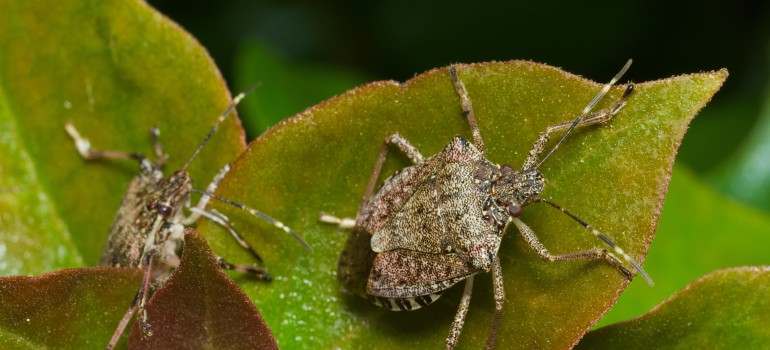
- It is shield-shaped, roughly 17 mm long, with banded antennae and pale dots along its scutellum edges.
- It does not bite or sting humans, but emits a strong, persistent odour when threatened or crushed.
- It is a serious agricultural pest, feeding on fruit, vegetables, and crops by injecting enzymes and sucking out plant fluids.
- Indoors, it overwinters in cracks and crevices but does not breed, feed on wood, or cause structural damage.
- Prevention focuses on sealing entry points, reducing light attraction, and removing garden debris.
- Severe infestations may require professional pest control, as the bug is highly resistant to most household insecticides.
Table of Contents
Identifying the brown shield bug in the UK
The brown shield bug is a sap-feeding insect originally from Asia that has expanded its range to the UK through warmer climates and global trade. Here is what to look for when identifying it:
- Size: approximately 17 mm (5/8 inch) long in adulthood, roughly 2 cm wide.
- Shape: shield-shaped body with an almost rectangular head.
- Antennae: light-toned bands on the antennae — two bands on the brown shield bug, compared to three whitish bands on the similar Hairy Shield Bug.
- Scutellum: pale dots across the edges of the scutellum.
- Wings: when on the ground, wings fold flat on the back to give the distinctive shield appearance; in flight, those same wings allow the bug to ride wind currents and cover considerable distance.
Adult stink bugs are easy to identify because they have fully developed wings. They reproduce rapidly and have a relatively long lifespan of six to eight months.
Do shield bugs bite in the UK?
No. The brown marmorated stink bug does not sting or bite. Its only means of defence is that pungent odour. If you spot one, don’t crush it — doing so releases the smell and can attract other pests. These bugs are not built to pierce human skin, so there is no real reason to squish one. They can be a nuisance and a genuine threat to agriculture, but they pose no direct danger to people or pets.
Damage caused by the brown shield bug
While it’s native to China, Japan, and Korea, the brown marmorated stink bug has made it to the UK and can cause major agricultural damage. They can easily ravage crops, and since one bug can feed on many different plants, losses can be substantial.
These bugs can sometimes interfere with the winemaking process, and if they are not removed promptly, they can contaminate the wine. This often results in the entire wine harvest being thrown away. A huge waste of fresh, ripe grapes and a loss of profit.
If you have a bunch of grapes that contain stink bugs and you grind them up into wine, the bugs’ smell gets into the drink and makes consumers unhappy. Their scent leaves a noticeable odour in wine, often described by people as “an unpleasant, almond-like smell”.
Adults and nymphs inject enzymes that can damage plant tissue and suck juices from fruit crops. The bug may harm fruits and vegetables during the summer, and, like other pests, can move indoors during the winter.
They don’t reproduce indoors, nor do they feed on wood, therefore, they cannot cause structural damage to buildings. But that doesn’t mean they’re not annoying.
Check also: Where Do Insects Go in the Winter Time?
What do stink bugs eat?
In the summer, these pests feed on fruits and vegetables, such as apples, pears, peaches, tomatoes, and sweetcorn. When piercing the surface with their needle-like mouths and sucking out the fruit’s juice, they also inject a toxin into the fruit.
When they are done, they leave behind spots and blemishes that make the fruit inedible. In other words, these insects’ saliva is toxic to the fruit cells, so when the damaged fruit grows, it develops a scar.
Lifecycle and behaviour of the brown shield bug
The brown marmorated stink bug is a hemimetabolous insect that takes approximately 40 to 60 days to develop from egg to adult. Nymphs are nocturnal and complete five stages in a week. They are orange or orange-red and remain near the egg mass until they shed their outer layer.
The eggs of the brown marmorated stink bug are oval-shaped and green in colour. They are laid in masses that can be as many as 30 eggs and are often found under leaves and on the underside of the leaf. Egg-laying generally happens from May through August.
How to get rid of brown marmorated stink bugs
Effective ways to prevent the brown shield bug infestation
How to prevent brown shield bugs from entering your home during autumn and winter.
Seal cracks and gaps
Inspect the exterior of your home for cracks, gaps around pipes, and openings around window frames. Seal these with caulk or weatherproofing foam to block entry routes. This also helps break the cycle of re-infestation. For more advice, see our guide on pest proofing your home.
Repair or replace damaged screens
Check door and window screens for tears or loose fittings. Replace any that are damaged, and ensure exterior doors close tightly with no gaps at the base.
Reduce exterior lighting at night
Brown shield bugs are attracted to light and can often be seen flying around street lights at night in large numbers. Keep exterior lights switched off when not needed, particularly in late summer and autumn when bugs are actively seeking overwintering sites.
Vacuum bugs on contact
If bugs have already entered the home, remove them with a vacuum cleaner rather than crushing them. Seal and dispose of the vacuum bag immediately to prevent the odour from spreading indoors. Find out more about how to get rid of stink bugs.
Home remedies to get rid of stink bugs
Can I remove brown shield bugs without chemicals? If you prefer using natural repellents to control stink bugs in your garden, you may also want to consider spraying them with a mineral clay solution to prevent the bugs from attaching to the plants and laying eggs. Manual removal and natural deterrents like neem oil are effective for small infestations.
In addition, you can use a mixture of water and lavender oil or olive oil to repel stink bugs. A regular spray bottle or garden sprayer is perfect for applying the mixture.
Making a homemade insecticide from vegetable oil and soap is another effective solution. Mix a cup of vegetable oil with one tablespoon of soap, and then add one quart of water. Shake thoroughly and spray directly on the affected plants.
Besides being biodegradable and nontoxic to pets, birds, fish, and other wildlife, neem oil has been found effective against common garden pests, and it can also protect plants from powdery mildew and other fungi. Many garden and food stores sell neem oil, so you can either follow the instructions on the bottle or start with a simple mix of two teaspoons of the oil, one teaspoon of liquid soap, and a quart of water.
Check also: Humane Methods for Handling Common Household Pests
Insecticide concentrates for stink bugs
Sometimes, after all your efforts have failed, all you have left is the use of pesticides. Stink bugs are highly resistant to most pesticides, so their removal can be a challenge. They have a waxy coating that prevents poisons from penetrating. However, there are a few options you can try. Rotenone, insecticidal soap, and a few others can be used to deter these smelly creatures.
Although insecticides may temporarily discourage stink bugs from entering homes, they only affect a small percentage of them. While insecticidal dust may kill bugs inside the walls, the carcasses can smell and attract other unwanted guests, such as carpet beetles. These pests will damage other things in your home.
Applying an interior pesticide most probably will not be efficient enough, and they will emerge from the baseboards after a few days. Hence, you may need to seek a professional team to help you get rid of stink bugs.
You can also prevent insects from entering your home by using insecticides around the garden. This method is effective for several days up to a week, depending on the quantity of insecticide applied.
Caution: You should read labels carefully and follow the directions when handling pesticides. Keep containers away from children, pets, and wildlife. Dispose of empty containers in a safe way and place.
Nothing is better than a professional service!
Benefit from a professional pest control service with commercial grade products, that is provided by experienced technicians!
Call usPrevent brown shield bugs in your garden
As temperatures rise in spring, brown shield bugs emerge from their overwintering sites and females begin laying eggs on nearby plants. They target crops with high sap content, so orchards and vegetable gardens are particularly at risk.
One of the first steps in eliminating stink bugs is to remove all nearby weeds or overgrowth that they use as cover, as well as any hiding places like old boards or logs. The garden and surrounding area should be kept clean and free of debris.
In case you are growing any type of vegetables in your garden, cover them with a row cover material or net. Such covers can prevent bugs from eating your crops. A light, permeable material, usually made of polypropylene or polyester, can be used to prevent damage by a wide variety of pests.
When you first see stink bugs on your plants, you should spray them directly with water. This will physically force the insects off the plants and break down their exoskeletons.
Natural predators of the brown shield bug
Above all, stink bugs UK have a large number of natural enemies. Encouraging natural predators is an environmentally friendly way to control brown shield bugs. Birds, parasitic wasps, and predatory insects, such as ladybirds, play a role in managing bug populations. Creating a habitat for these beneficial species, with a variety of plants and water sources, can naturally reduce bug numbers.
FAQ
What does a brown shield bug smell like?
The brown shield bug releases a pungent chemical from glands on its thorax. The smell is often described as sharp, herby, or coriander-like — sometimes compared to stale almonds. It lingers after the bug is disturbed or crushed and can persist in enclosed spaces such as window frames where bugs overwinter in clusters.
When are brown shield bugs most active in the UK?
Brown shield bugs in the UK are most active from late spring through to autumn — typically May to October. They emerge from overwintering sites in April or May, feed and breed through summer, and begin seeking warm shelter indoors from September onwards as temperatures drop.
Are brown shield bugs the same as green shield bugs?
No. The brown shield bug (Halyomorpha halys) is an invasive species originally from Asia and a significant agricultural pest. The green shield bug (Palomena prasina) is a native UK species that is largely harmless to crops. They differ in colour, size, and behaviour — the brown shield bug is larger (around 17 mm), mottled brown, and releases a stronger odour.
To sum up
If brown shield bugs are getting into your home or damaging your garden, the approach is straightforward: seal entry points, use natural deterrents where you can, and call in professional help if the infestation is beyond what DIY methods can handle. A solid pest management strategy will always get better results than reaching for the nearest pesticide spray.